
GERMANY’S NAHE WINE REGION
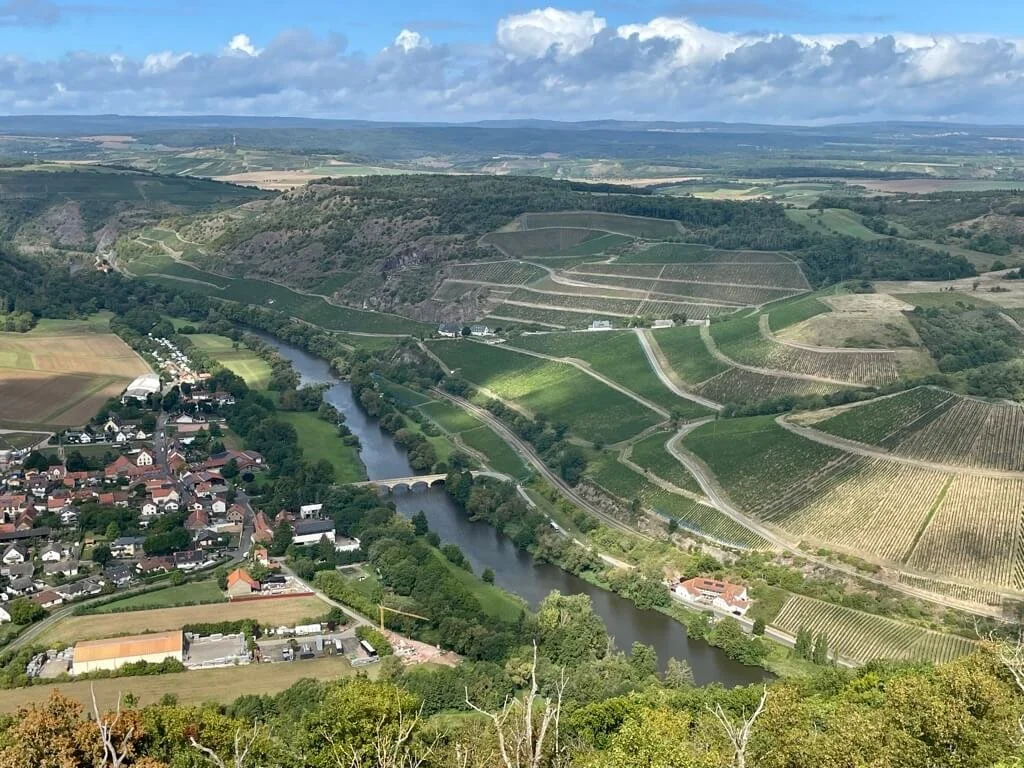
The Nahe wine region
Source: Winekeller
Winekeller wine travel and wine tour experiences in the Nahe wine region:

An introduction to the Nahe wine region
Germany’s Nahe wine region, in the district of Rhineland-Palatinate, is one of the smallest of the wine regions in Germany, however it produces some of the best German wine, in particular German Riesling wine.
The Nahe wine region stretches out over a wide area on either side of the river Nahe, starting in the Hunsrück Hills and ending in the popular Rhine town of Bingen. Sandwiched between three other German wine regions, Rheingau, Rheinhessen and Mosel, the Nahe Valley (Nahetal) is known especially for its superb German Riesling which thrives in the varied terroir and soils here and on the steep vineyard slopes.
The main town in the Nahe wine region is Bad Kreuznach, a spa town, known for its medieval bridge dating from around 1300.
Culture and wellness are both a major draw to this beautiful region, but so are outdoor activities such as hiking and cycling where you can discover its wealth of green landscapes, romantic river valleys, and dramatic rock formations.
Discover the Nahe wine region
The Nahe is one of Germany’s best wine regions, producing some excellent wines, especially German Rieslings.
Discover the beautiful Nahe wine region here…
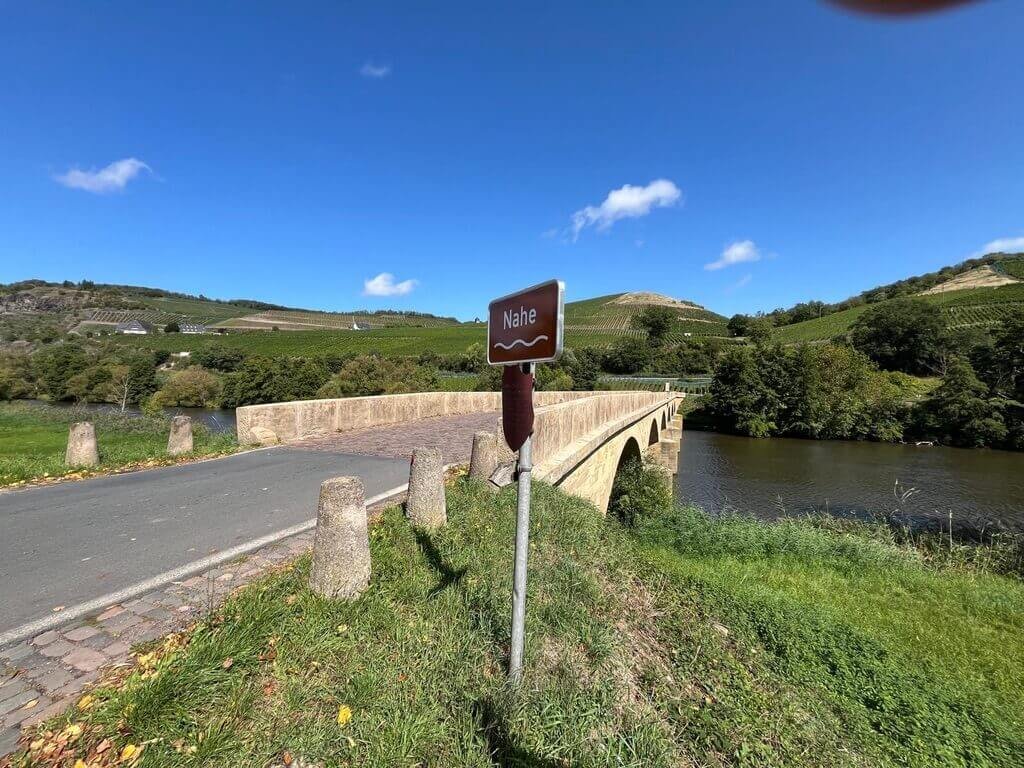
Vineyards on the slopes of the Nahe
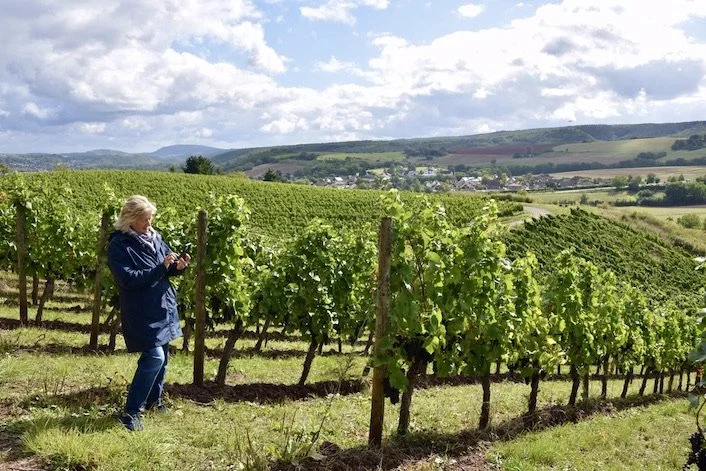
Walking through vineyards in Meddersheim, Nahe
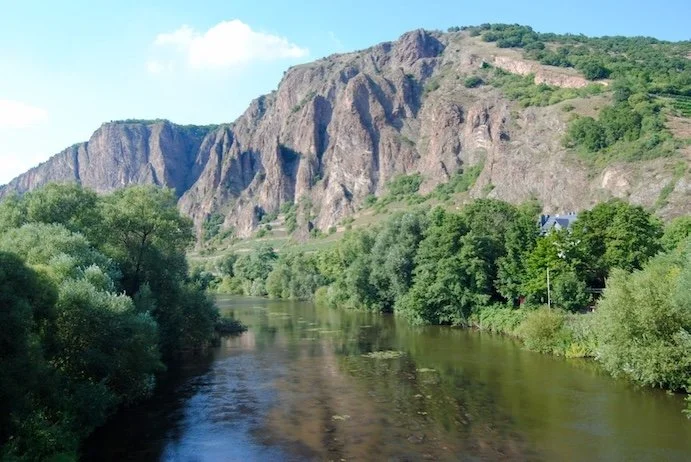
Stunning rock formations
Nahe vineyards
The River Nahe flows north, parallel to the River Mosel, out of the Hünsruck Hills to join the River Rhine at Bingen. The top Nahe vineyards are scattered around the south banks of the Nahe or along its tributaries, the Alsenz, Ellerbach, Gaulsbach, Glan, Gräfenbach, Guldenbach and Trollbach.
The premium Riesling vineyard sites and wine villages are located along the stretch of the River Nahe from Monzingen to Bad Münster am Stein. Travelling downstream the top vineyard sites include: Monzingen (Frühlingsplätzchen, Halenberg), Meddersheim (Rheingrafenberg), Schlossböckelheim (Felsenberg, Kupfergrube), Oberhausen (Brücke, Leistenberg), Niederhausen (Hermannshöhle, Kerz, Klamm), Norheim (Dellchen, Kirschheck), and Traisen (Bastei, Rotenfels).
Nahe wine region map - Source: Weinland Nahe
These Nahe wine estates still lead the pack today, with newer estates including Schäfer-Fröhlich, Jakob Schneider, Weingut Kruger-Rumpf and Gut Hermannsberg adding their weight to further enhance the reputation of this superb German Riesling wine region.
What are the best wineries in Nahe?
Prior to the 1980s only a few growers were recognised for the quality of their wines.
This all changed when Helmut Dönnhoff from the Hermann Dönnhoff estate in Oberhausen began making exceptional quality wines, specifically dry wines, soon to be joined by Werner Schönleber from Weingut Emrich-Schönleber and Schlossgut Diel.
This Nahe revolution was also supported and driven by Michael Prinz zu Salm-Salm, the VDP.President between 1990 and 2007, who played a key role in the upswing of quality viticulture in Germany and in the worldwide renaissance of Riesling.
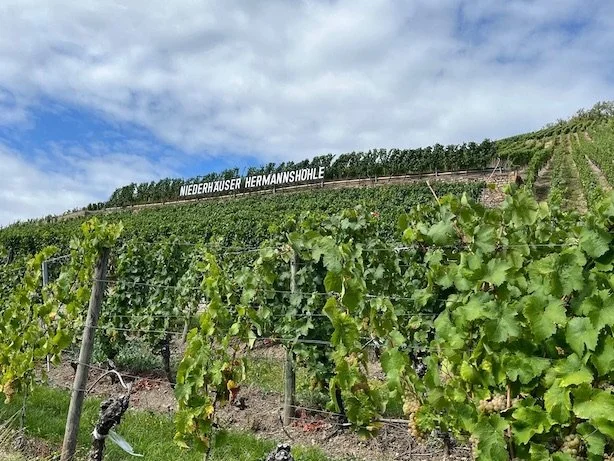
Hermannshöhle vineyard, Niederhausen
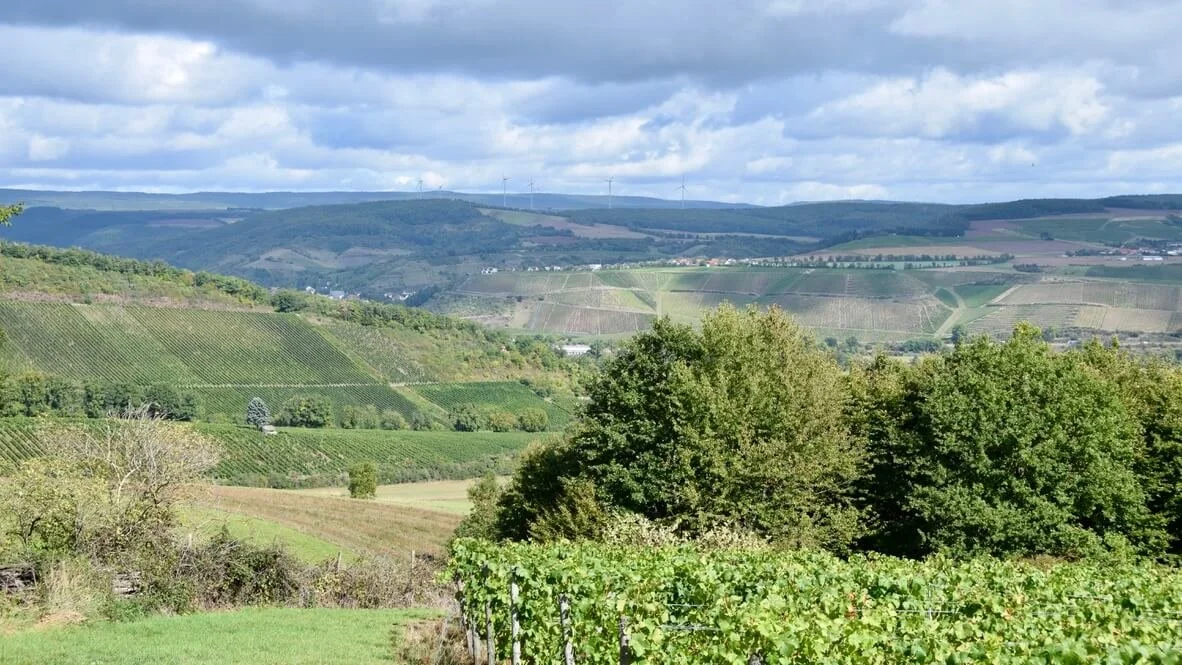
View across to the Monzingen vineyards
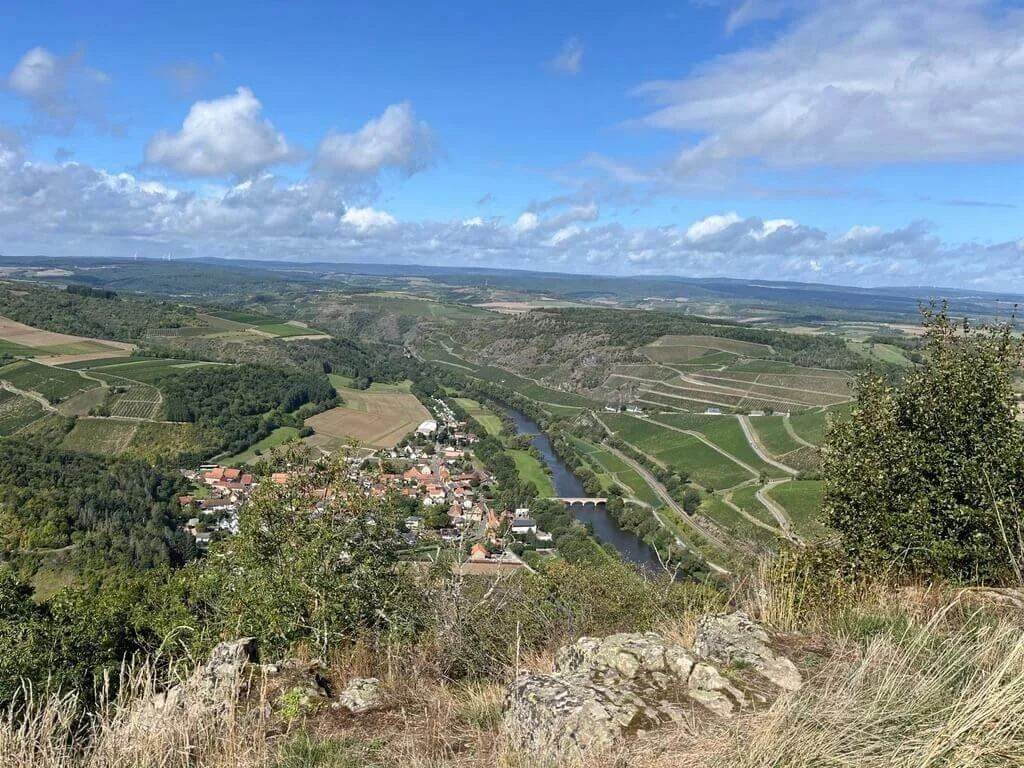
The famous Oberhausen and Niederhausen vineyards
Nahe Wines - Nahe Riesling
Due to the wide variety of soils across the Nahe wine region, a diverse range of wines are produced from relatively few grape varieties. Since the region was recognised as a distinct wine region in Germany in 1971 it has achieved a remarkable reputation for its wines, but particularly when dry white wines started to become more popular.
The star here however is the Riesling grape, which represents about 30% of total plantings and produces a broad range of wines from dry to fruity. The steeper vineyard slopes in the Nahe Valley, where the volcanic soils are red, clayish slate, provide the ideal terroir for yielding top class German Riesling wines.
Nahe Riesling wines are well-respected German wines, known for their elegance, finesse and purity, with mineral, clear-cut flavours and some spiciness. These wines also tend to be on the lower alcohol side.
In addition to Riesling, Müller Thurgau is grown on the flatter slopes, as well as some Weissburgunder (Pinot Blanc), Grauburgunder (Pinot Gris) and Silvaner.
Although some three-quarters of Nahe wines are white, red Dornfelder is widely grown and Nahe wineries are having success with some excellent Pinot Noir wines.
To learn more about Nahe wines and the Nahe wine region see here.
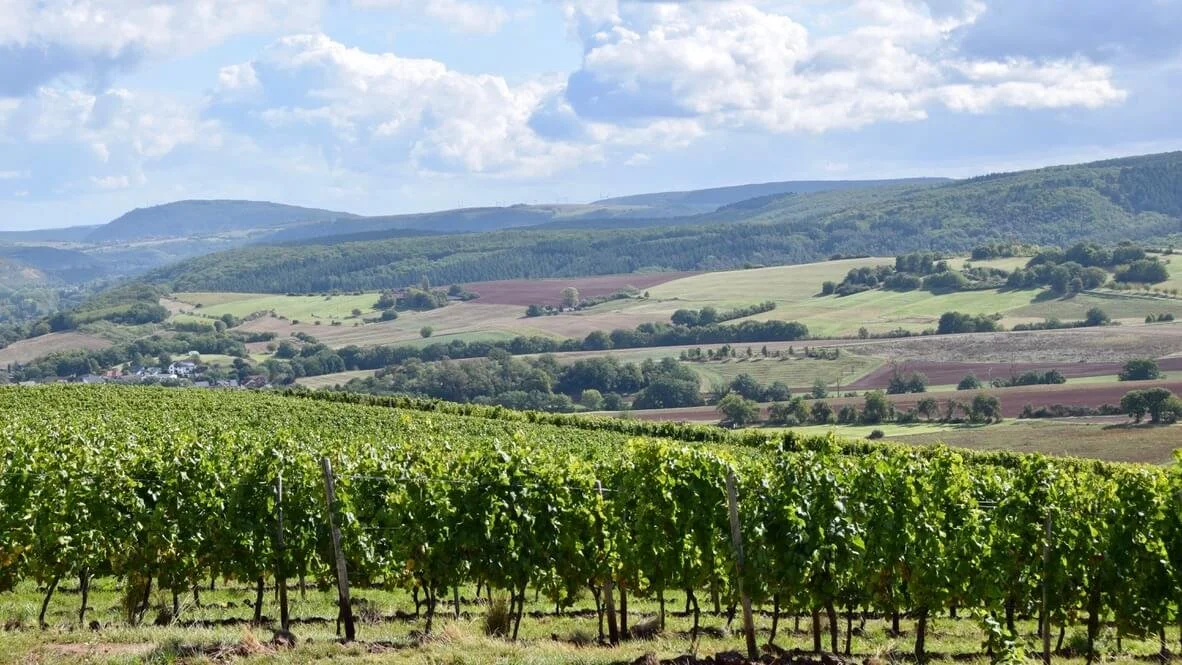
The stunning scenery of the Nahe Valley
Source: Winekeller
Nahe wine region guide
In our view the Nahe wine region has so much to offer the visiting tourist and wine enthusiast. In addition to the wonderful wines of course, there is so much to enjoy here, including wellness, hiking, cycling and simply appreciating the magnificent natural landscapes of this lesser-known German wine region.
Where is the Nahe wine region in Germany?
The beautiful Nahe Valley lies just 40 kilometres away from the state capital of Mainz in the Rheinhessen wine region and only about 70 km away from Frankfurt International Airport. This makes it very accessible and also offers the option to explore not one but four distinct German wine regions together - Rheingau, Rheinhessen, Mittelrhein and Nahe - as well as to venture further into the Rhine Valley, the Pfalz or the Hunsrück regions.
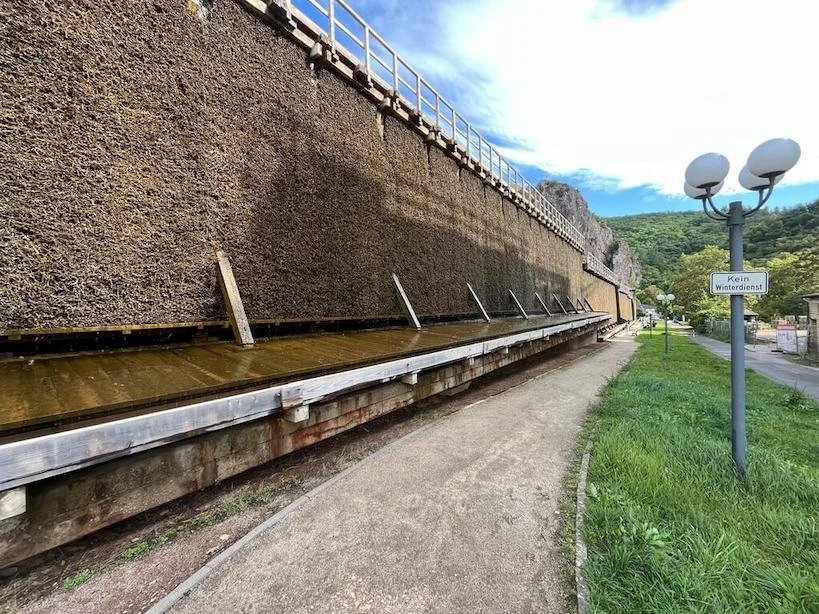
The huge hedges and thermal waters
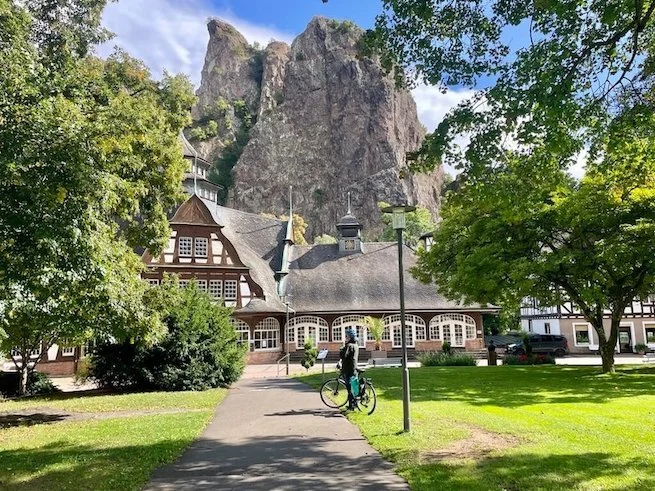
Bad Münster am Stein-Ebenburg
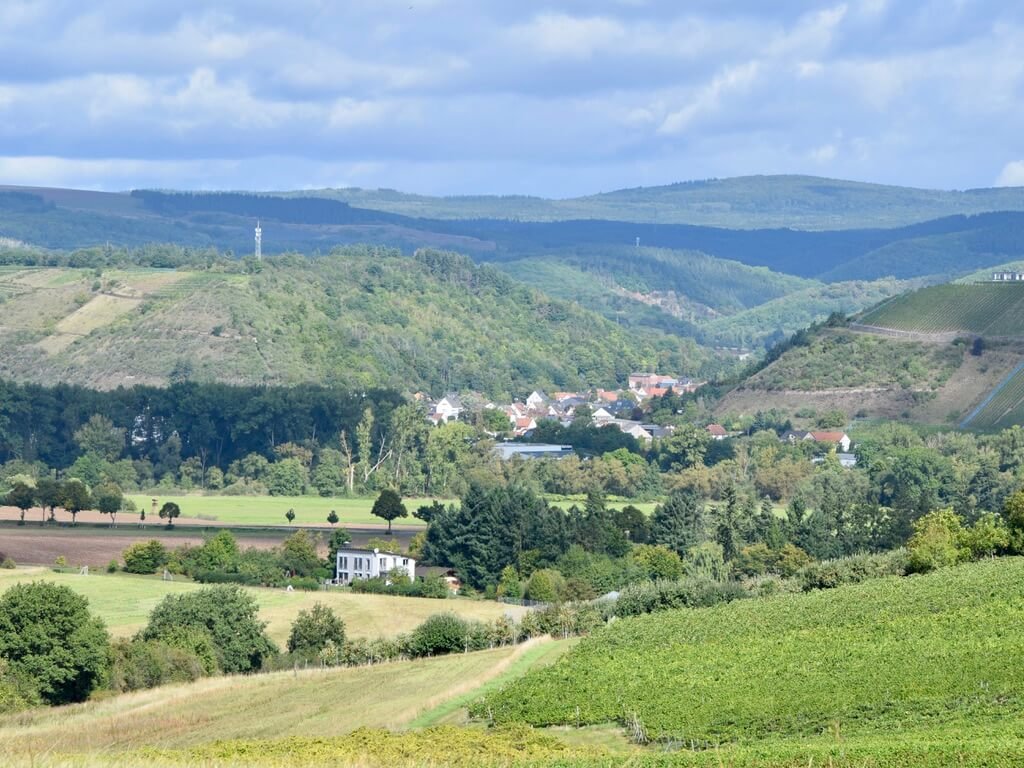
The rolling hills and villages of the Nahetal
Wellness activities
A visit to the Nahe Valley offers you the opportunity to visit three top spa resorts: Bad Kreuznach, Bad Münster am Stein-Ebenburg and Bad Sobernheim, where you can enjoy a wealth of spa and wellness facilities and treatments.
The Nahe Valley is also known as the ‘Salinental’ - Europe’s largest open-air inhalation facility - where thermal waters trickle over huge blackthorn hedges, supplying the entire valley with refreshing, salty air.
Hiking
Hiking and wine definitely go well together and what a perfect way to explore a region’s wines and its beautiful landscapes. You can enjoy specific wine-hiking trails along the Rhine-Nahe wine trail as well as general, superb hiking experiences and marked, circular hiking routes known as ‘Dream Loops’.
There are also some incredible viewpoints from which to enjoy the stunning scenery around the Nahe Valley. We enjoyed hiking up the Lemberg mountain for views over Oberhausen and Niedherhausen and also up to the ‘Schönste Weinsicht 2016’ lookout point over Monzingen from Meddersheim.
Cycling
The Nahe region offers some spectacular cycling opportunities, be it exploring the beautiful Nahe River path, as we did, or venturing into the Hünsruck hills, there is something for everyone and all skill levels.
Visiting Bad Kreuznach
Bad Kreuznach is the centre of the Nahe region, a charming town with a wide range of health and wellness facilities, outdoor activities and shops and restaurants. There is a lovely historic quarter to explore with its own ‘Little Venice’ area and of course the landmark Alte Nahebrücke bridge.
Standing on the medieval stone bridge, spanning the lovely River Nahe, are the Brückenhäuser bridge houses, remarkably well-preserved houses made of timber and built from 1480 onwards due to a shortage of land.
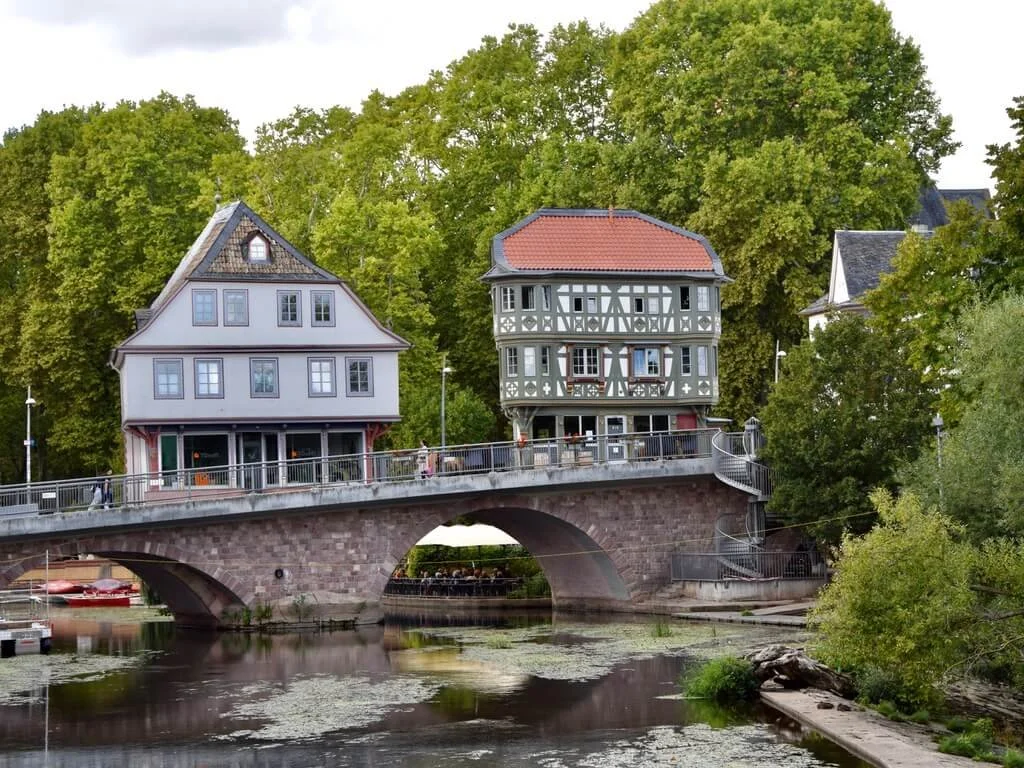
The famous Alte Nahebrücke, Bad Kreuznach

Cycling the beautiful Nahe River Path
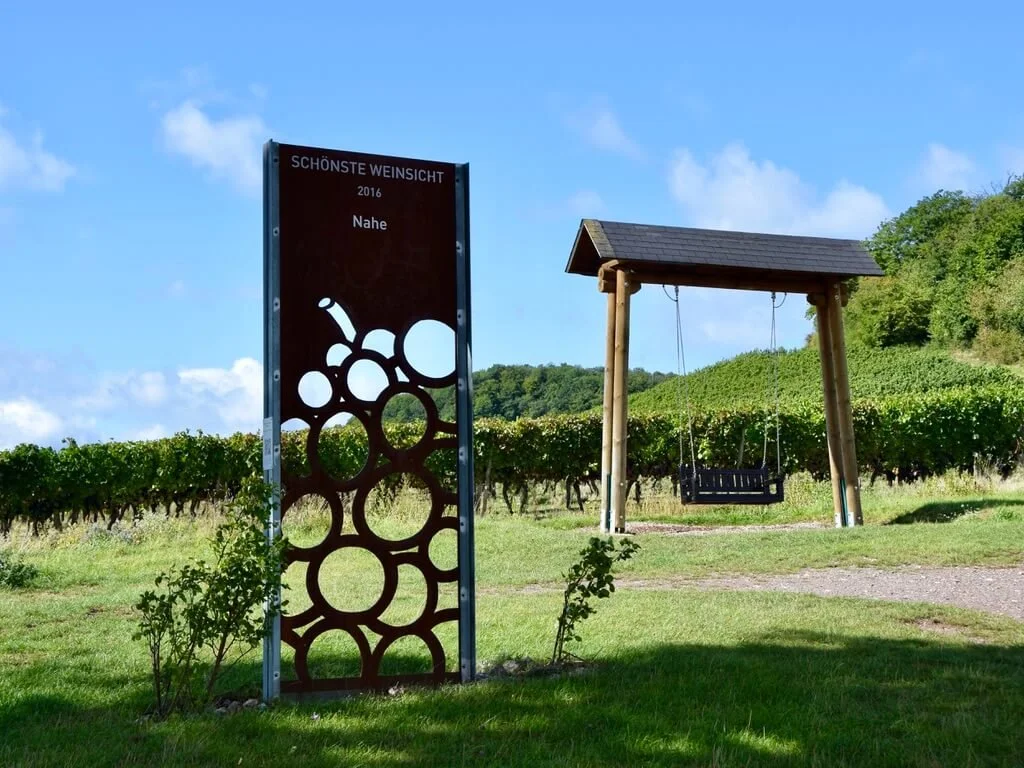
Voted the 'best Nahe wine view', 2016
The Nahe wine region’s Weingut Emrich-Schönleber is known around the world for its top quality, single vineyard Grand Cru (Grosses Gewächs) Riesling wines. Located in the historic Nahe village of Monzingen, Weingut Emrich-Schönleber is an iconic and influential German wine producer…