
FRANCE’S ALSACE WINE REGION
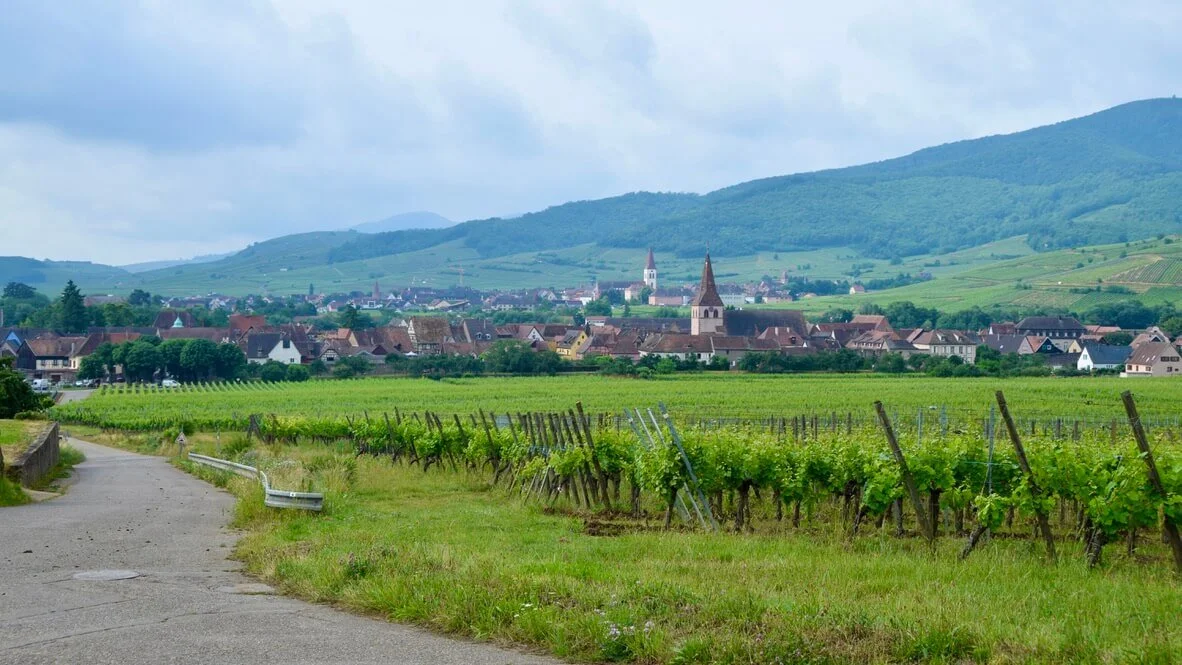
Alsace villages and vineyards
Photo source: Winekeller
Our personal wine travel experiences in Alsace (see our wine travel blog):
The Alsace wine region: an introduction
The historical region of Alsace is located in north-east France, bordering Germany and Switzerland and its capital city is Strasbourg. Alsace is separated from Germany by the river Rhine and from the rest of France by the Vosges Mountains.
For much of its existence Alsace has been the western German region ‘Elsass’, but it has alternated between German and French control over the centuries. Following the First World War, Alsace returned to France, but was occupied in the Second World War.
What language is spoken in Alsace?
Alsace is almost a ‘hybrid’ region today, reflecting both a Saxon and Latin culture and in terms of language, both French and German are spoken. However many families speak ‘Alsacien’, a dialect particular to the region, which is quite different from either French or German.
Alsace is particularly known for its ruined castles and fortresses and its beautiful villages, laid out along the hilltops of the lower Vosges, with their traditional half-timbered houses and fortifications, seemingly untouched since the Middle Ages.
The Alsace wine region has a long wine history and is very much ‘terroir-driven’.
It produces some unique, mostly white wines, which are named by the grape variety, as is also the case in Germany (but not in the rest of France). Alsace still wines are produced in distinctive, tall bottles called ‘flutes’, a tradition since the 16th century, a boom time for Alsace wine, when the bottle shape was designed to transport it more easily by river.
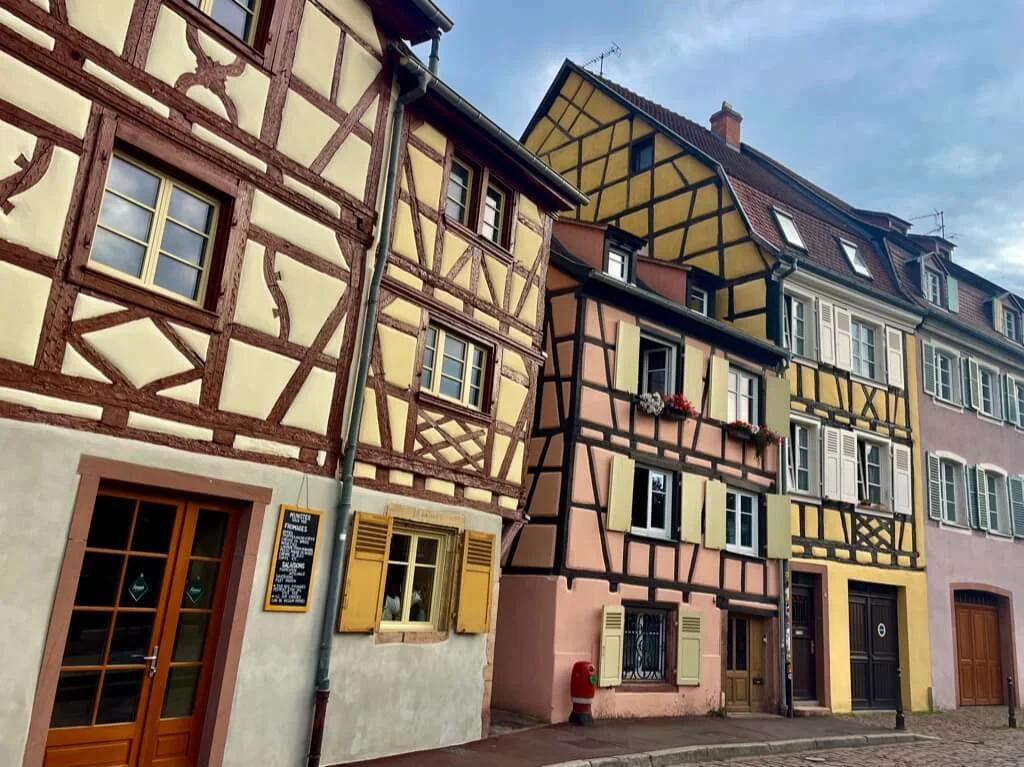
The famous half-timbered houses of Alsace
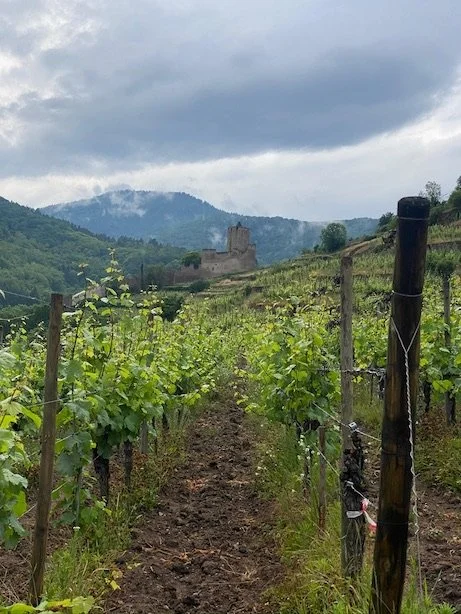
The medieval fortress of Kaysersberg

Traditional Alsace wine bottle
Discover Alsace
Watch our video to discover the beauty of Alsace - its medieval towns and villages and its stunning landscapes…
Alsace wines
Alsace focuses primarily on ‘varietal’ wines and about 90% of production is white wine. The huge variety of soils and terroirs in Alsace (see below), ensures a broad range of wine styles, from those with more body and weight to those with more minerality, elegance and finesse.
The AOCs comprise: AOC Alsace, AOC Grands Crus, AOC Crémant d’Alsace
Is Alsace wine sweet or dry?
Similar to German white wines, Alsace wines are mainly about fruit rather than oak and traditionally are dry, aromatic and robust, matching well with the rich, heavy food (see later). However in more recent years producers have experimented with different levels of sweetness, using the long Autumn ripening season to produce some beautiful ‘late harvest’ wines (known as ‘Vendange Tardive’ and ‘Sélection de Grains Nobles’ wines).
Alsace wines can therefore be grouped into ‘fresh and dry whites’, ‘powerful and intense whites’, ‘sweet and dessert whites’, ‘Alsace reds’ and ‘sparkling’.
What wine is Alsace famous for?
Alsace is probably most known and famous for its dry Rieslings, its aromatic Gewurztraminers and Pinot Gris wines and its sparkling Crémant d’Alsace wines, made by the traditional method.
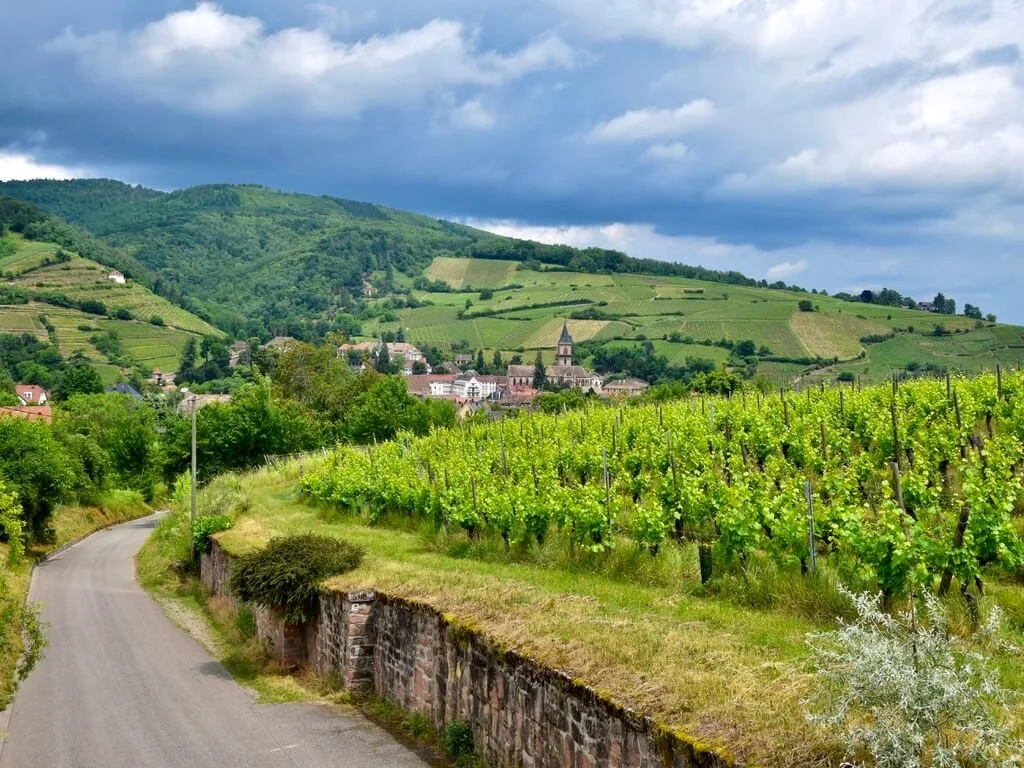
The hillside vineyards

Discover the Alsace wine route

Riesling - the 'King' of Alsace grapes
Alsace grape varieties
In the 1960s and 1970s many of Alsace’s top vineyards were replanted and today the region grows the following gape varieties:
Riesling - the ‘King of Alsace grapes’, constituting some 20% of grapes planted, mostly presented in a bone-dry style;
Gewurztraminer - almost as widely planted as Riesling and the best introduction to the aromatic wines of Alsace - a distinctive aroma and flavour, floral and spicy, with hints of lychee and grapefruit;
Pinot Gris - full-bodied, lightly spicy and very versatile;
Muscat - usually a blend of Muscat Blanc and Muscat Ottonel - dry and grapey aroma, often enjoyed as an aperitif;
Pinot Blanc - often used in blends and the common base for sparkling Crémant d’Alsace, made by the traditional method, and
Sylvaner - more challenging to grow here, a slightly bitter, slightly perfumed flavour, with very firm acidity.
Other varieties grown less widely include Chasselas, Chardonnay, Auxerrois and Pinot Noir.
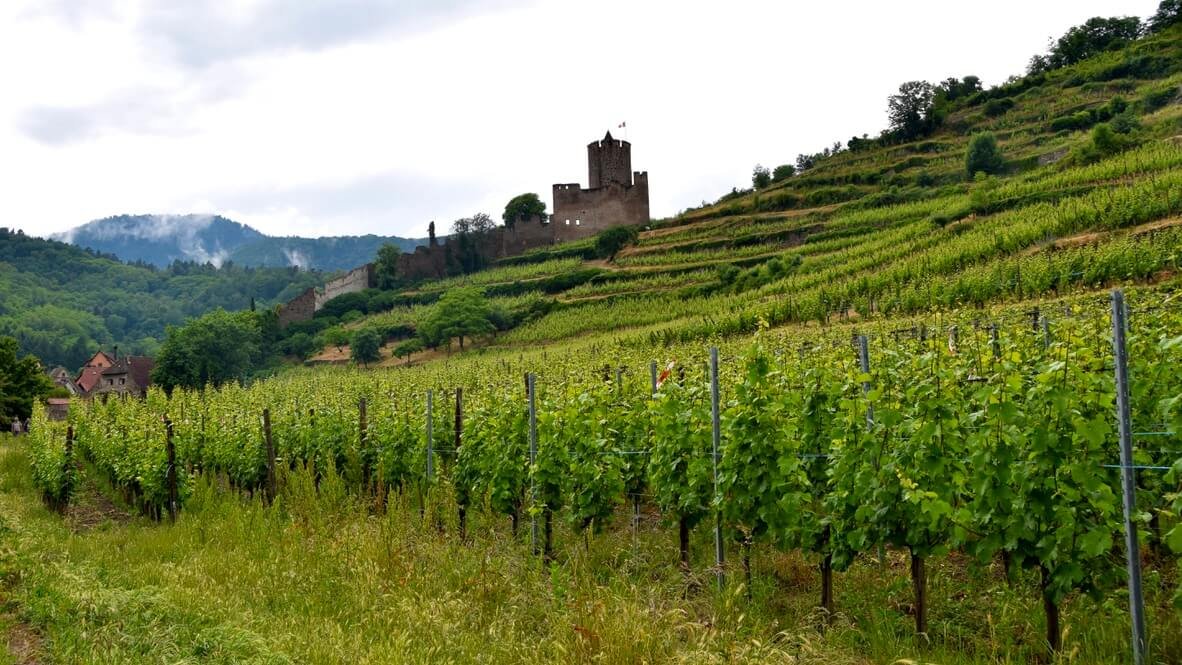
The Schlossberg Grand Cru vineyard at Kaysersberg
Source: Winekeller
Alsace vineyards
The Alsace vineyards stretch over a narrow strip of land running 60 miles along the eastern edge of the Vosges Mountains, spanning two départements, Bas-Rhin (Lower Rhine) on lower land to the north and Haut-Rhin (Upper Rhine) in the south. Most vineyards lie at an elevation of 175–550 m.
The Alsace wine region is often compared to the Côte d’Or in Burgundy in the way it stretches over the hillsides on a narrow strip of land, its variety of terroirs and its classified Grand Cru vineyards.
Alsace terroirs
The climate here, in the shadow of the Vosges mountains, is unusually dry with high levels of sunshine and relatively cooler nights. Drought can sometimes be a problem, but the grapes never struggle to ripen. The geology is complex with many different soil types - said to be the most complex of all of the French wine regions, with some 800 different terroirs (compared to 60 in Burgundy). Good wines come from granite, schist, sandstone, various limestones (including the fossil limestone, ‘Muschelkalk’) and marls, clay or volcanic soils.
Alsace Grand Cru vineyards
Most of the larger producers are based in the more southerly Haut-Rhin, which is generally associated with better quality and where the majority of the classified Grand Cru vineyards are located. The Alsace appellation was formalised in 1983 and today there are over 50 ‘Grand Cru’ vineyards, but the classification process is ongoing and subject to much debate!
Almost all of Alsace’s finest wines are grown in the Grands Crus and each has its own appellation, with specific rules applied regarding grape variety and permitted blends. Each Grand Cru wine thus reflects a unique and special pairing of terroir and grape variety.
Some wine producers however choos not to follow the laws of the Grand Cru system, believing their wines to speak for themselves.
Alsace wine producers
The modern Alsace wine industry was developed by farmers, many working land owned by their family since the Thirty Years War and today many remain family-owned. Famous Alsace names such as Hugel, Humbrecht, Trimbach and Beyer reflect this.
There are more than 4,000 grape growers and one quarter of these bottle wine. Alsace produced France’s first co-operative cellar in 1895 and today some of the region’s co-operatives rank amongst the top wine producers.
Discover more about Alsace wine producers and Alsace wines.
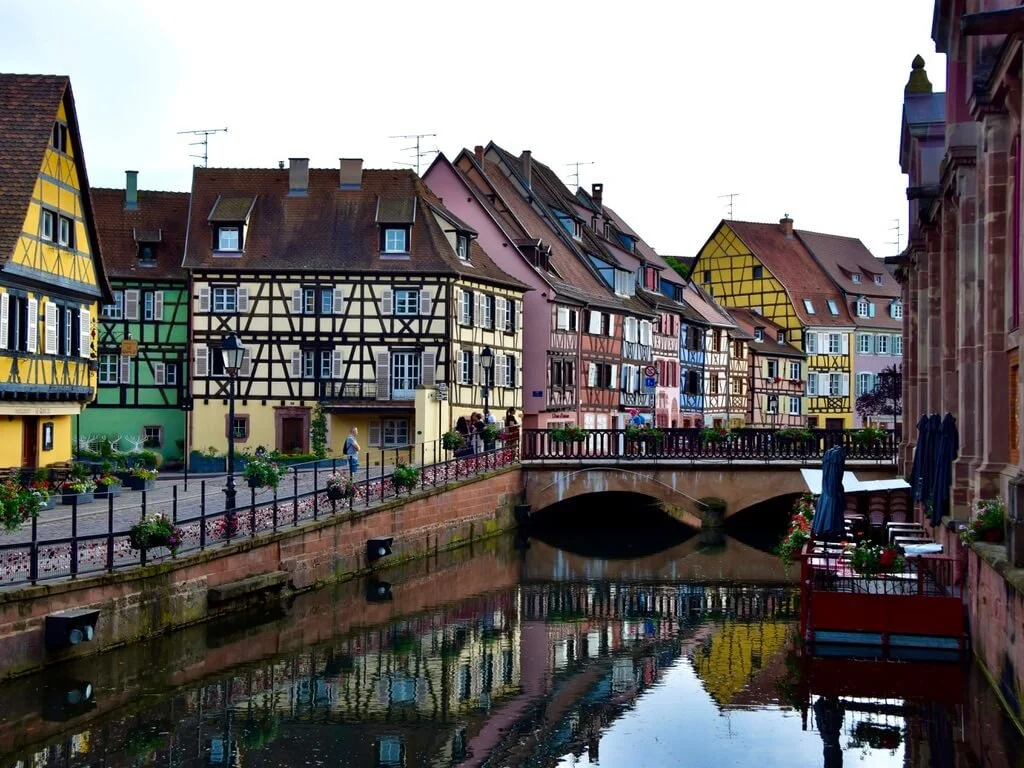
Beautiful Colmar
Source: Winekeller
Alsace wine region - Travel guide and useful information
The fascinating region of Alsace in France is a unique travel destination in Europe. With its impressive fusion of French and Germanic cultures, Alsace is known for its history, wine and architecture and in our view it’s really worth exploring!
Getting to Alsace
Alsace has two international airports - Strasbourg and Basel-Mulhouse, as well as strong rail links and sharing borders with Germany and Switzerland it’s easy to get to by car. See here for detailed information about getting to Alsace.
Cities in Alsace
Strasbourg
The capital of Alsace is the beautiful European city of Strasbourg - one of the many fine cities of France; its historic centre, with its magnificent gothic cathedral, is among the most visited in France, and the Petit France quarter, on the banks of the river Ill, is particularly worth a visit. Strasbourg attracts a large number of international visitors, being the one of the two seats of the European parliament.
Mulhouse
The biggest city in the Haut Rhin/Upper Rhine départment is Mulhouse - a major manufacturing centre (known as the French Manchester!), but with the French national railway museum and the Cité de l'Automobile, an impressive car museum with the world's largest collection of Bugattis, and also the large Ecomusée d'Alsace open-air museum, this part of southern Alsace has plenty to offer the tourist.
Colmar
The medieval city of Colmar lies at the heart of the Alsace wine region and is the best preserved historic city centre in the region, with its half timbered houses, romantic canals, cobble-stone lanes and flower-laden window sills. It also provides an excellent base for exploring the Alsace wine region and the Alsace wine route. Explore picturesque Little Venice, the Quai de la Poissonnerie (Fishmonger’s district) and its superb covered market, where you can purchase the local delicacies.
The Alsace wine route and beautiful Alsace wine villages
The key reason we recommend you visit Alsace is of course to experience the wine region and there’s no better way of doing this than to explore the Alsace Wine Route - one of France’s most emblematic routes - a 170-km-long wine route passing through a string of picturesque villages, well-known wine-producing towns and exceptional landscapes.
The Alsace Wine Route is made up of five key stages: Northern Alsace; the Strasbourg vineyards; Central Alsace; the Colmar vineyards and villages; and finally, Southern Alsace. Visit the wineries, discover the wines and enjoy discovering some of the most beautiful, authentic villages you will ever visit!
What are the four wonders of Alsace?
You can’t visit Alsace without seeing its ‘four wonders’ - four postcard-perfect medieval villages: Eguisheim, Kayserberg, Ribeauvillé, and Riquewihr.
Alsace Christmas markets
From the end of November to early January, experience the Christmas season in Alsace, where its cities and villages are decorated with thousands of lights and you can wander around the wonderful craft markets.
The annual Strasbourg Christmas Market is the highlight of the city's year, held around the cathedral, an event that attracts visitors from all over France and neighbouring countries - and the Colmar Christmas Market is also world-famous. Check out these recommendations too. There’s no doubt that Alsace is a special place to be to celebrate the Christmas festive season.
Doe more information about visiting Alsace see ‘Visit.Alsace’ and ‘Alsace Wine Route’.
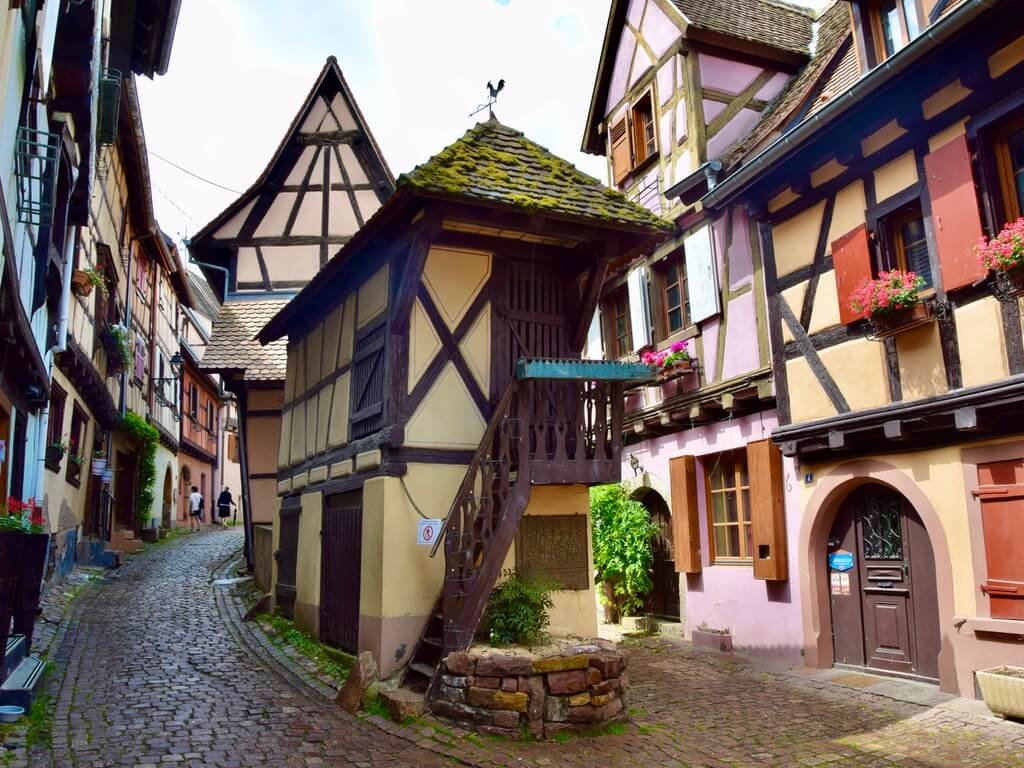
Eguisheim village
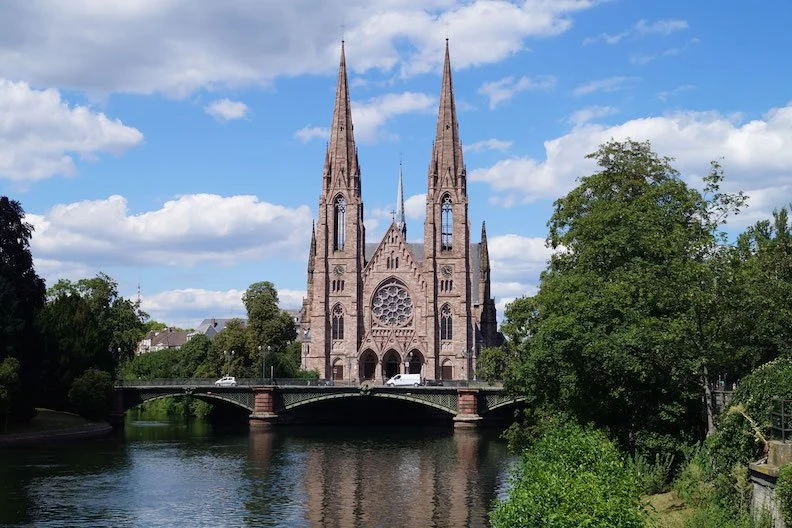
Strasbourg Cathedral
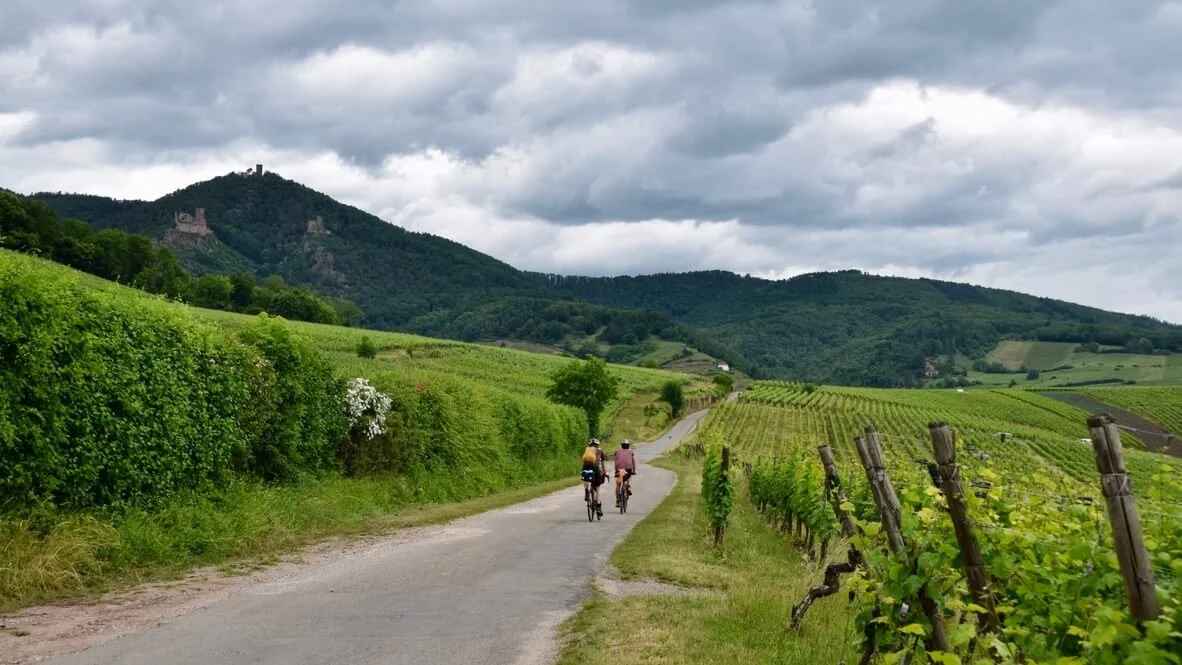
Cycling the Alsace wine route
Alsace food
Gastronomy is a well-established tradition in Alsace. The cuisine tends to be rustic, hearty and tasty and reflects both German and French influences. To appreciate the traditional, regional cuisine head to a ‘winstub’ (derived from the German name ‘Weinstube’ - a wine tavern).
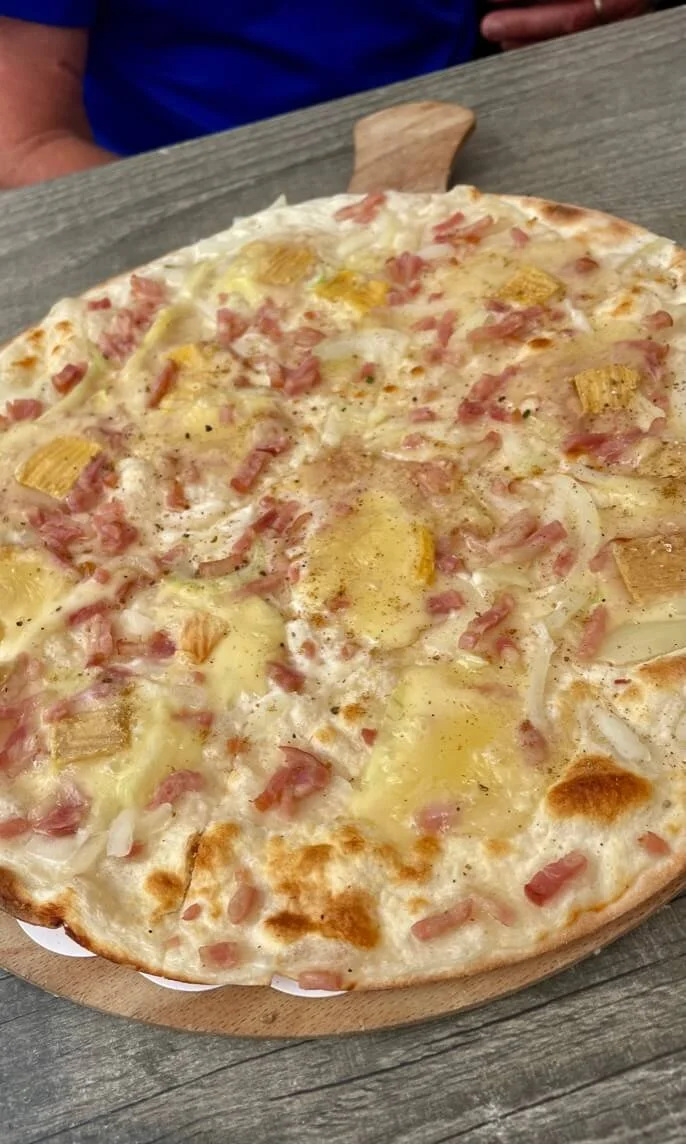
The most iconic dish is ‘FlammeKueche’, also called Tarte Flambée, which is a very thin crust pizza, covered in a thin layer of crème fraiche and topped with traditionally onion and bacon but lots of other savoury toppings - great for a snack or a more substantial meal.
Alsatian ‘Choucroute Garnie’ is a popular hot dish in the wintertime. It’s mainly made up of meats like Alsatian sausage, Polish sausage and ham and is accompanied by sauerkraut (sour cabbage) and boiled potatoes, all on the same plate.
Baeckeoffe is another comfort food - a hot casserole dish made with potatoes, onions, and a variety of meats, like beef and pork. All the ingredients marinate overnight and are slowly cooked, giving them a strong flavour.
Spaetzle is a popular Alsatian dish, a warm pasta dish, although sometimes it is more like a dumpling, usually made with just eggs, salt, and flour. It is commonly served with meat and a sauce or gravy on top.
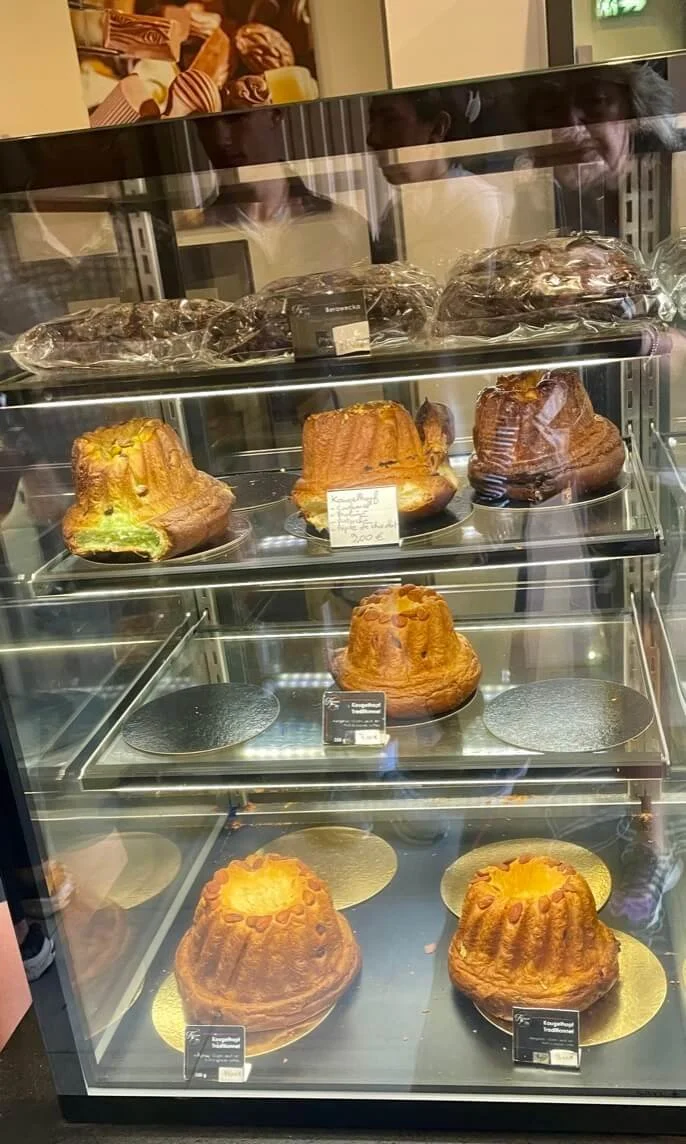
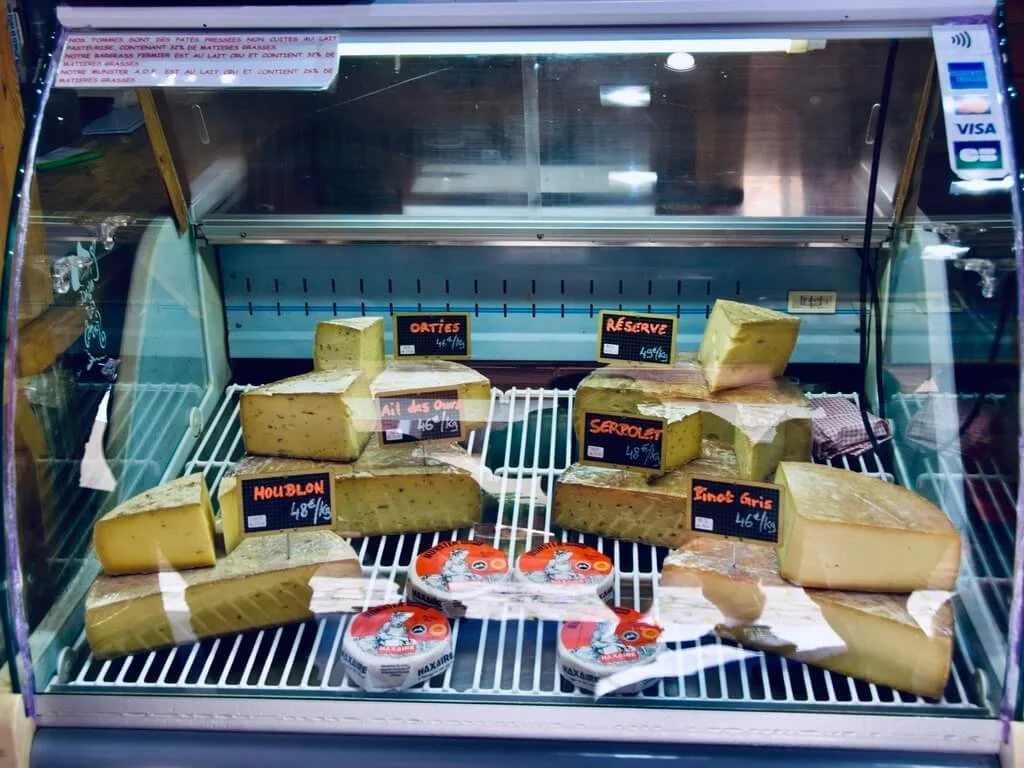
A very common snack in Alsace is a ‘bretzel’ (pretzel) and the most famous regional cheese is ‘Munster’ cheese, served mild and mellow, or sharp, with lots of character. The ‘Kougelhopf’ is a unique sweet or savoury speciality, somewhere between a cake and a bread, baked in special moulds and served at just about any meal in Alsace, at any time of day!
Check out more Alsace specialities here.
We visit what is arguably the prettiest town in the Alsace wine region and one of the four wonders of Alsace, the medieval village of Éguisheim. We also explore one of the most popular cities of Alsace, beautiful Colmar…