Discovering some of the best Alsace wine producers
A wine bike tour along the Alsace wine route, through its famous vineyards and picturesque medieval villages
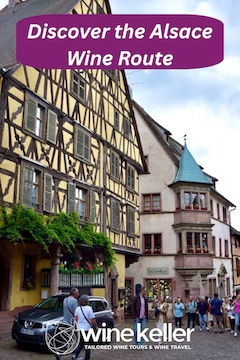
Cycling the Alsace Wine Route - Source: Winekeller
We had the opportunity recently to fulfill a dream - to explore the world-famous Alsace Wine Route - one of France’s most emblematic routes - a 170-km-long wine route passing through a string of picturesque villages, well-known wine-producing towns and exceptional landscapes.
We based ourselves in the medieval city of Colmar, the wine capital of the Alsace wine region, with its spectacularly well-preserved historic city centre. We decided to experience one full day cycling what is perhaps the most famous part of the Alsace Wine Route, around Colmar, incorporating what are affectionately known as ‘the four wonders of Alsace’, referring to four postcard-perfect medieval villages (see later). This section of the Alsace Wine Route also happens to be home to several of the best Alsace wine producers - and of course we set out to visit them too!
Keep reading to see how we got on with such a packed day’s itinerary!
The Alsace Wine Route and Alsace Vineyard Cycle Route
The Alsace Wine Route is made up of five key stages: Northern Alsace; the Strasbourg vineyards; Central Alsace; the Colmar vineyards and villages; and finally, Southern Alsace. For this particular trip we wanted to explore the spectacular villages and vineyards around the medieval city of Colmar.
We decided that the best way to explore this section of the Alsace Wine Route - to enable us to fit as much into one day as possible and to best experience this wonderful wine region - was to do it by ebike. You will know by now that we love exploring wine regions by bike and we planned our day by referring to the Alsace Vineyard Cycle Route and with the help and advice of a very friendly and helpful bike hire shop - ‘Alsa Cyclo Tours’.
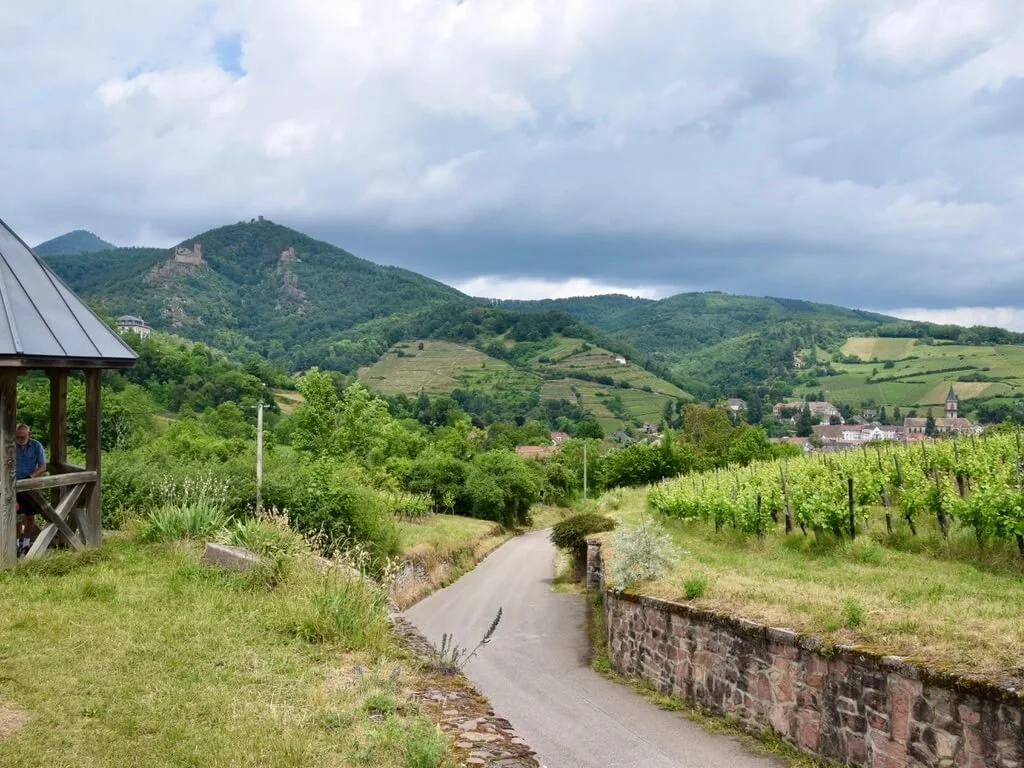
The Alsace Vineyard Cycle Route runs alongside the Alsace Wine Route through 131.5 km of picture-postcard scenery, along former railway lines, portions of the old Roman Road and numerous peaceful country lanes, winding through spectacular vineyard landscapes and historic, medieval villages which you just have to stop in and explore!
Beautiful Riquewihr village, Alsace - Source: Winekeller
What are the four wonders of Alsace?
The Colmar section of the Alsace Wine Route is probably the most famous of all, because of the four incredibly preserved and picture-postcard villages that surround it, namely: Eguisheim, Kayserberg, Riquewihr and Ribeauvillé. A question often asked is ‘What is the prettiest town in Alsace?’ These four villages are certainly all contenders for that accolade!
During this trip we decided to focus on the three villages of Kayserberg, Riquewihr and Ribeauvillé, leaving the discovery of Eguisheim to another day (ranked as "One of the Most Beautiful Villages in France" since 2003).
Our Alsace cycle route
We decided to drive north from Colmar to Kaysersberg - just a 30 minutes drive - and collect our ebikes from ‘Alsa Cyclo Tours’, which is conveniently located at the foot of beautiful Kaysersberg Castle and directly on the cycle path.
Collecting our bikes from Alsa Cyclo Tours in Kaysersberg
We planned to cycle from Kaysersberg, through the vineyards to the village of Riquewihr, then on to Ribeauvillé, where we would turn around and retrace our path back to Kaysersberg.
The whole round trip was approximately 30km and took us the whole day, getting back in time to return the ebikes before 6pm and pick up our car to return to Colmar.
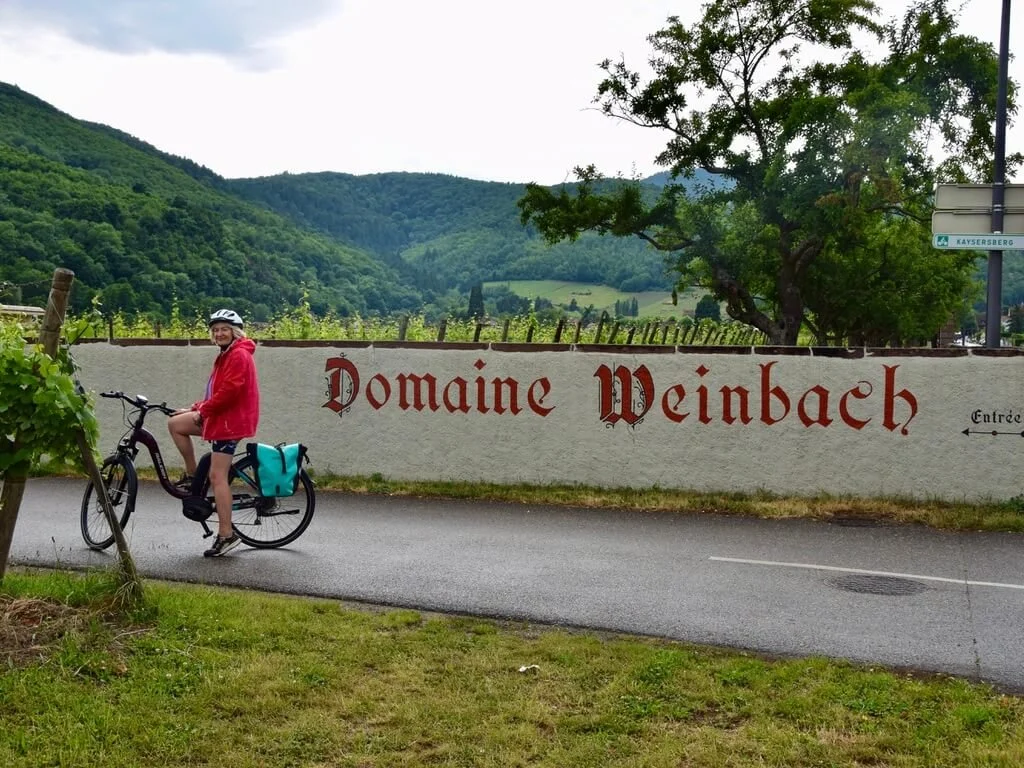
As well as exploring these beautiful, famous Alsace villages, the plan was to fit in three separate wine tastings at three of the top and best Alsace wine producers, Famille Hugel in Riquewihr, Maison Trimbach in Ribeauvillé and Domaine Weinbach in Kaysersberg.
Part 1 - Kaysersberg to Riquewihr
The beautiful Alsace village of Kaysersberg and Kaysersberg Castle - Source: Winekeller
Kayserberg is located just 10km from Colmar. It provides a great starting point for either cycling or walking through the Alsace vineyards, but take the time to soak up the atmosphere of this pretty Alsace village, with its unique heritage. Stroll the little streets, with its traditional, colourful half-timbered houses and make sure you visit its famous fortified bridge and above the town standing in the vineyards, the ruins of Kaysersberg Castle. All that remains of the castle today is part of the perimeter wall and the main tower, however you can climb its spiral stairway to enjoy spectacular views across the rooftops to the surrounding countryside.
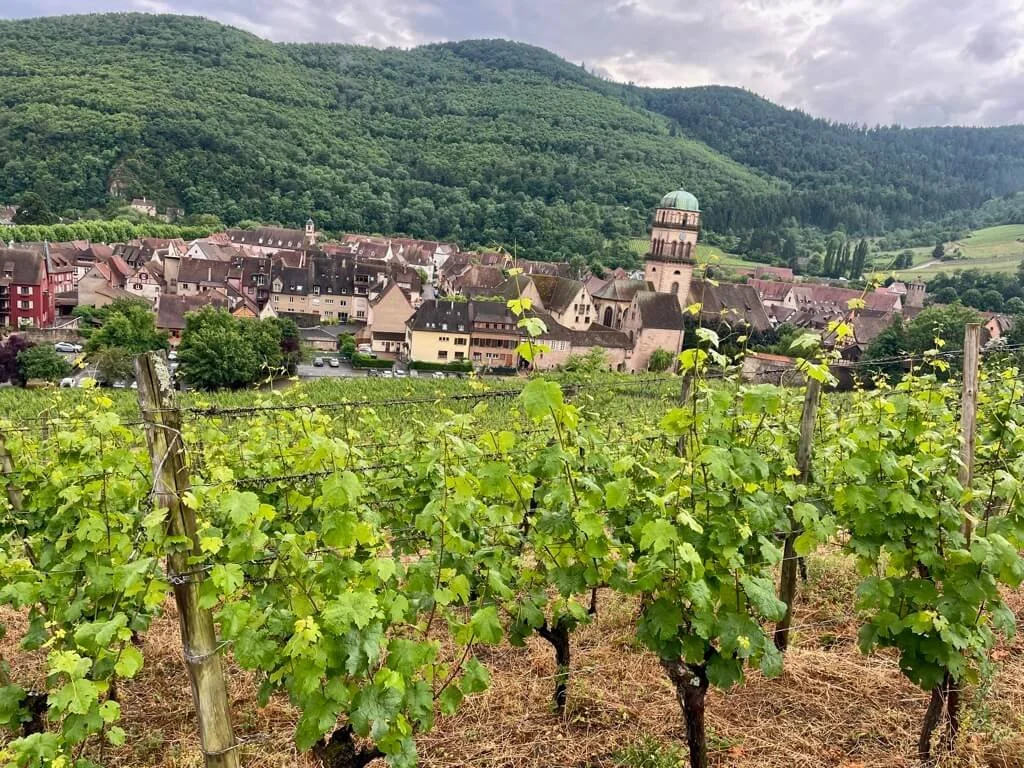
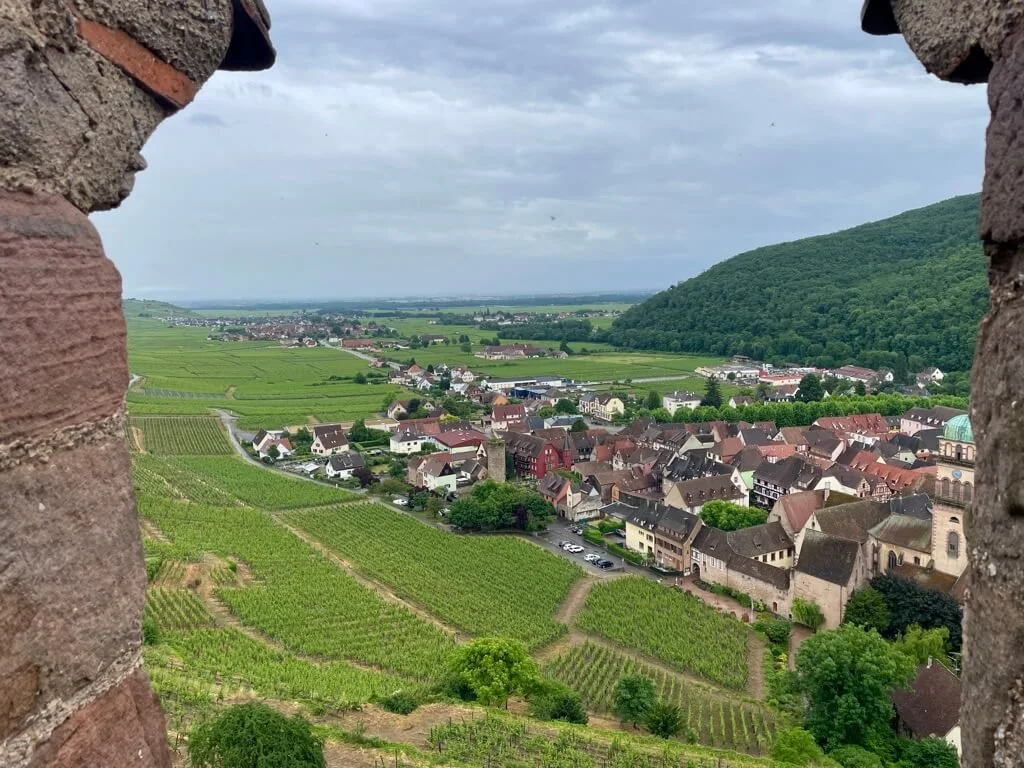
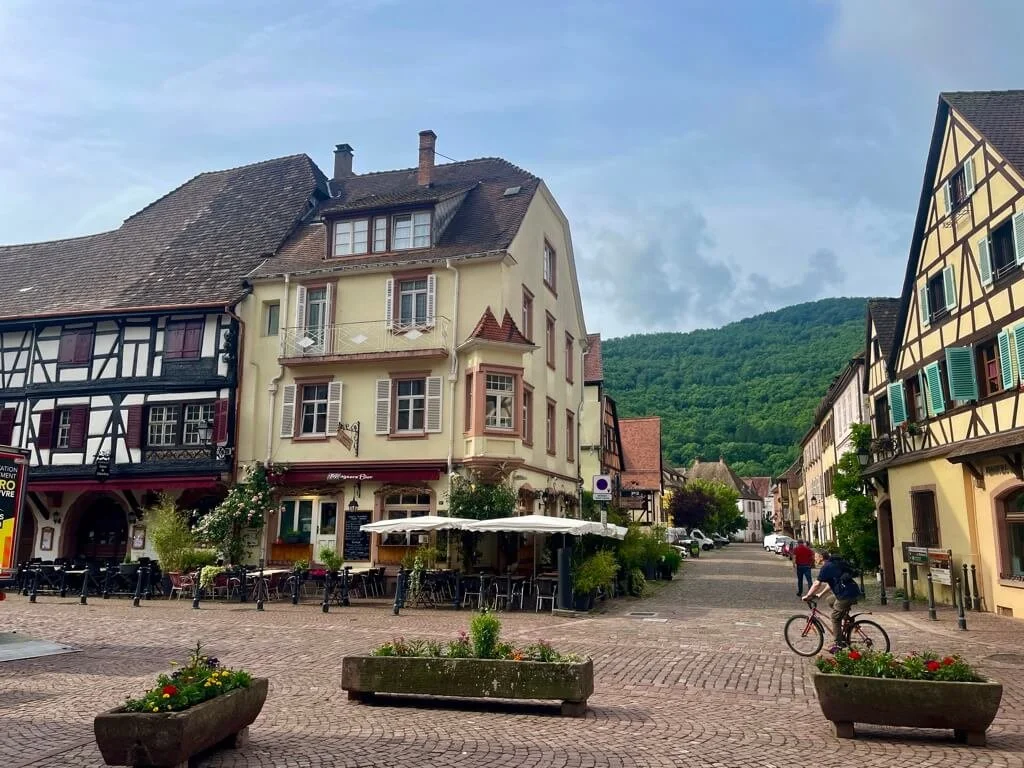
As you join the cycle path towards Riquewihr just below the castle, you start riding through the famous Alsace Grand Cru ‘Schlossberg’ vineyard - the oldest and largest of the 51 Alsace Grands Crus (see later for our wine tasting at Domaine Weinbach in Kaysersberg).
We enjoyed a wonderful cycle ride through the vineyards, with some gentle slopes, passing through the small village of Kientzheim and on to Riquewihr. In fact the three villages of Kaysersberg, Kientzheim, and Sigolsheim were joined under a single name in 2016 to form ‘Kaysersberg-Vignoble’.
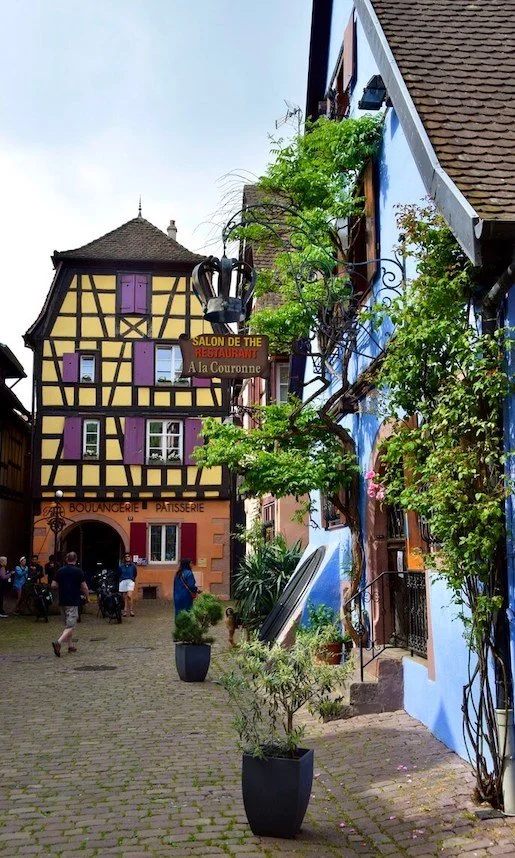
On arriving in the beautiful village of Riquewihr, we parked our bikes up, grabbed a snack from the most brilliant ‘boulangerie’ and then proceeded to have a look around before heading to our first wine tasting appointment.
Arriving in the lovely Alsace village of Riquewihr - Source: Winekeller
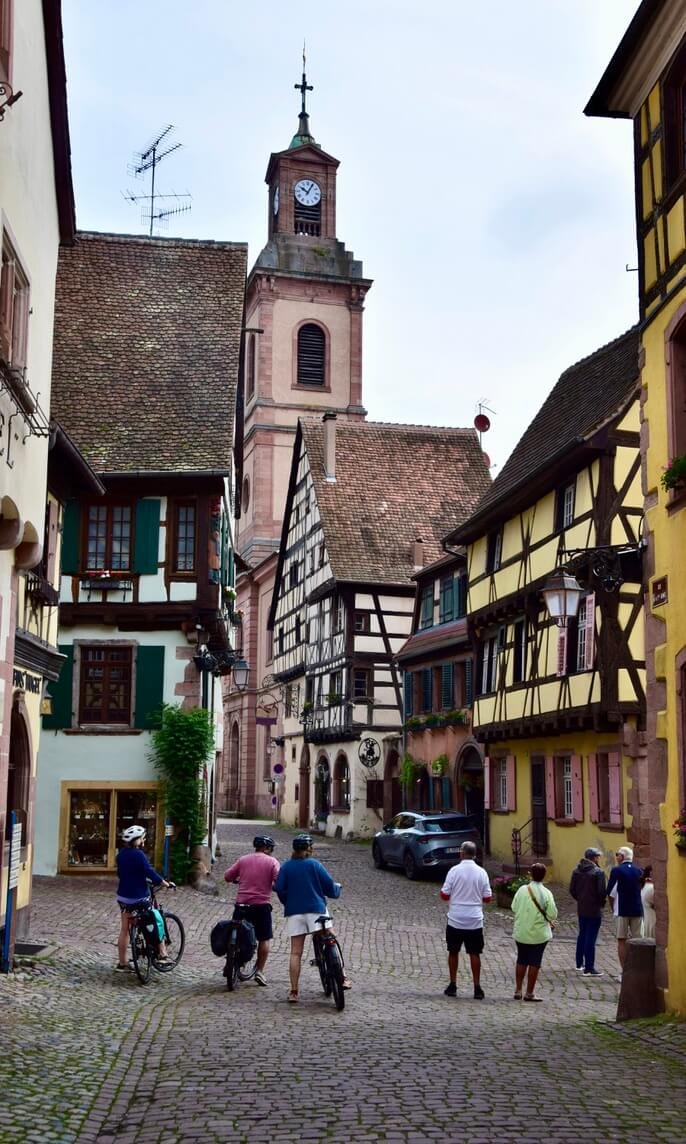
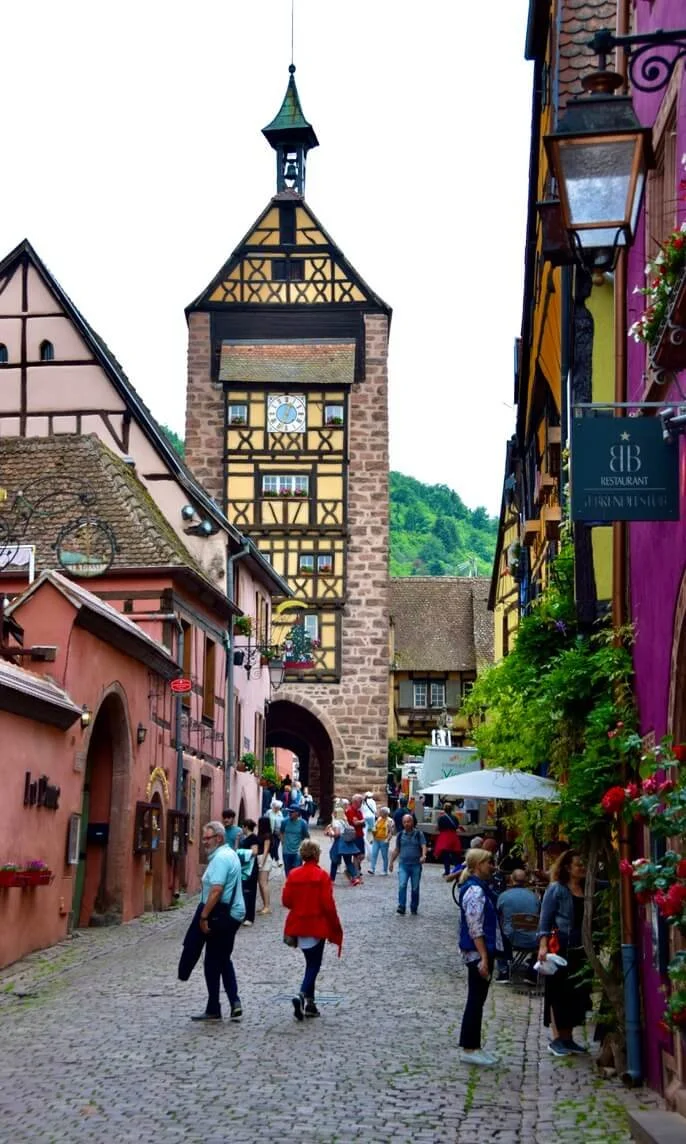
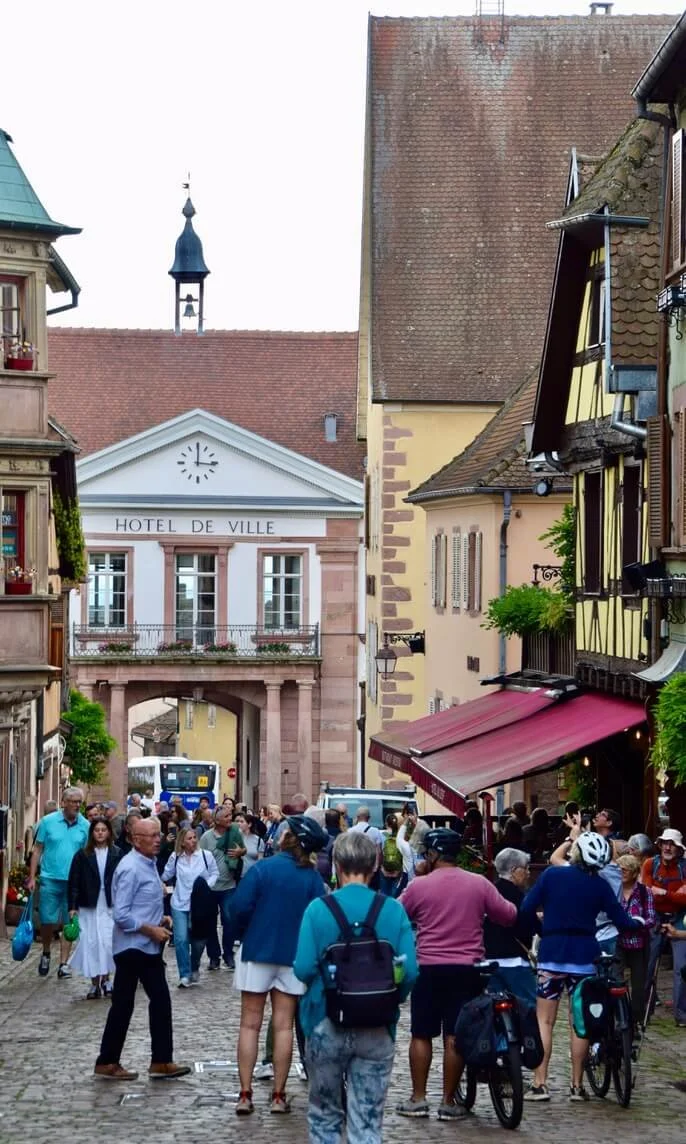
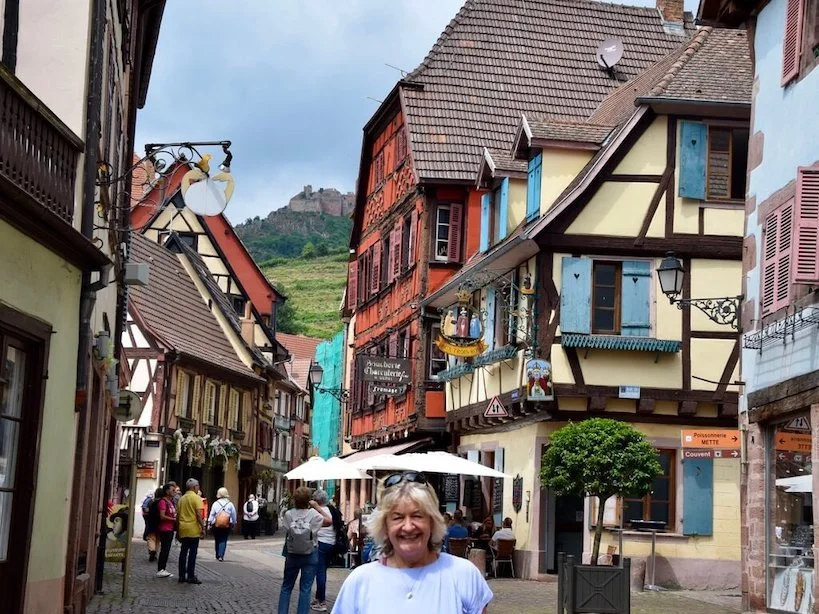
Riquewihr is known for its incredibly picturesque, fairy-tale atmosphere and well-preserved medieval architecture, making it feel like a living museum, however it can get very crowded, so pick your time when you visit!
Known as the “little pearl of Alsace”, Riquewihr is an outstanding example of a medieval town, surrounded by a double set of town walls dating from the 13th century. The village is dominated by the ‘Dolder’ watch tower, which serves as the town emblem.
Things to do in Riquewihr
Stroll down the main street as well as the smaller side streets, there are lots of lovely shops and places to eat and drink and the traditional medieval buildings, untouched by war, are beautiful. Of course take the time to visit one of the numerous Riquewihr wineries in the village, some of which can trace their line back for many generations.
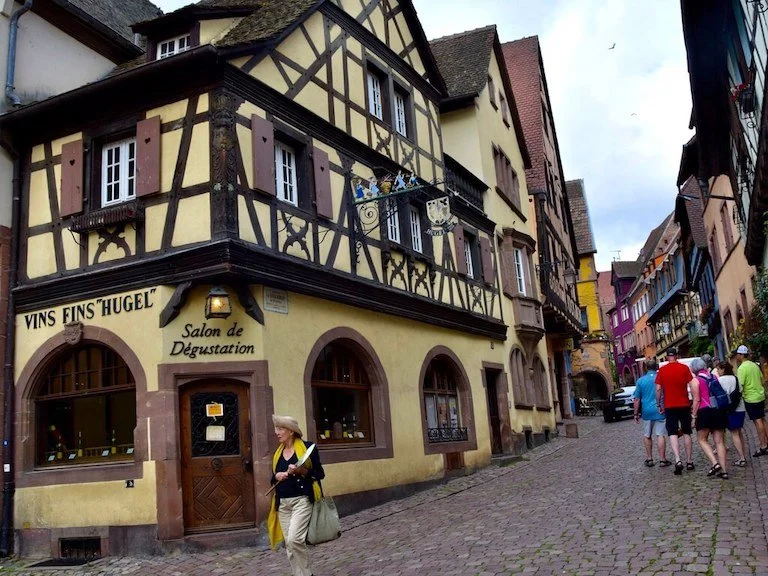
Famille Hugel wine tasting
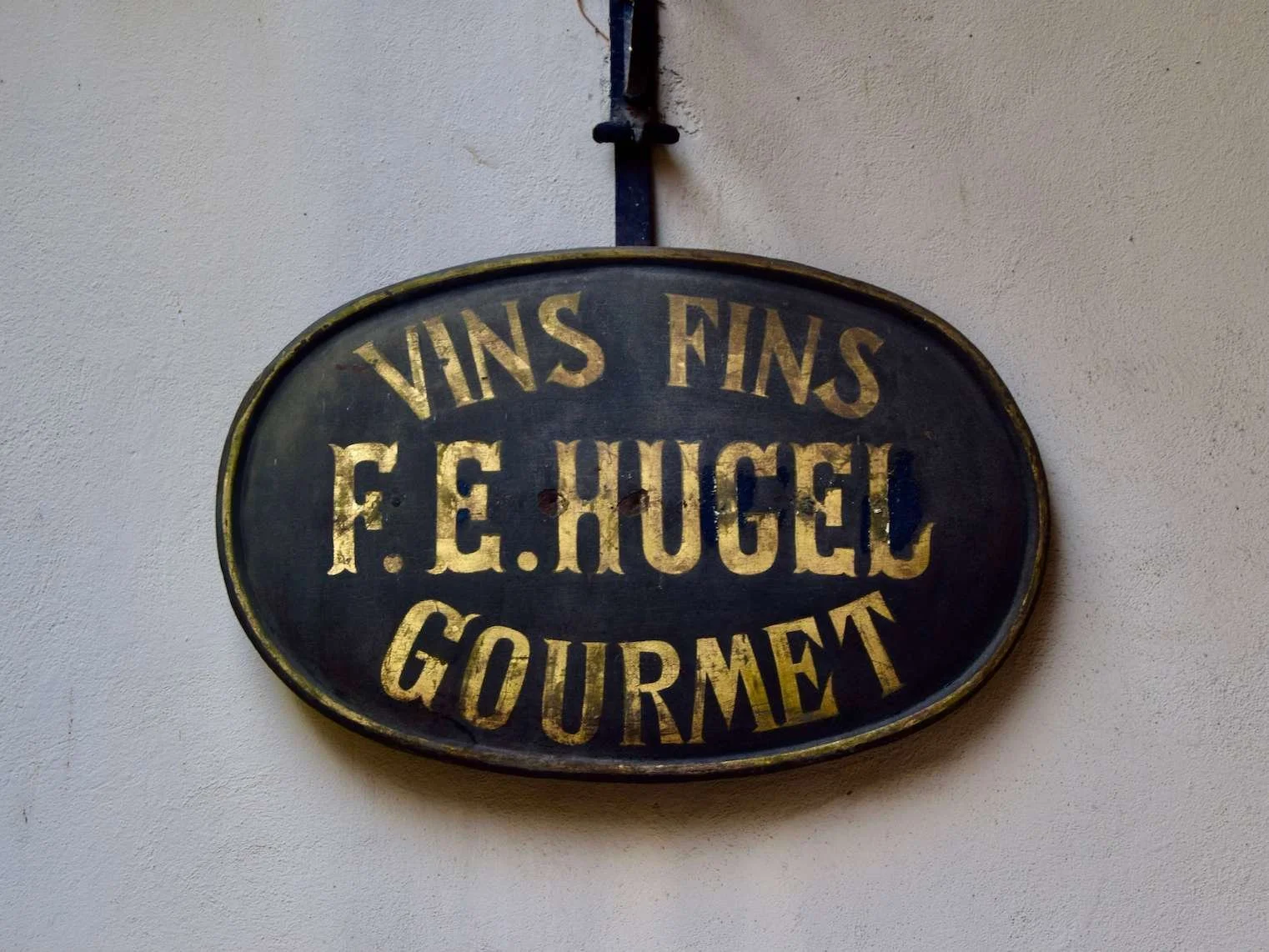
Famille Hugel is an Alsace institution - a top and highly reputable Alsace winery, located right in the heart of the Riquewihr. For many around the world, Hugel wine is Alsace wine.
Famille Hugel is a wonderful example of family-owned, traditional Alsace winery, with a history spanning 13 generations. The winery was built in 1639 and land was first purchased by the family after the Plague and the 30 Years War. The oldest bottle of Hugel wine dates back to 1835.
Today Famille Hugel farms some 30 hectares of mainly classified Grand Cru vineyard sites and produces about 800,000 bottles per year, of which about 90% is exported to 90+ countries around the world. In addition to using its own grapes to make wine, it also buys grapes from long-standing partner vineyards.
Hugel wines, with their distinctive yellow labels, express the pure varietal character of Gewurztraminer, Riesling, Pinot Gris, Muscat and Pinot Blanc. Famille Hugel is also known for its late-harvest Alsace wines and its range of Grand Cru wines, which are aged in large oak casks. It is particularly known for its ‘Schoenenbourg’ Grands Crus wines - one of the most famous of the Alsace Grands Crus.
We commenced our Hugel wine tasting with the Gentil 2024, a great introduction to the Alsace wine region - a blend of Alsace grapes including Pinot Gris, Riesling, Gewurztraminer, Muscat, Pinot Blanc and Sylvaner. It was deliciously fruity and fresh, with great acidity.
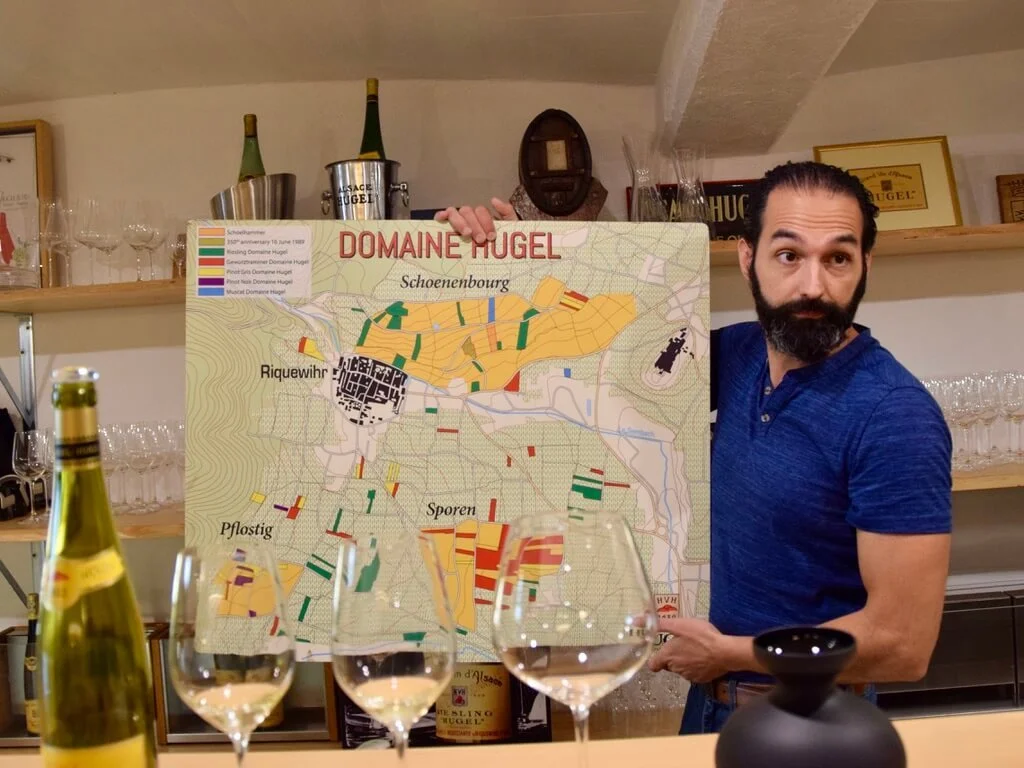
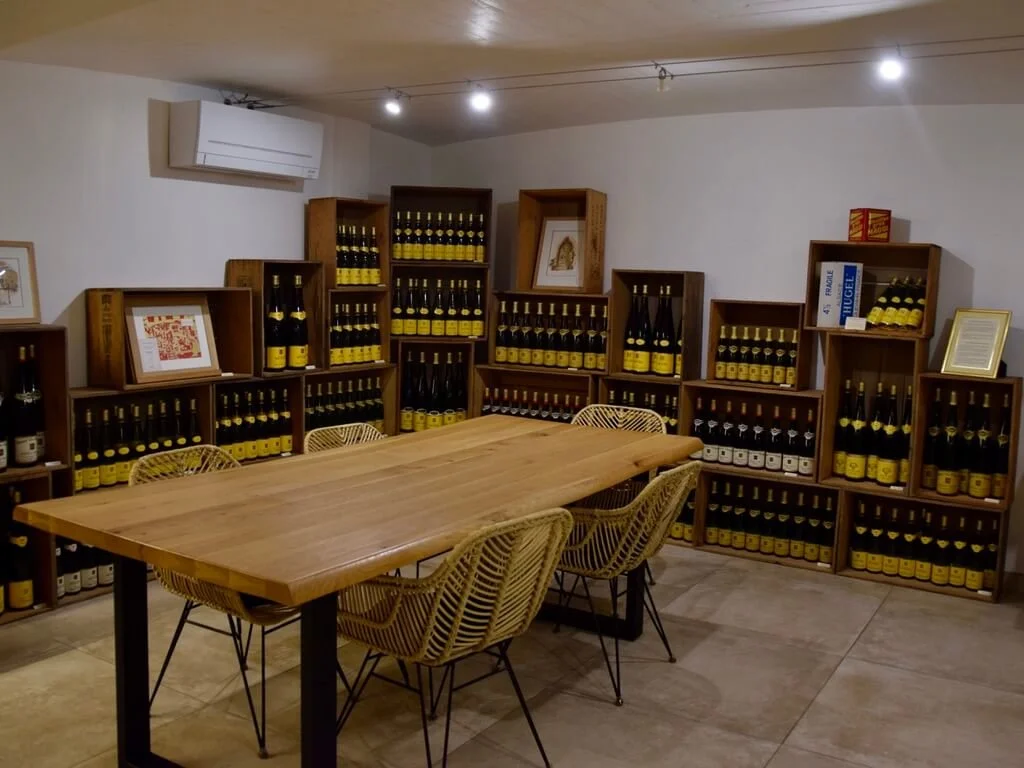
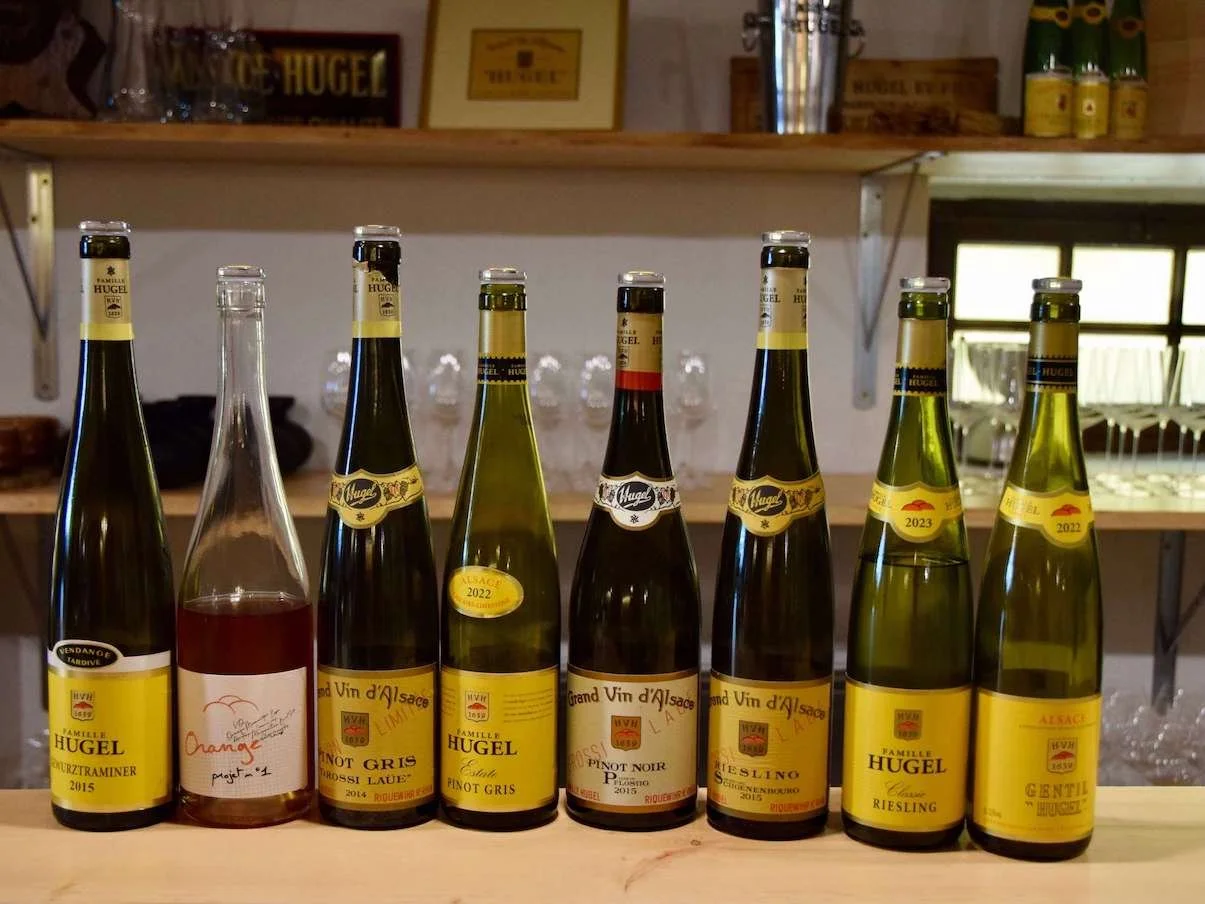
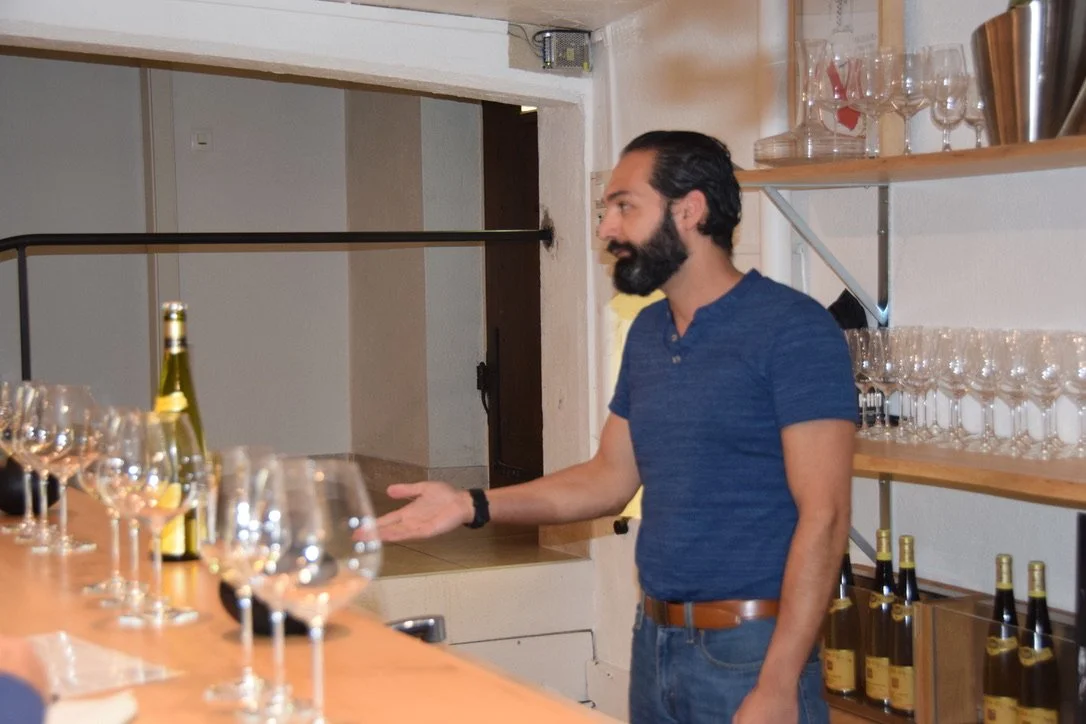
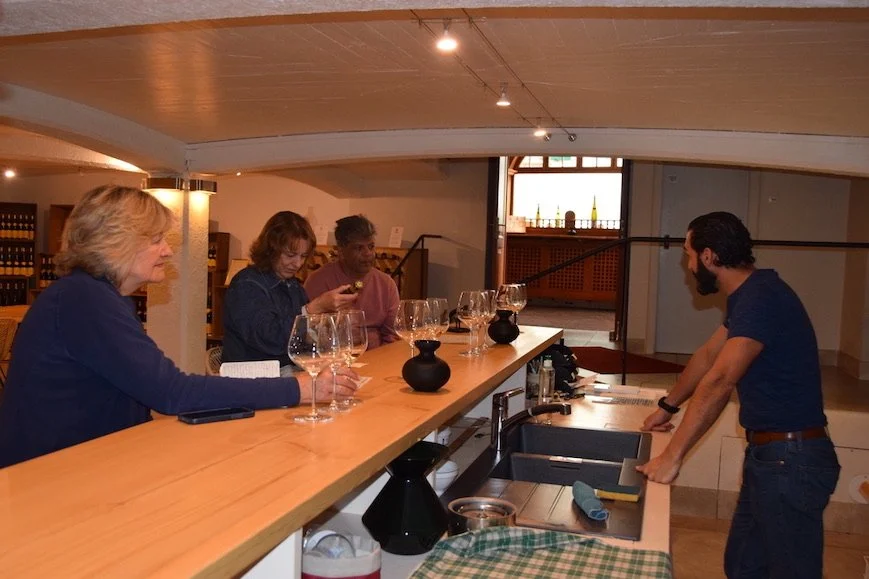
We then went on to taste a Hugel Riesling from the ‘Classic’ range and to compare and contrast, the Riesling Grand Cru 2015 from the famous Schoenenbourg vineyard - the latter was rich and smoky compared to the classic Riesling. We repeated this comparison exercise with the Pinot Gris Estate 2022 and the Pinot Gris Grand Cru 2015 - which was a ‘big’ wine at 14.5% alcohol and would be great with food.
We then enjoyed a lovely Pinot Noir, an ‘experimental’ Gewurztraminer Orange wine and finally an amazing late harvest ‘Vendanges Tardives’ wine, Gewurztraminer 2015, which was incredibly concentrated and sweet and would pair really well with something like foie gras.
What an amazing tasting in Famille Hugel’s lovely tasting room and wine shop in the centre of the beautiful village of Riquewihr!
Part 2 Riquewihr to Ribeauvillé
Following our superb wine tasting at Famille Hugel we got on our bikes again, rejoined the cycle path and headed in the direction of Ribeauvillé - a 4km cycle ride through the vineyards, passing through the small village of Hunawihr (there were a couple of very steep hills here - be warned!)
These two villages, Riquewihr and Ribeauvillé are among the most visited in Alsace and the most beautiful in France, so we looked forward to arriving in Ribeauvillé, where we also enjoyed ‘Flammkueche’ for lunch!
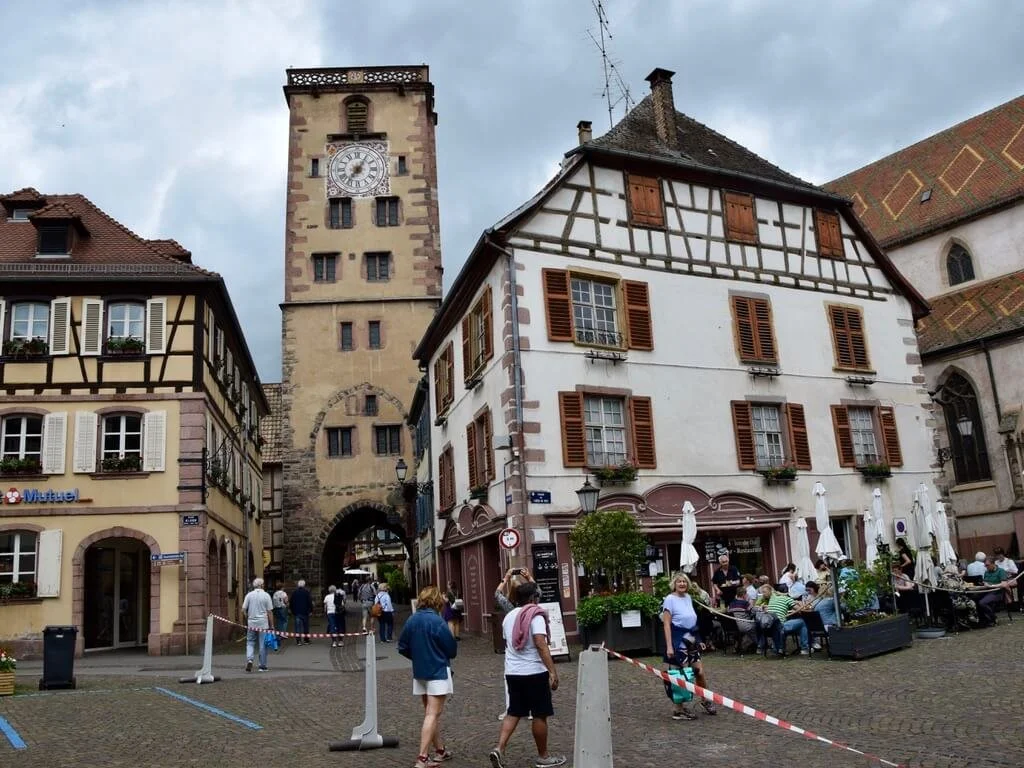
Ribeauvillé is one of the oldest medieval towns and villages in Alsace. Wander along its main street - ‘La Grande Rue’ and explore the many picturesque side streets lined with 15th to 18th century buildings and its Renaissance fountain-decorated squares. You can’t miss the ‘Tour des Bouchers’ (Butchers’ Tower), which dominates the town centre. Ribeauvillés history is very much linked with the Lords of Ribeaupierre and you can see the majestic ruins of the three Castles of the Lords of Ribeaupierre dominating the village and the surrounding hills.
Is Ribeauvillé worth visiting?
Ribeauvillé is a little less ‘touristy’ than Riquewihr and feels more ‘lived-in’ - there is a good selection of shops and restaurants here. There is of course a good selection of wineries to visit too. Ribeauvillé sits amongst many vineyards dating back to the Middle Ages and three Alsace Grands Crus, ‘Geisberg’, ‘Kirchberg de Ribeauvillé’ and ‘Osterberg’.
Maison Trimbach wine tasting
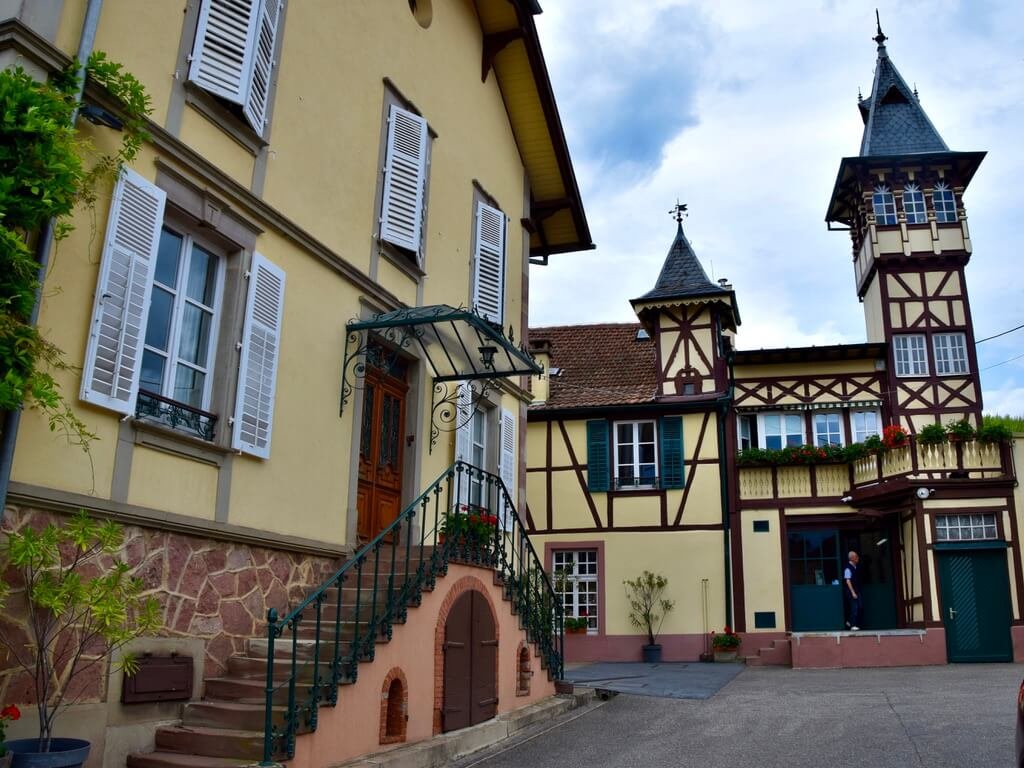
On the outskirts of Ribeauvillé you can find the world-famous Alsace wine producer, Maison Trimbach. Another 13th generation Alsace family wine estate, dating back to 1626.
Today Maison Trimbach farms some 60 hectares of vineyards - 70% of the vines are planted in the villages of Ribeauvillé, Bergheim and Hunawihr. Trimbach also buys grapes from partner wineries and all wines were certified organic in 2023.
Maison Trimbach is particularly known for its dry, precise, balanced Trimbach white wines. The majority of wines produced are Trimbach Riesling - approximately 60% of production - and it is known especially for its exceptional Clos Sainte Hune Riesling - made from grapes from a very special vineyard plot in the Grand Cru Rosacker in Hunawihr, which has belonged to the Trimbach family for over 200 years.
The Trimbach wine range also includes Gewurztraminer, Pinot Gris, Pinot Noir, Pinot Blanc, Sylvaner and Muscat.
Maison Trimbach is managed today by two brothers - one who looks after the commercial side of the business (Jean Trimbach) and the other who is the winemaker (Pierre Trimbach), who has been voted one of the best white winemakers in the world. Over 85% of production is exported to 60 countries and the top five export markets are the US, Japan, France, the UK and Scandinavia.
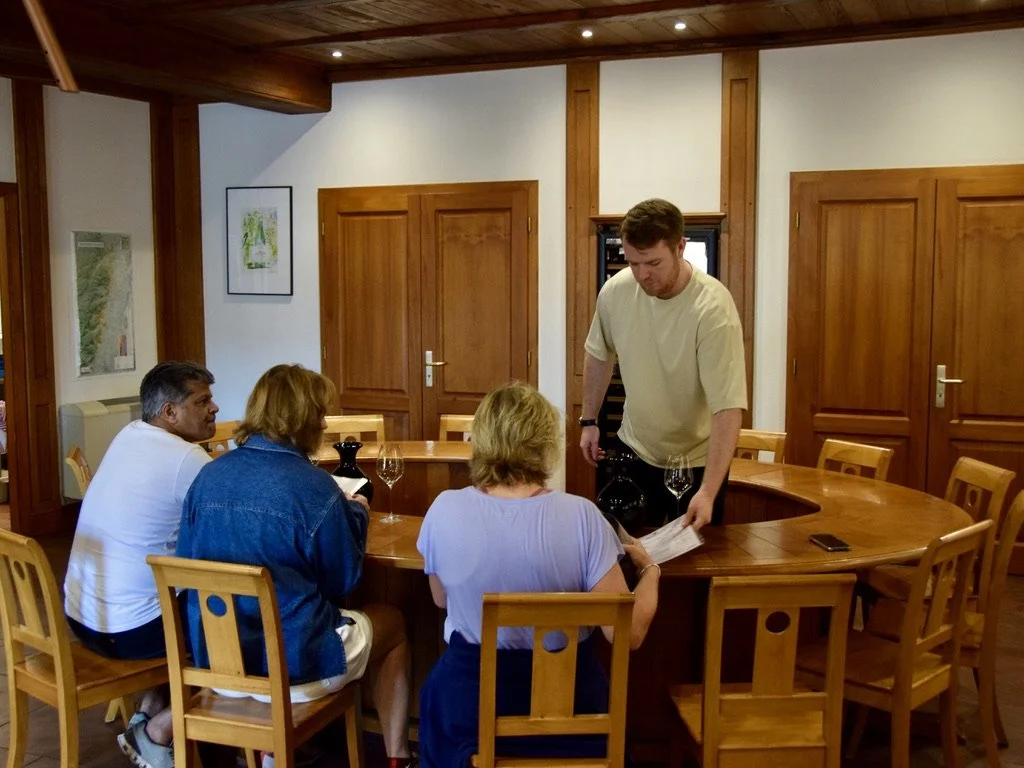
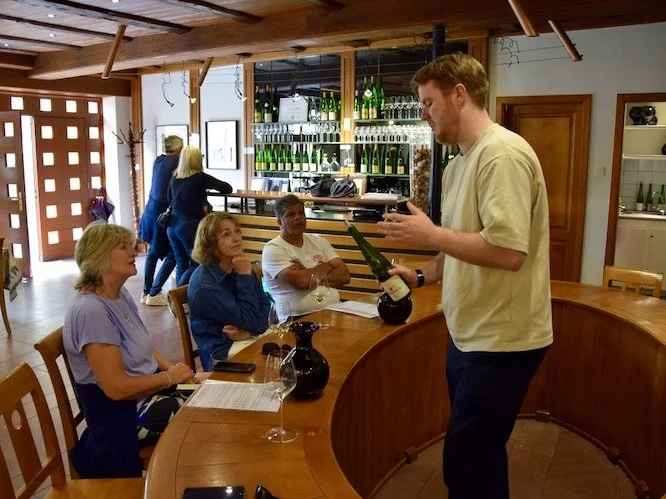
We were treated to an excellent tasting at Maison Trimbach, comprising different wines from across the Trimbach wine ranges, including the ‘Classic’ Pinot Blanc, the ‘Réserve’ Sylvaner (single vineyard), Riesling and Riesling Vieilles Vignes (60-70 year old vines) and Pinot Noir and finally we had the opportunity to taste a very famous wine - the ‘Riesling Fréderic Emile 2018’ - made from grapes from the Grands Crus Geisberg and Osterberg and aged 5-8 years in the bottle. This was famously the first Alsace wine to be sold in all French Michelin star restaurants.
An excellent wine tasting and a privilege to taste these renowned Alsace wines in the place they are made.
Part 3 Ribeauvillé to Kaysersberg
Following our amazing wine tasting at Maison Trimbach it was time to get back on our bikes and head back in the direction of Kaysersberg. The hills were a little less arduous on the return journey and in no time at all we were back on the outskirts of Kaysersberg and heading to our final Alsace wine tasting of the day.
Domaine Weinbach wine tasting
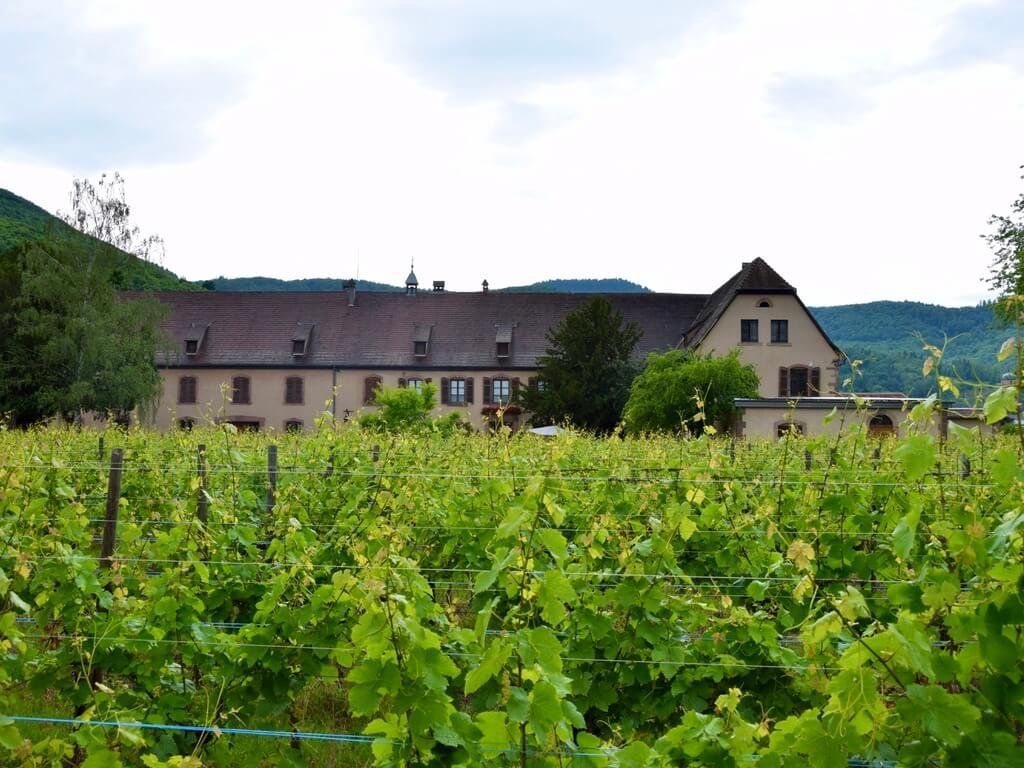
Domaine Weinbach was first established in 1898 by the Faller brothers and is today managed by 4th generation Catherine Faller and her two sons. Domaine Weinbach lies at the foot of the famous Schlossberg hill (and Grand Cru ‘Schlossberg’ vineyard) and was built as a monastery in 1612 by the Capuchin monks. It remained a monastery until the revolution, but is now a family home.
The famous Schlossberg Grand Cru vineyard at Kaysersberg- Source: Winekeller
The family farms 38 hectares of vineyards and only the estate’s grapes are used to produce Domaine Weinbach wines. Biodynamic processes have been followed in the vineyard and in the cellar since 2005. Approximately two-thirds of production is exported.
Domaine Weinbach is known around the world for its Pinot Noir wines, as well as its Gewurztraminer and Riesling wines, but especially its Grand Cru wines, namely Grand Cru Schlossberg, Grand Cru Furstentum, Grand Cru Mambourg and Grand Cru Marckrain.
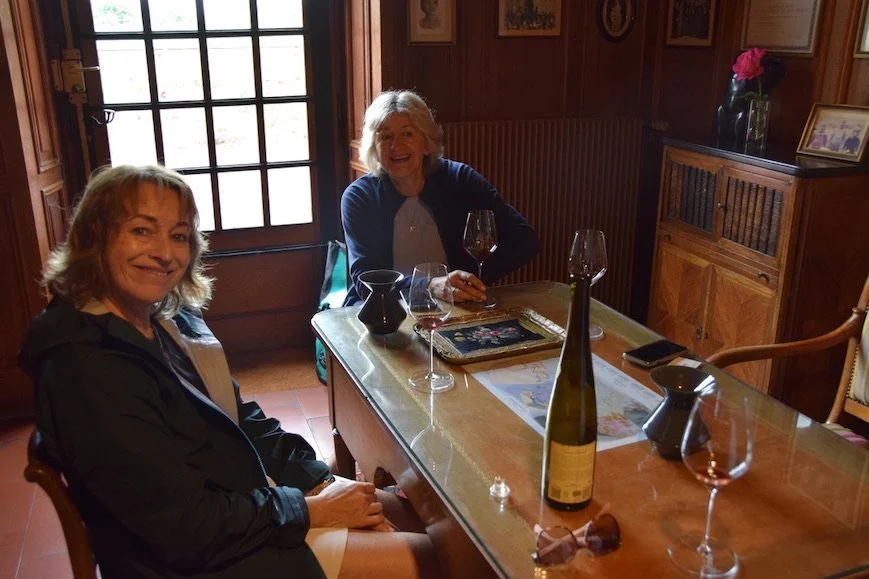
We enjoyed an excellent wine tasting at Domaine Weinbach which included the ‘Riesling Grand Cru Schlossberg 2023’ and the ‘Le jardin aux oiseaux Pinot Noir 2022’.
Domaine Weinbach wines are seriously good and highly acclaimed around the world. Please note that there is a charge for the wine tasting, but this is waived for wine purchase of more than €100.
After this last tasting it was time to make our way back to the cycle shop, to return our bikes and head back to our accommodation in Colmar - what a full but brilliant day!
Conclusion
Alsace is everything and more that we expected and wished for - it’s a fabulous wine tourism destination and a very unique, special place. This was a whistle-stop day tour but we experienced so much and can highly recommend you visit!