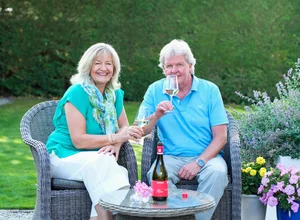
Which is the best Christmas market in Germany?
Our favourite ‘Top 10’ Christmas markets in Germany in the top German wine regions
Christmas markets are now featuring in cities and towns all across Europe offering no better way to stock up on some festive cheer and Christmas spirit over the holiday and Advent period.
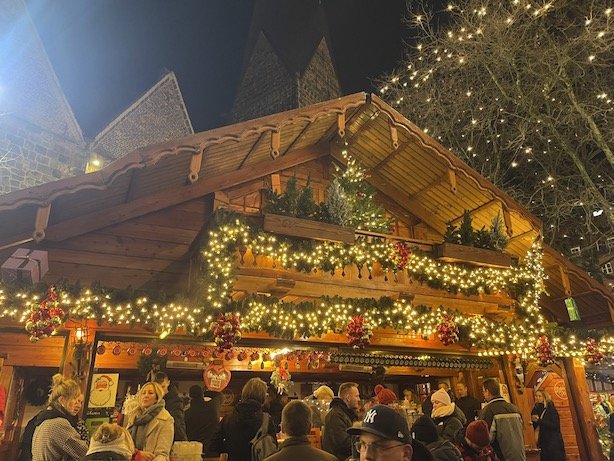
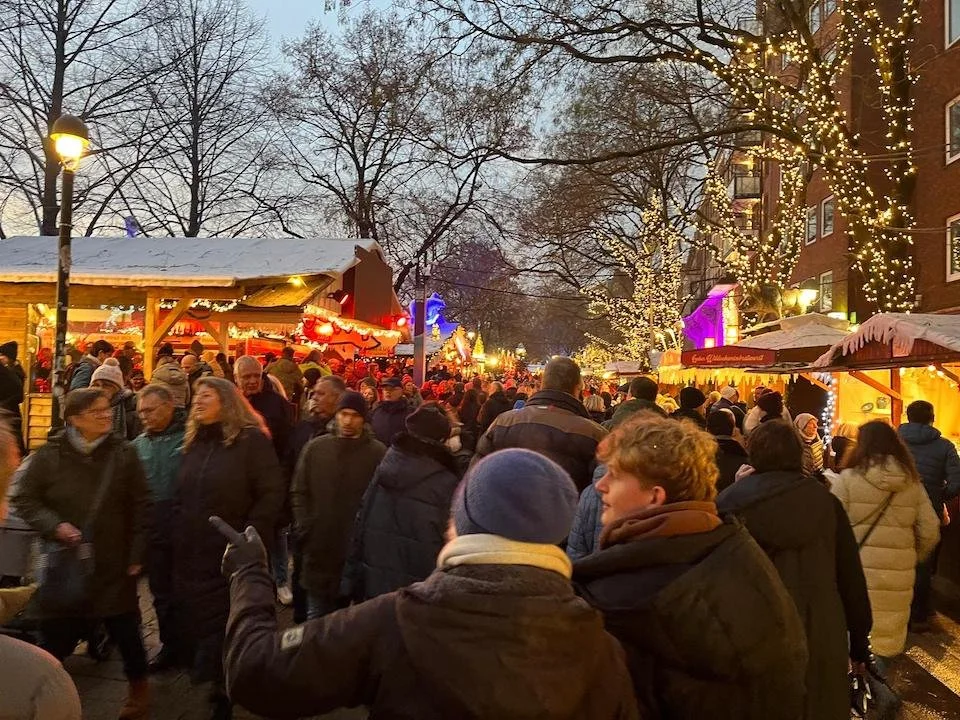
From the end of November to early January the whole family can enjoy stepping into a world of festive delights, browsing and shopping for unique gifts and sampling some yummy festive treats! Christmas markets transform the town and city squares into magical winter wonderlands, with twinkling lights sprinkled across rows of traditional wooden huts with vendors selling hand-crafted gifts and traditional Christmas decorations. The atmosphere is jolly and festive, with the sound of Christmas carols filling the air and the smells of piping hot mugs of glühwein (mulled wine), roasting chestnuts, sizzling sausages and traditional spiced gingerbread.
Although you may have a 'traditional German' market close at hand, there is little to beat however experiencing an ‘original’ Christmas market and that’s in Germany. The German word for Christmas market is ‘Weihnachtsmarkt’, however in southern Germany, Switzerland and Austria, it is called a Christkindelmarkt (‘Christ child market’).
The history of German Christmas markets
Christmas markets date back to the late Middle Ages in the German-speaking territories of Europe and some of Germany’s existing Christmas markets trace their origins as far back as the 15th and 16th centuries. Dresden’s market first opened for one day on Christmas Eve in 1434 and the oldest evidence of Nuremberg’s Christmas market dates it to 1628, though some believe it stretches back at least to 1530.
The Industrial Revolution brought about an increased standard of living and the emergence of the working class fueled the growth of Christmas markets in the early 19th century.
Christmas markets in Germany were unfortunately a target of the Nazi party in an effort to both stimulate the sale of German products and to realign Christmas with Nazi ideology. After the war the popularity of Christmas markets exploded in Germany and only grew in the following decades, as an economic boom in the 1960s and 1970s and the rise of consumerism fuelled the growth of Christmas shopping. These economic shifts transformed the Christmas markets into mass cultural events.
By the 1980s and 1990s, Germany’s Christmas markets had become a cultural export and cities in countries around the world began to host their own German-style Christmas markets.
Traditional German Christmas market food and drink
In our view nothing beats visiting an authentic German Christmas market - in Germany.
This is where you can fully experience and truly appreciate the traditional smells and tastes of the Christmas market. Here is just a few of our favourite Christmas market food and drink treats!
Savoury treats
You can’t escape a good German Bratwurst sausage at a Christmas market, but you will also see Curry wursts - a classic bratwurst covered in a sweet curry ketchup.
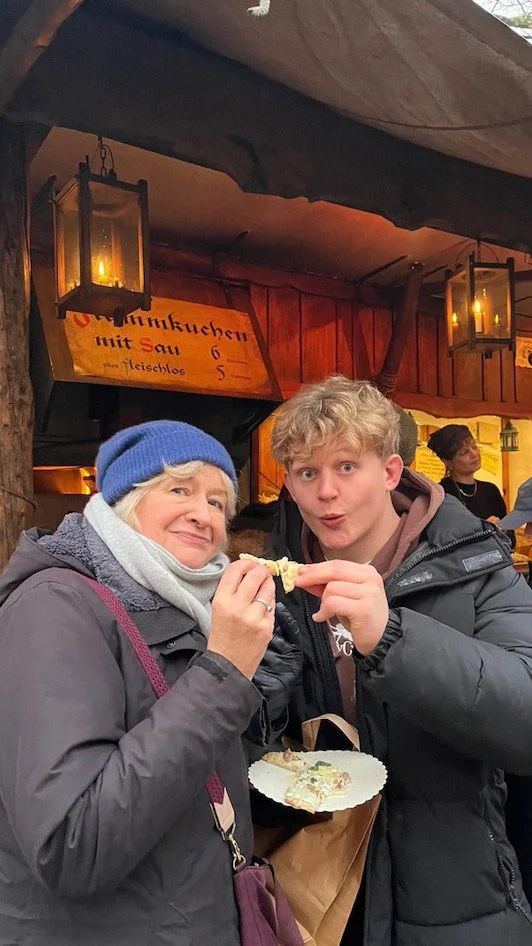
Käsespätzle is a very popular and traditional dish in Southern Germany - think macaroni and cheese pasta with crispy fried onions sprinkled on top and look out for Flammkuchen - a thin flatbread pizza with onions, cheese, and bacon.
You may see Spiralkartoffeln - or spiral potatoes, the perfect snack and a nice alternative to Pommes Frite (French fries). A firm favourite of ours is Kartoffelpuffer (crispy fried potato pancakes, often served with apple sauce or sour cream and Raclette (melted cheese, often served on potatoes or bread.)


Sweet treats
Advent is a time for indulging and in German the sweet treats start in early December with freshly baked cookies called ‘plätzchen’. These come in various forms, flavours, and styles, but often use vanilla, cinnamon, ginger, marzipan and butter. The most popular and well-known are ‘Lebkuchen’ - a type of German gingerbread spiced cookie, dating back to the 13th century.
Then of course there is ‘Stollen’ - a dense fruit cake originating from Dresden, made with candied fruit, nuts, and spices and look out for Gebrannte Erdnüsse and Madeln (roasted peanuts and almonds) - a nice alternative to roasted chestnuts
Christmas market drinks
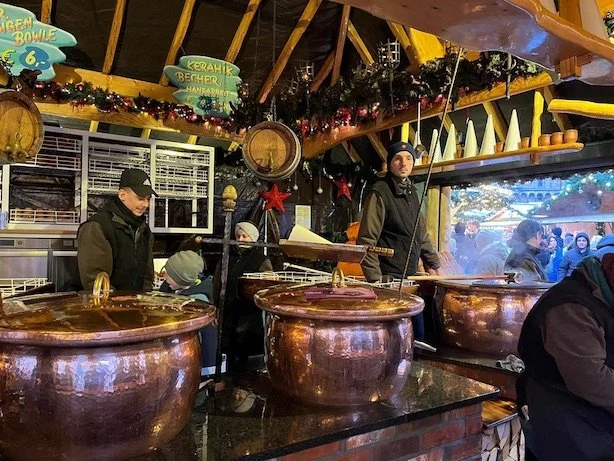
Glühwein is the quintessential Christmas market - a hot mulled wine with added spices and citrus fruits. Traditionally, Glühwein is made with red wine but can also be made with white wine and rosé and if you fancy more of a kick, opt for Glühwein mit Schuss - with an added shot of alcohol, typically rum or vodka. An alcohol-free alternative is called ‘Kinderpunsch’.
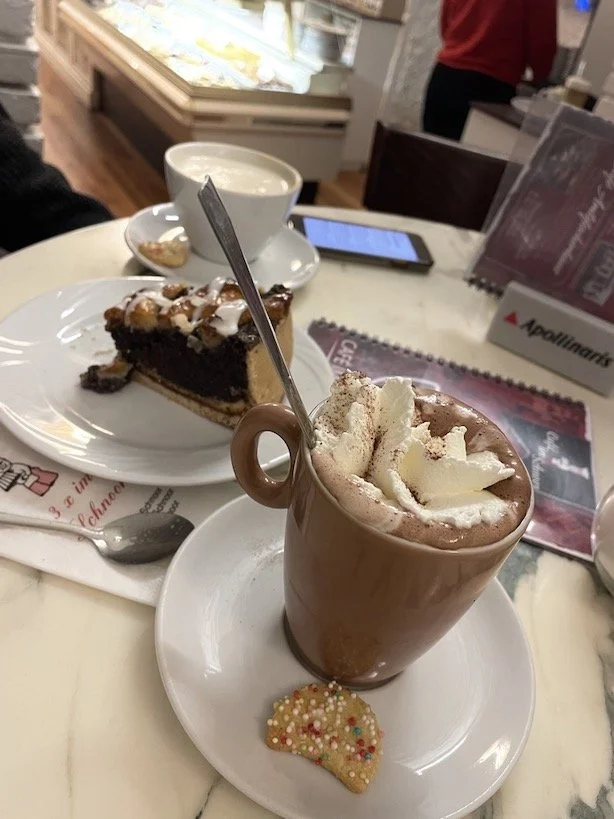
Apfelwein (hot apple cider) is another popular choice along with Heiße schokolade (hot chocolate)!
Enjoying a Christmas market and discovering some top German wines
We can highly recommend visiting Germany for a traditional Christmas market and also taking time out to visit a local winery or two to discover the regional wines - wineries are open for wine tastings and tours across the festive period (outside of the core Christmas and New Year holiday dates) and you will always receive a warm welcome.
The wines on offer at the Christmas markets may or may not be of that wine region - make sure you check - but to discover the regional wines it’s always best to check out the local wineries. Take the opportunity to discover German sparkling Sekt or perhaps some German Riesling…
Our favourite German Christmas markets
The Nuremberg (Nürnberg) Christmas market and the Dresden Christmas market are the oldest and most famous traditional Christmas markets so these should always be on the list and the two most visited Christmas markets in Germany are in Dortmund and in Cologne.
However, here are our favourite ‘top 10’ of the best German Christmas markets in the top visited German wine regions:
Traben-Trarbach in the Mosel wine region - located in large wine cellars underneath the town;
Frankfurt in the Rheingau wine region - large, authentic Christmas market in the historic city centre;
Mainz in the Rheinhessen wine region - in this lovely city, the Great Wine Capital of Germany;
Gengenbach in the Baden wine region - a charming town in the Black Forest;
Bernkastel-Kues in the Mosel wine region - a popular medieval wine town in the Middle Mosel;
Würzburg in the Franken wine region - one of the most atmospheric Christmas markets in Germany;
Freiburg in the Baden wine region - a well-established and popular market in this beautiful wine region;
Bad Neuenahr-Ahrweiler in the Ahr Valley - a traditional market in the centre of this lovely red wine region;
Trier in the Mosel wine region - the oldest city in Germany with a historic city centre;
Neustadt in the Pfalz wine region - a traditional Christmas market in the capital of the Pfalz Wine Route.
Conclusion
You can’t beat an authentic German Christmas market! Whichever one you get to visit, soak up the atmosphere, sample the traditional food and drinks and of course make time to discover the regional German wines!