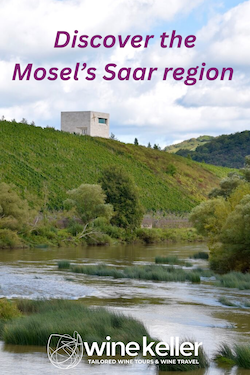
Discover Saar Riesling wine along the beautiful Saar cycle route
We explore the Saar in the Mosel wine region Germany - famous for its special German Rieslings, beautiful rolling countryside and chocolate-box wine villages
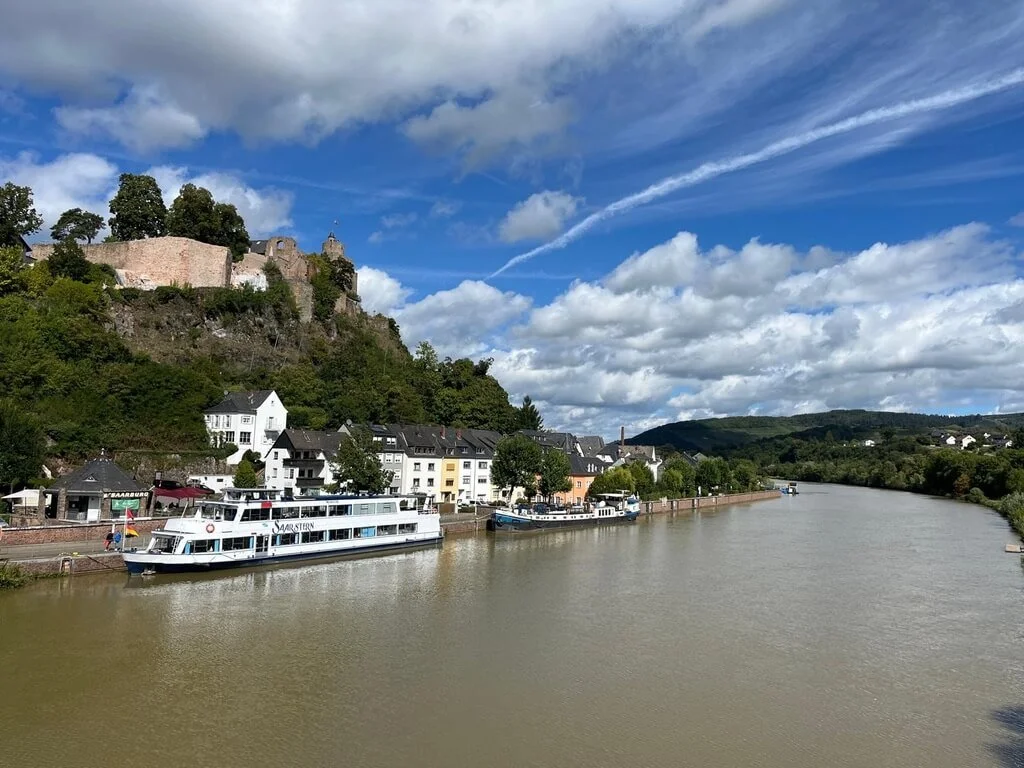
Saarburg on the River Saar - Source: Winekeller
The Mosel wine region is one of the most famous wine regions in Germany, known for its steep vineyards and top Mosel Riesling wines. The Saar and the Ruwer are two tributary rivers of the River Mosel and their vineyard-lined valleys both produce some excellent examples of Mosel Riesling wines, made from grapes grown on the south-facing, devon-slate hillsides.
Here we explore the beautiful Saar valley by bike, along the wonderful Saar cycle route, visiting two top Saar wine region wineries and the beautiful town of Saarburg.
Read on to learn all about the Mosel’s beautiful Saar wine region, Germany:
Also see the video here:
The Saar wine region
Is Saar in Mosel?
Saar wine map - Source Wine Folly
Yes, the Saar wine region is officially part of Germany’s Mosel wine region, in North-west Germany in the Rhineland-Palatinate area, extending from the wine town of Serrig to the confluence of the River Saar with the River Mosel at the village of Konz.
The Saar wine region has a long history of winemaking, as in the wider Mosel wine region, dating back to Roman times. After phylloxera devastated its vineyards in the late 19th century, they were later replanted with Riesling grapes, which have thrived in the region's unique terroir. Saar wines were recognised as some of the world’s best wines at the beginning of the 20th century.
Some 800 hectares of vines are cultivated here, set amongst rolling hills, orchards and pastures, with an impressive representation of top VDP classified German wineries, producing some of the best expressions of German Riesling you can hope to find. Few German wine regions can claim so many VDP wineries in such a small region and this has everything to do with the unique Saar terroir and how this suits the Riesling grape variety - see later. (VDP is a private association of some 200 top German wine producers - read more about it here).
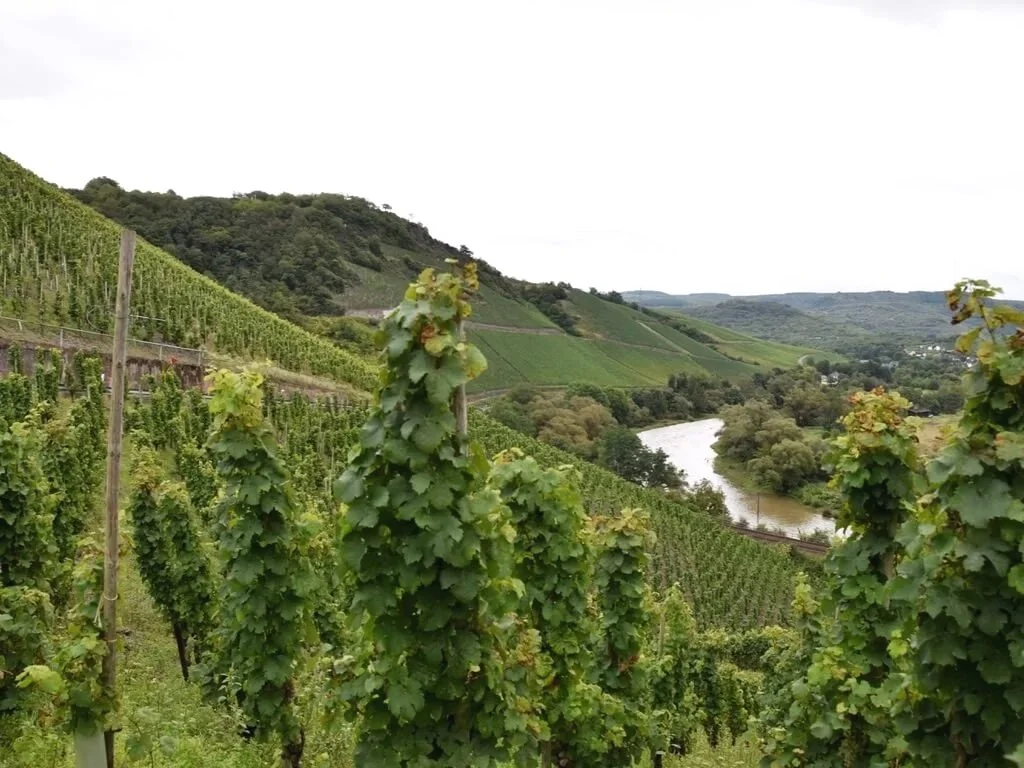
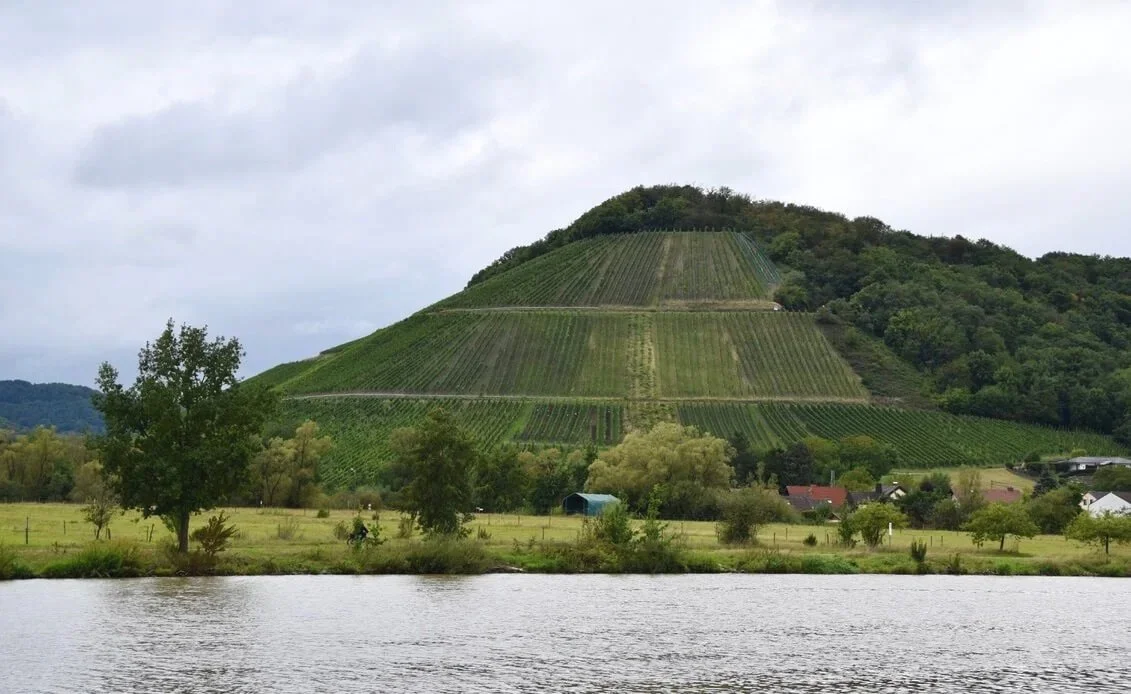
The Saar wine region is divided into six districts: Konz, Oberemmel, Wiltingen, Kanzem, Saarburg and Serrig. Most of the vineyard sites are actually not directly on the River Saar but on the hillsides of its side valleys and the best sites are the steep, south-facing slopes, which get more sunlight, vital for the ripening process.
The most famous vineyard here is the ‘Scharzhofberg’ just east of Wiltingen, where Egon Müller, widely regarded as the ‘king of the Saar Valley’, produces some of the world’s best white wines.
The Saar’s unique terroir
Much of the Saar Valley is vulnerable to cold easterly winds and ripening grapes can be a struggle, however in more recent years, with a warming climate, this has been less of an issue. The cool climate here and the devon slate soils provide the ideal conditions for growing Riesling grapes. The steep slopes provide excellent drainage and exposure to sunlight, which helps the grapes ripen slowly and develop their complex flavours.
Saar wines
Wines produced in the Saar Valley region are said to be some of the best in Germany, wonderfully elegant and delicate, dry and sweet Mosel Riesling wines, full of fruit, that age beautifully.
The slow ripening process in the Saar region results in a naturally high fruit sweetness, but with a low proportion of fruit sugar, Saar wines typically have a maximum of about 12% alcohol by volume.
Saar wines are elegant, fresh, aromatic and mineral, medium-bodied with a combination of stone fruit, citrus, floral and garden herb flavours. Even aged Saar Riesling wines burst with freshness and elegance.
Over 60% of the vines planted are Riesling, with small amounts of Elbling, Pinot Blanc, Pinot Gris, Kerner, Auxerrois, Pinot Noir and Chardonnay. Some sparkling wines are produced and a small amount of Pinot Noir red wine, but be in no doubt though that the Saar wine region is all about Riesling.
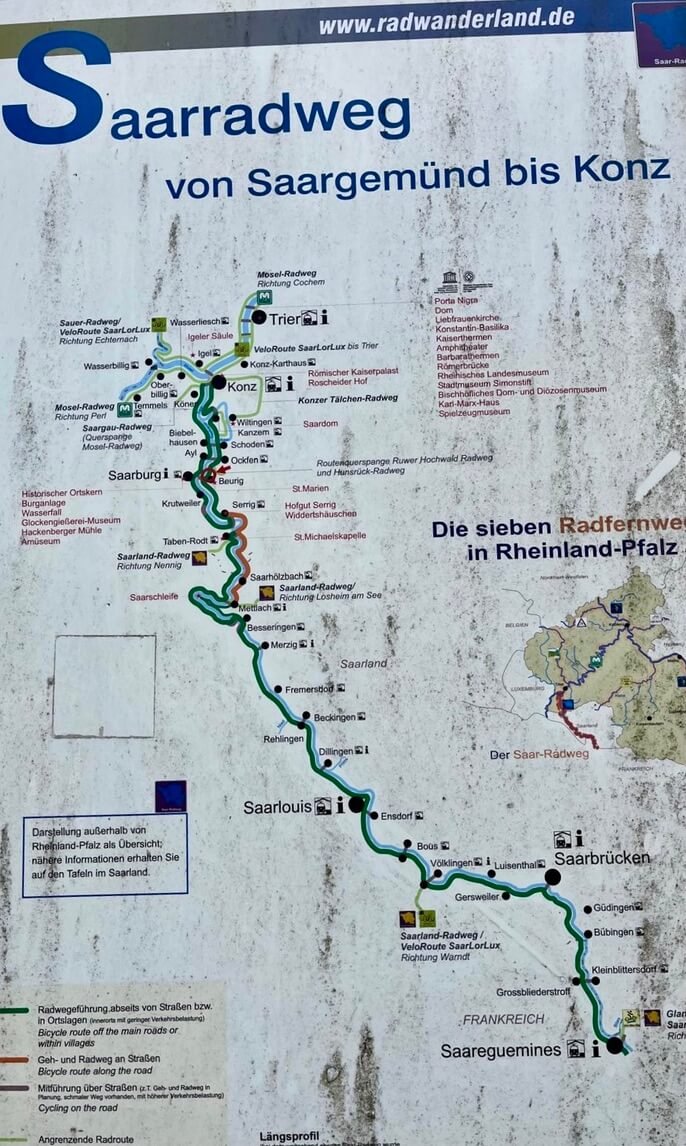
The Saar cycle route
The Saar cycle route runs for a total length of 115 km, starting in Konz where the River Saar meets the Mosel, running via Saarbrücken and into Sarreguemines in France.
Leaving the Saar cycle path at Saarburg to explore!
This beautiful cycle route is one of 7 long-distance cycle routes in Rhineland-Palatinate and in Konz you can join the Mosel cycle route.
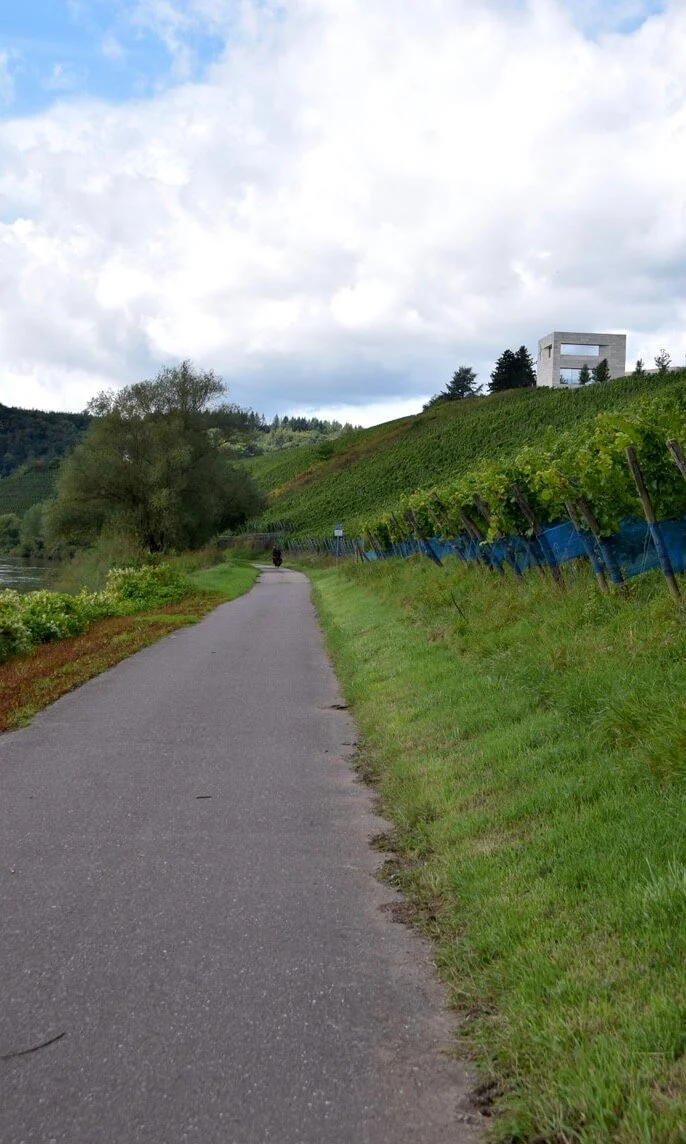
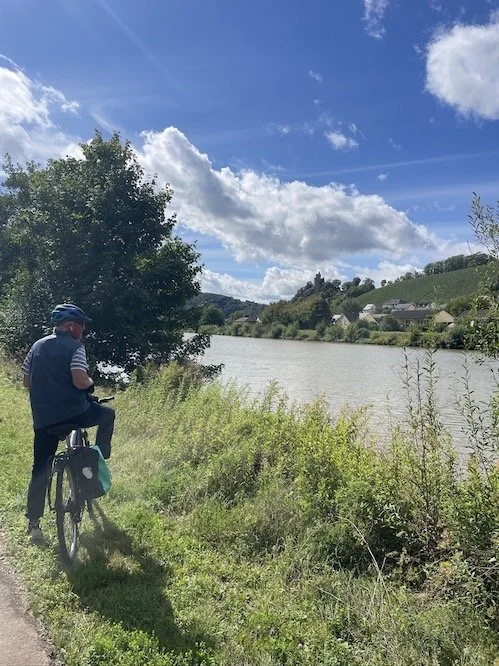
The Saar cycle route is very flat and family-friendly, but it does get busy in the Summer months so you do need to be vigilant! This great cycle path allows you to explore the whole of the Saar wine region, from the town of Konz to Serrig (just under 20 km), following the natural river course via Kanzem to Wiltingen, then on to Schoden, where the river forks and where a weir was created during the Saar expansion into a major shipping channel. From Schoden the route continues to the beautiful town of Saarburg (see later) and then onto the wine village of Serrig, a small wine-growing community also called the “Gateway to Saar Wine”.
We can highly recommend discovering the Saar wine region by bike, there’s lots to enjoy! It gives you the opportunity to explore beautiful wine villages and romantic old towns, to enjoy the peaceful, beautiful countryside and scenery and to stop off at a Saar winery or two and discover the fabulous Saar wines!
Saar wine region wineries
As said earlier, there is a high concentration of top VDP wineries in the Saar wine region, who have invested and are investing big-time here, including Saar hero Egon Müller. There are also some smaller, family-owned wineries and estates who are making a big impression around the wine world, with some excellent wines made from grapes grown on these incredible vineyard sites.
We visited two different, but both excellent wine estates in the Saar wine region during our visit and Saar cycle tour: VDP estate Van Volxem, known for its top vineyard sites and Grand Cru wines, but also its new, modern winery, perched on the hillside above the river, overlooking the famous Scharzhofberg vineyard site - and family-owned estate Weingut Würtzberg, perched high above the Saar amidst the steepest vineyard sites in Serrig and with an incredible history, considered the first wine estate in the Saar region.
Visiting Weingut Van Volxem
The spectacular Weingut Van Volxem, Saar - Source: Winekeller
Weingut Van Volxem is located in the middle of the Wiltinger Schlossberg vineyard and is impossible to miss as you are cycling along the River Saar or from the road - in fact it is also visible from the village of Kanzem, which is 4km away!
A huge, elongated, modern, white limestone building, set in 6,800 square metres of land, it certainly creates a lasting impression, one which is only reinforced as you enter the spectacular two-storey visitor centre, with its floor to ceiling panoramic windows giving incredible views across the Saar. Weingut Van Volxem certainly delivers the wow factor!
The building of this incredible new modern winery, cellars and visitor centre was completed in 2019.
Weingut Van Volxem overlooking the River Saar and the Saar cycle route - Source: Winekeller
Who owns Van Volxem winery?
The current owner of Weingut Van Volxem is Roman Niewodniczanski, who took over in 2000, following four generations of the Van Volxem family.
As a former monastery wine estate that belonged to the Luxembourg Jesuits, Van Volxem has possessed large vineyard parcels on the best steep slate slopes of the Saar since the early 18th century and today is known for its top vineyard sites and Grand Crus wines. With over 90 hectares of vineyards, Van Volxem produces some 600,000 bottles of wine per year. All grapes are hand picked and sustainable practices are followed both in the vineyard and the cellar.
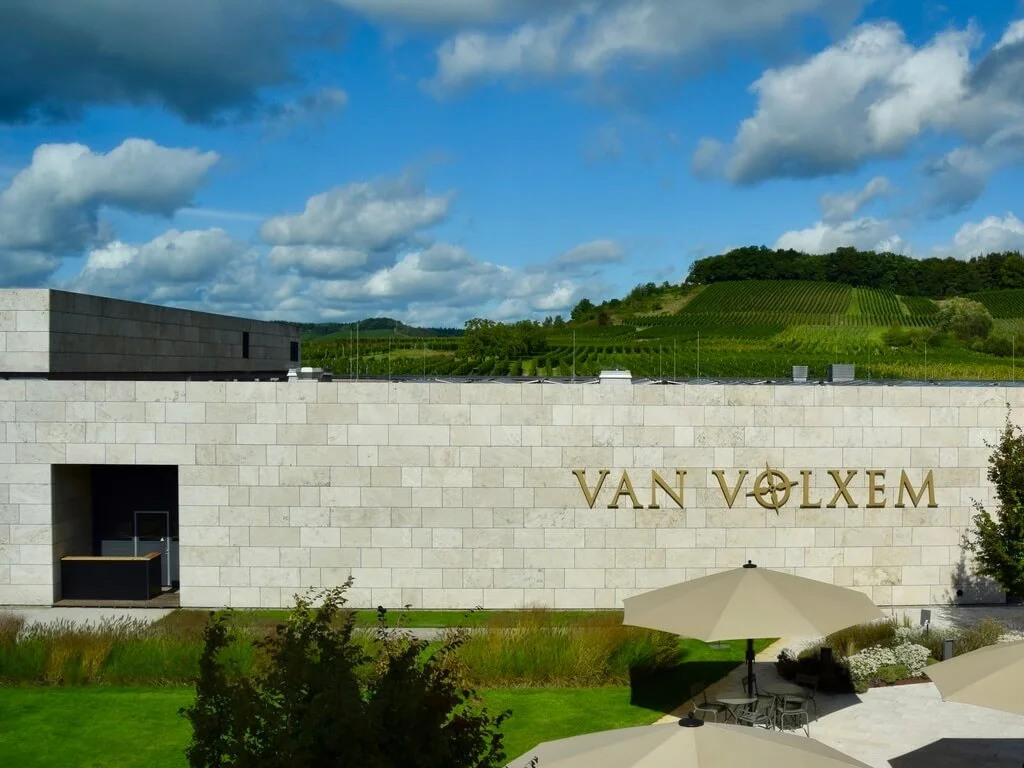
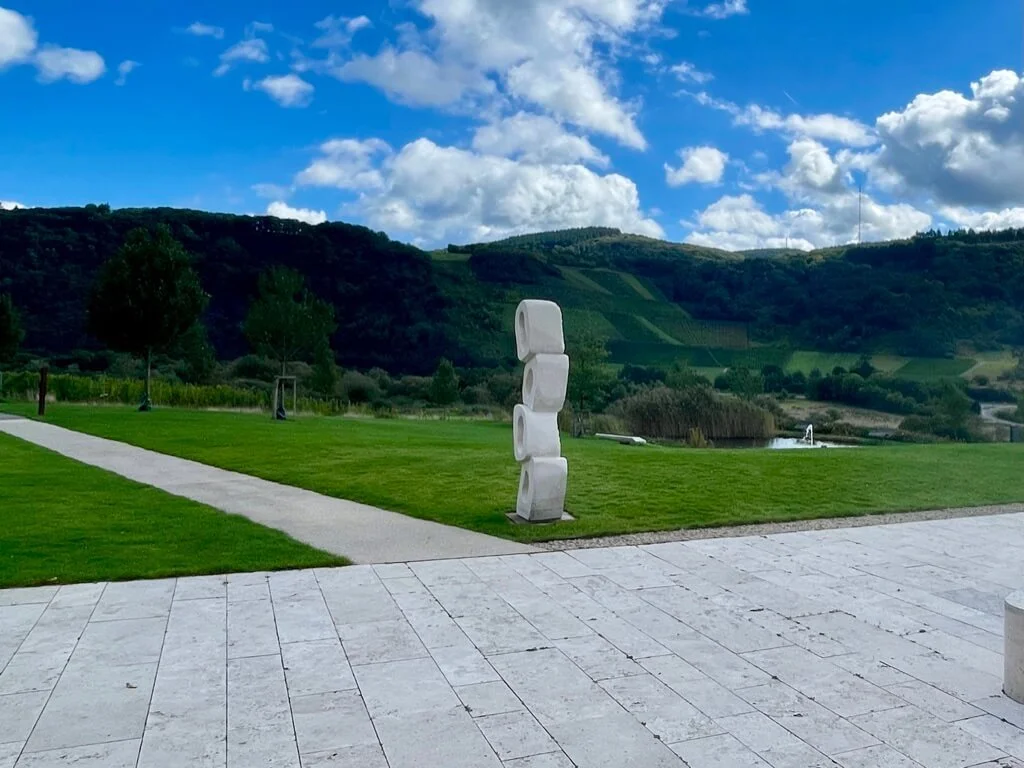
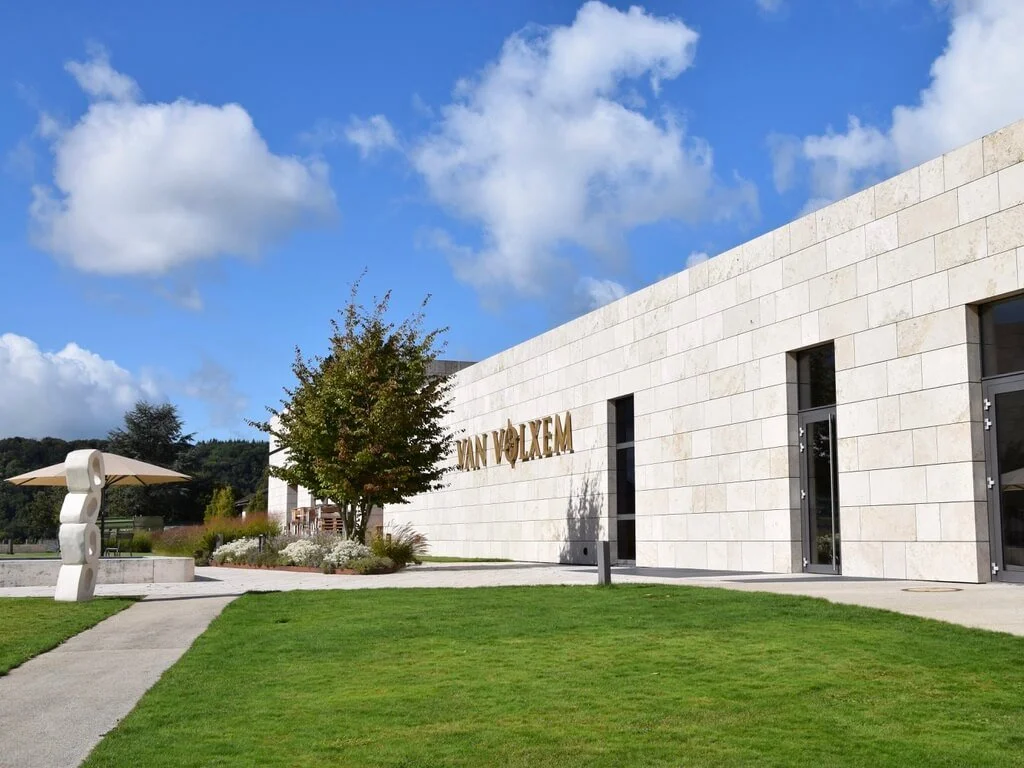
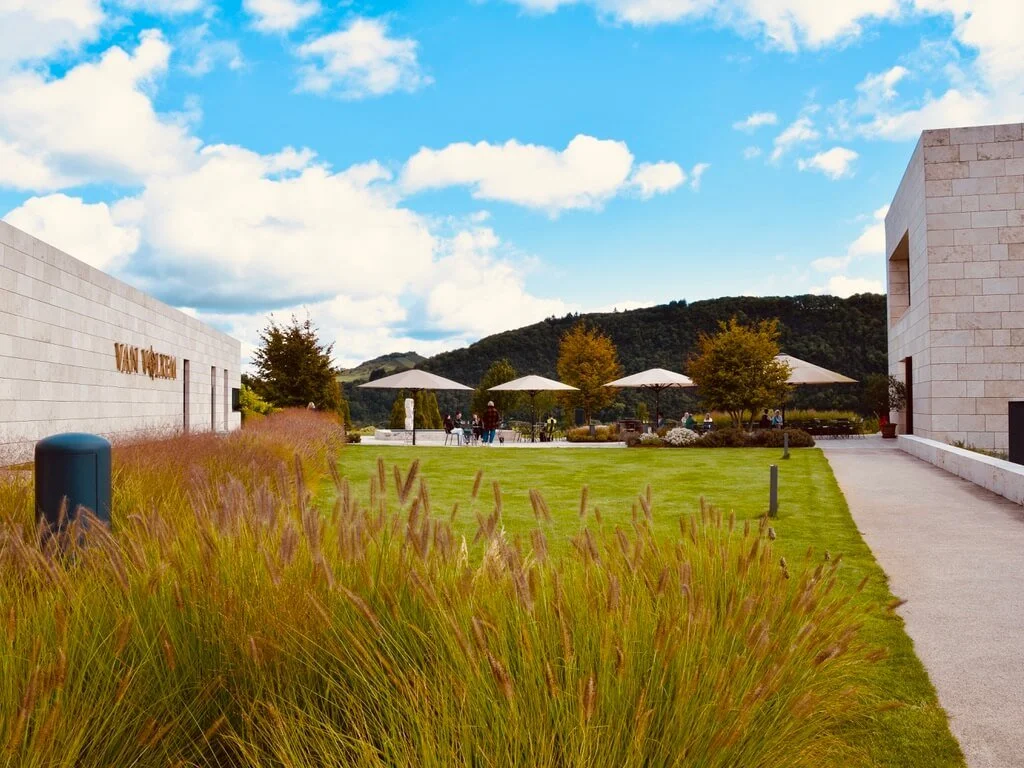
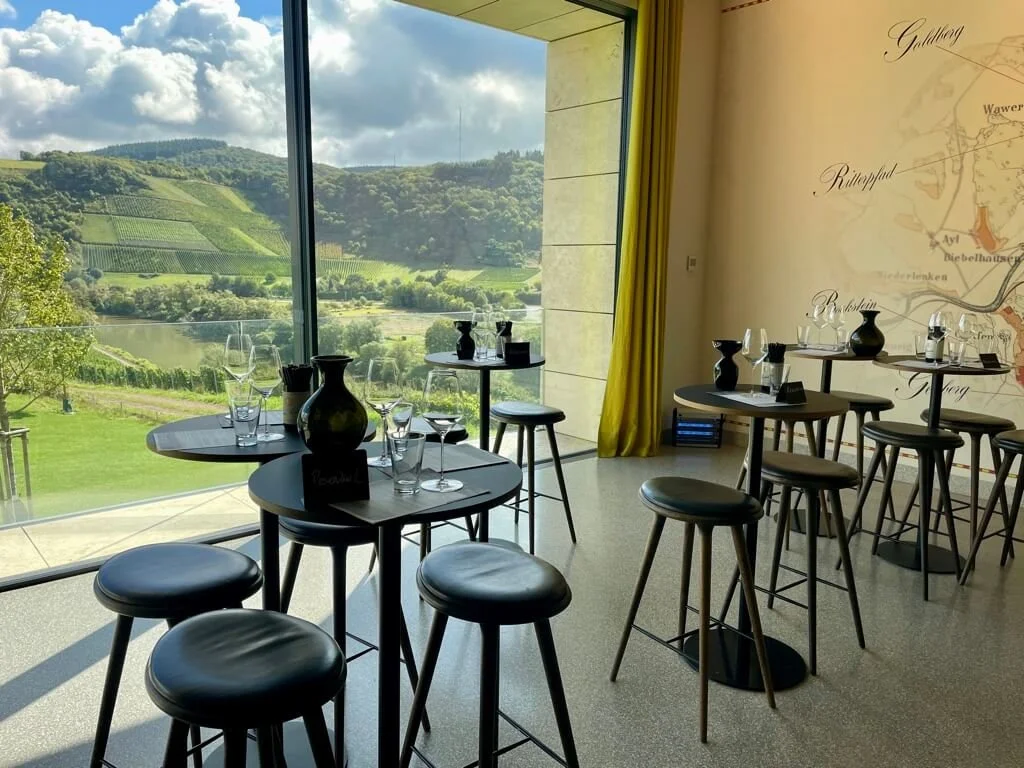
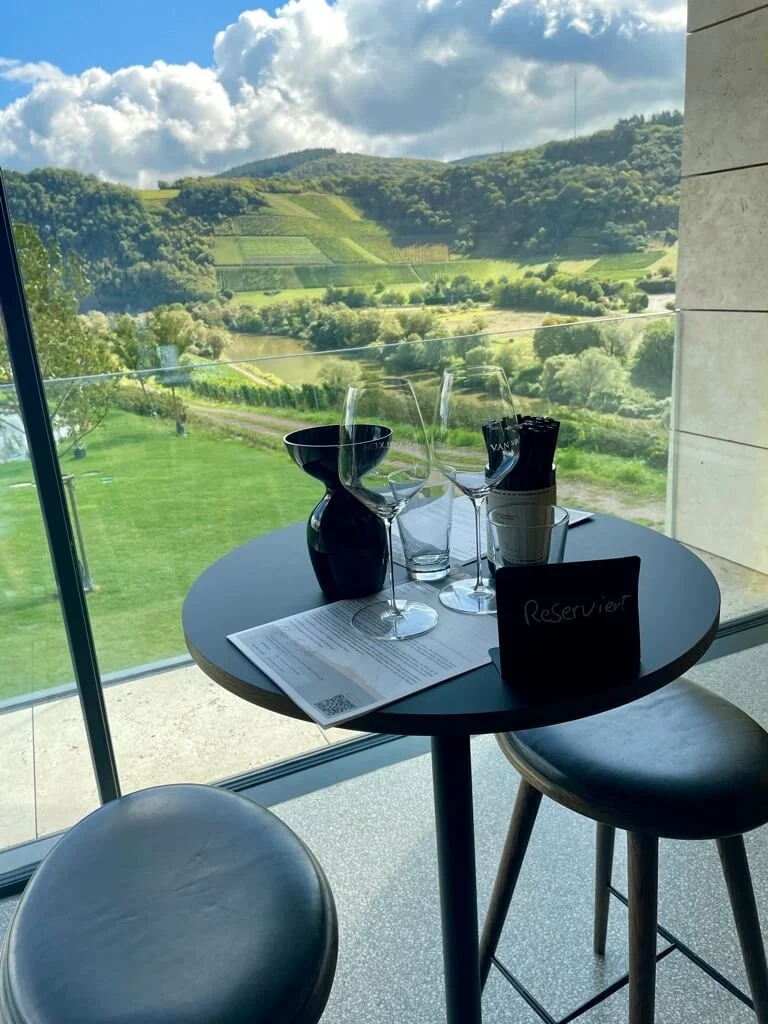
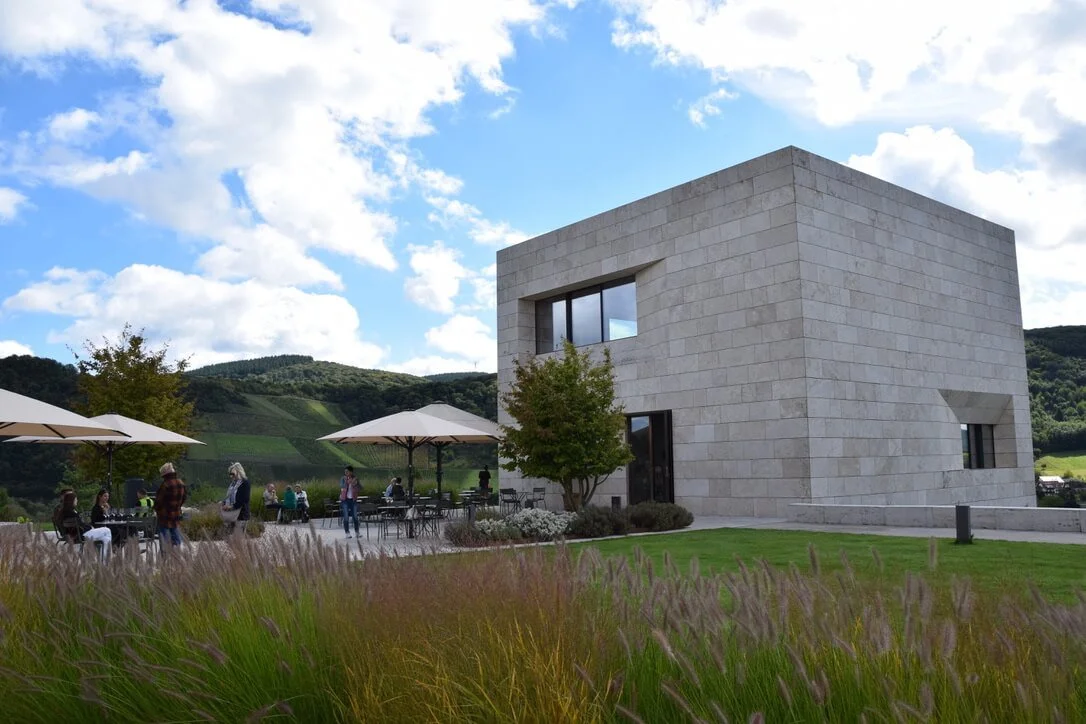
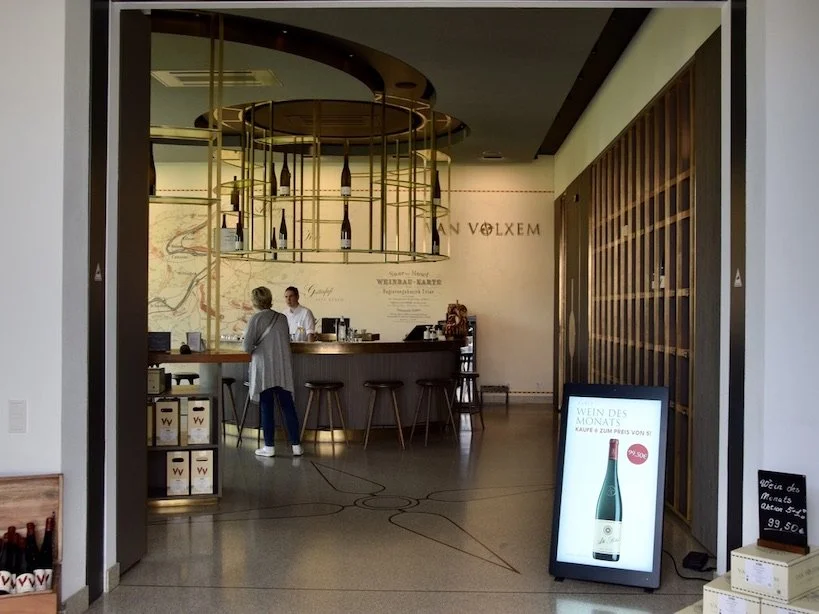
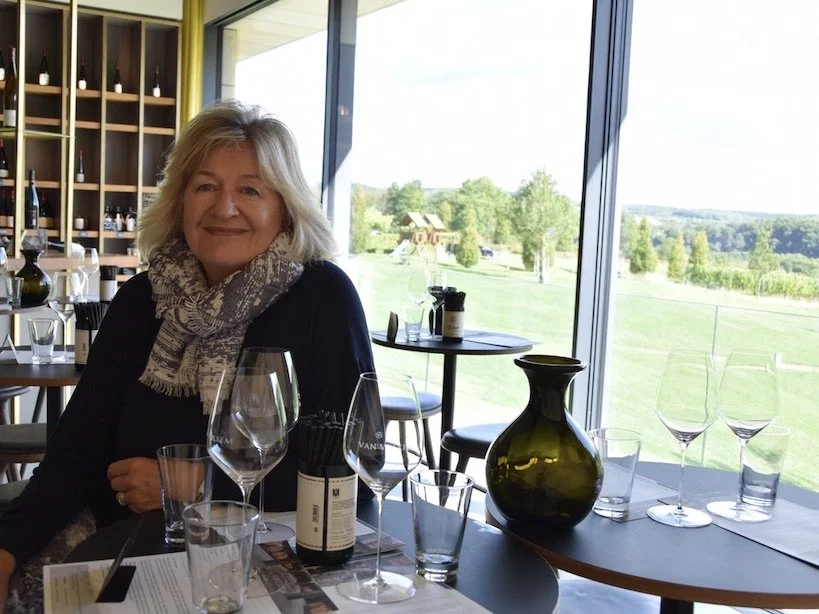
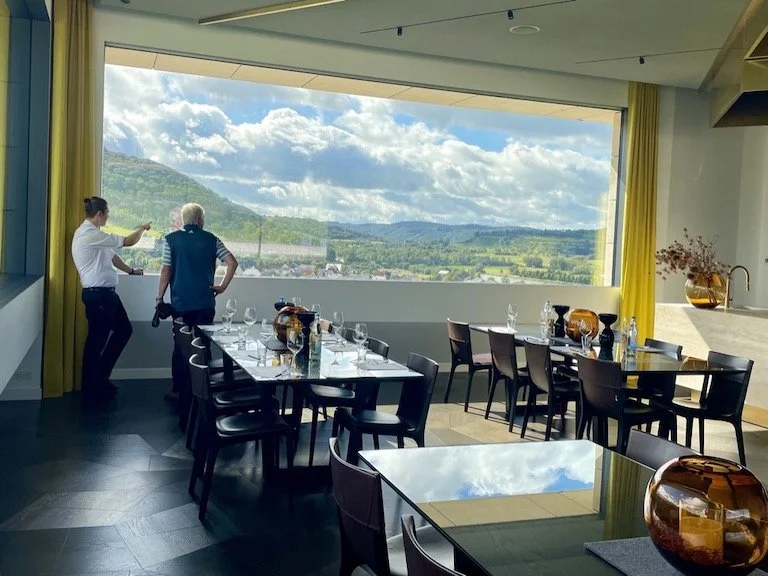
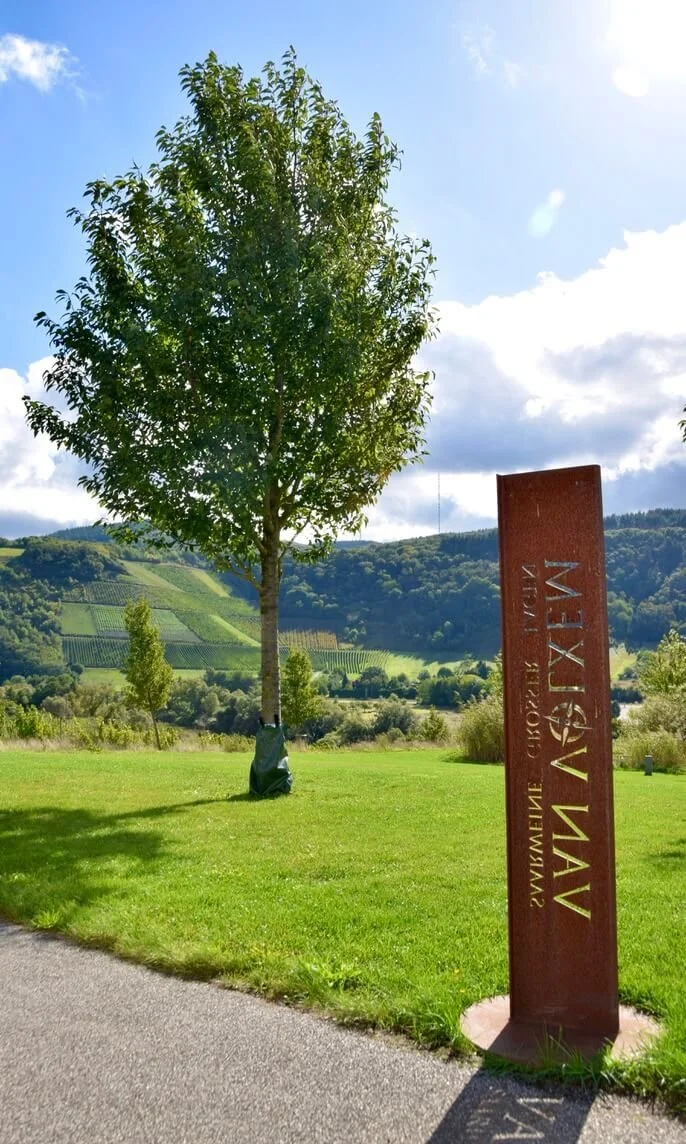
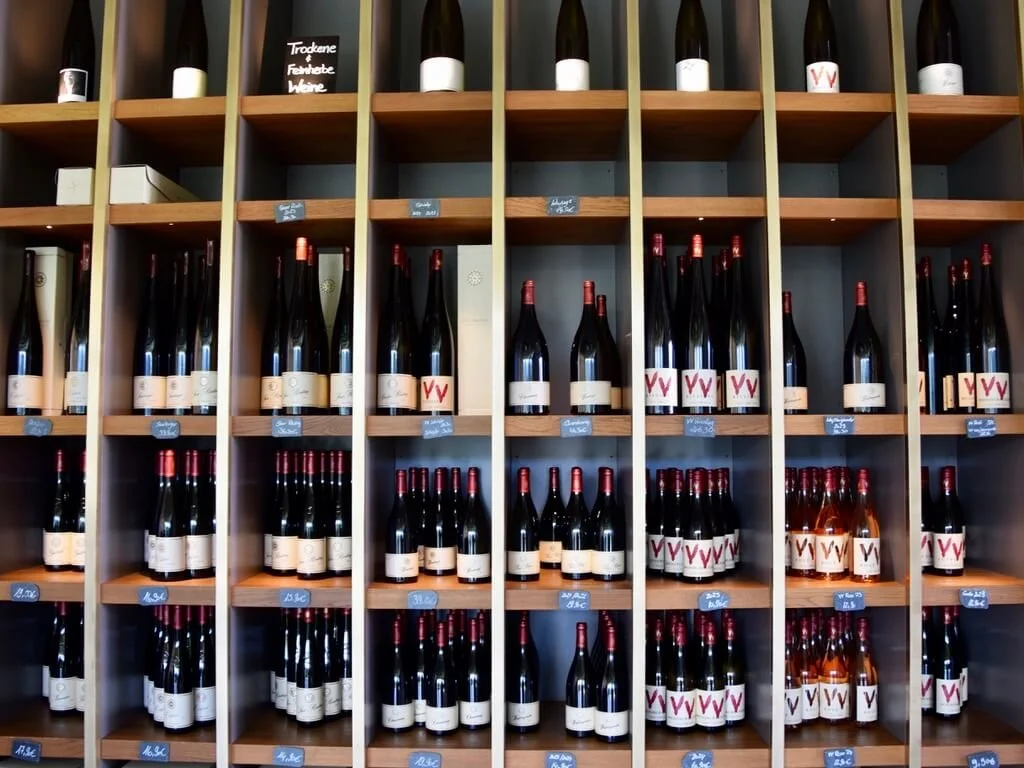
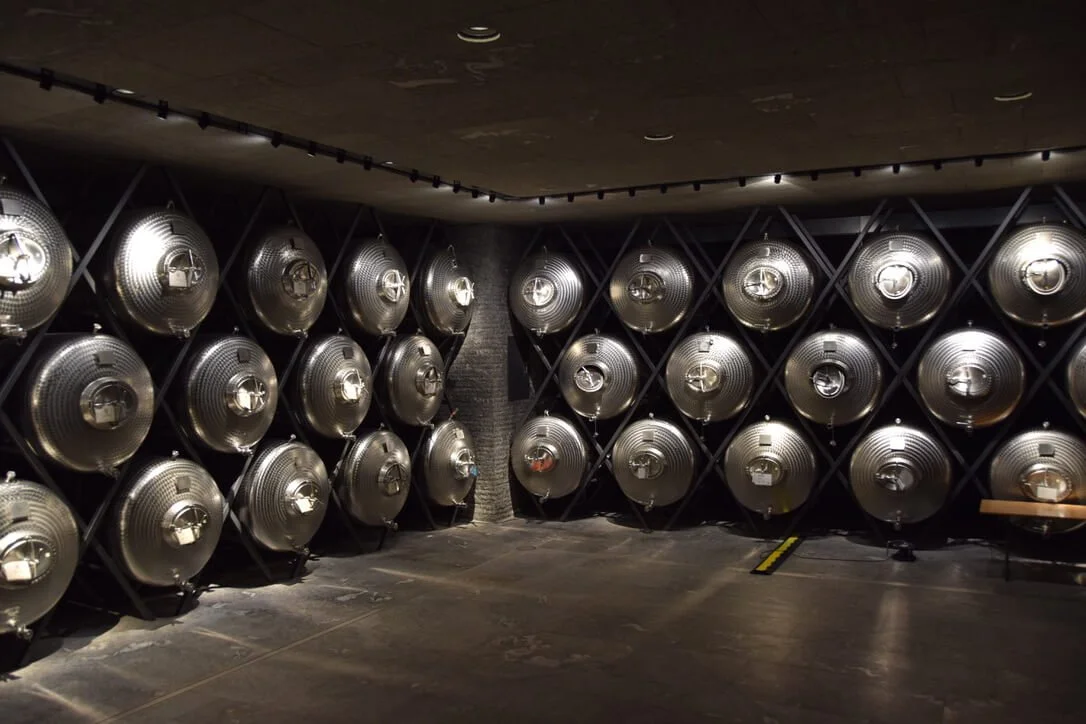
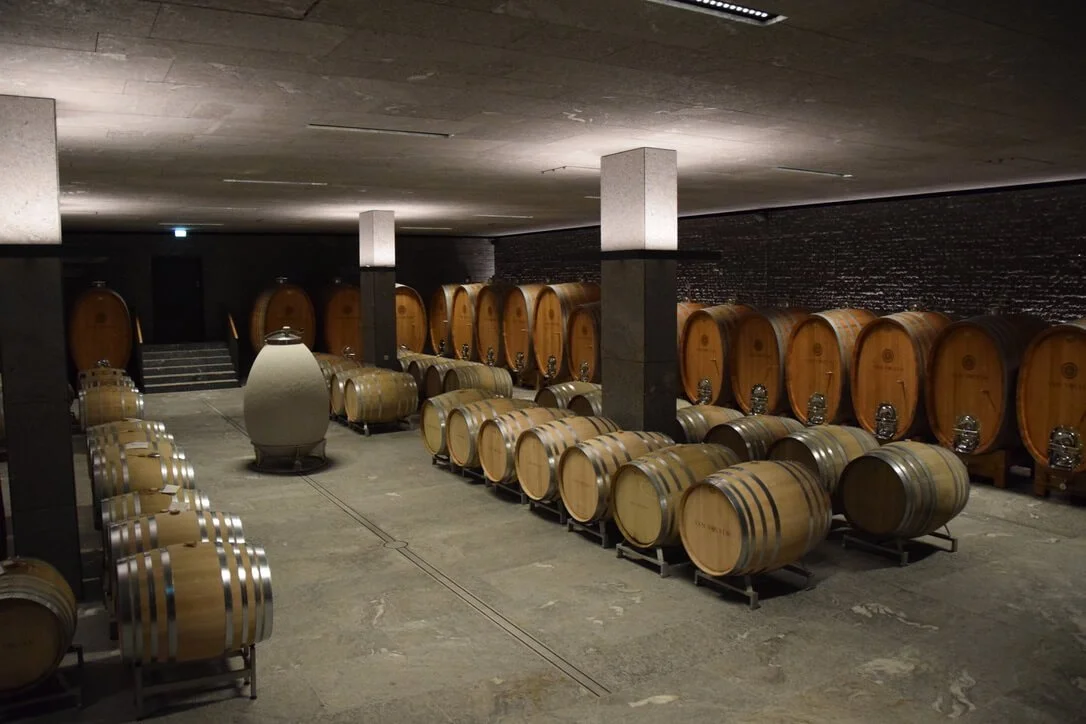
You can visit Weingut Van Volxem for a wine tasting in the fabulous visitor centre/vinothek and can also reserve a place on a cellar tour and vineyard tour.
If you visit the Saar wine region, then make sure you visit Weingut Van Volxem for an incredible experience - Van Volxem Saar Riesling is very special, so take time to discover it in these spectacular surroundings, with the architectural masterpiece that is the new winery and cellars as well as the magnificent setting and views!
Visiting Weingut Würtzberg
The wine village of Serrig was the turning point for us on the Saar cycle route and we were looking forward to heading up to visit Weingut Würtzberg high up on the steep slopes overlooking the river, before we headed back towards Konz.
The beautiful manor house, Weingut Würtzberg, Saar - Source: Winekeller
We had been told that the family were holding their end of Summer festival ‘Hoffest’ at the winery on that day and were overwhelmed to see how many local people were there, celebrating, enjoying the wines and generally having a great time (despite the inclement weather!)
Weingut Würtzberg is a family-owned estate, owned today by the Heimes family, led by siblings Felix and Annalena. The history of this former Prussian estate goes back to 1897 and the estate, which covers 32 hectares and comprises a charming manor house and beautiful courtyard, is a protected national monument. It is also considered to be the very first winery in the Saar region.
The winery is perched high above the Saar amidst the impossibly steep vineyards so typical of this German wine region. The estate’s two most important Grand Cru vineyards are Serriger Herrenberg and Serriger Würtzberg, solely owned by the estate and ‘monopoly-owned’ sites. These are two of the steepest (up to 63% slopes) and best vineyard sites in the Saar. The third Grand Cru vineyard is Ockfener Bockstein, located in a side valley of the Saar.
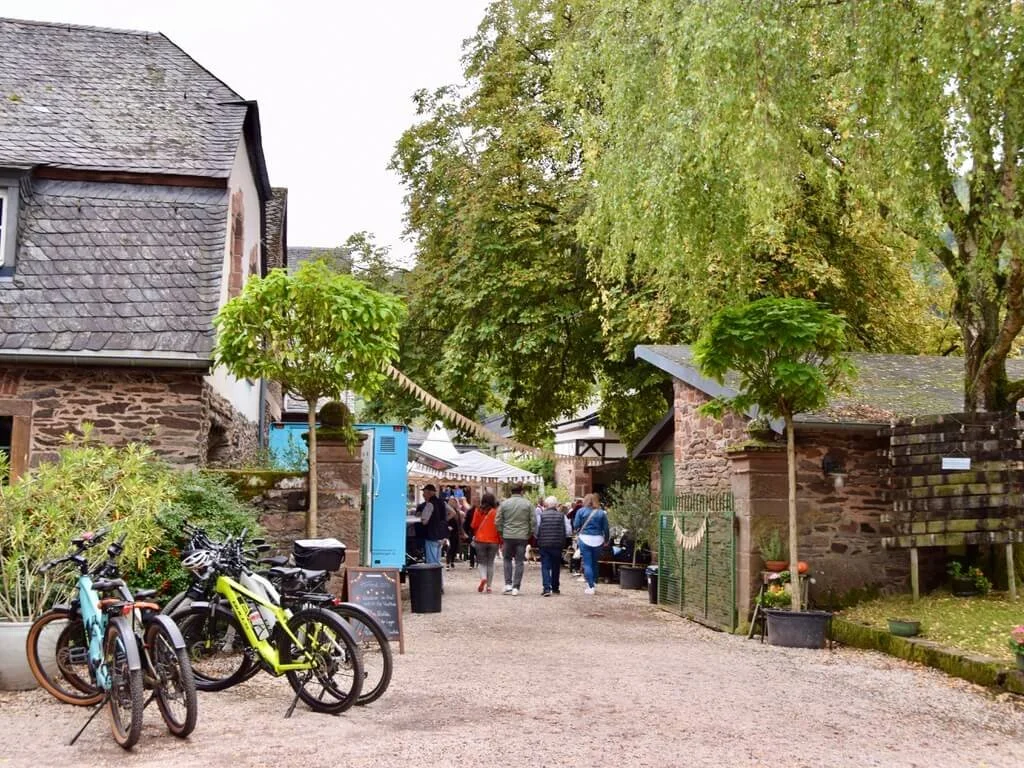
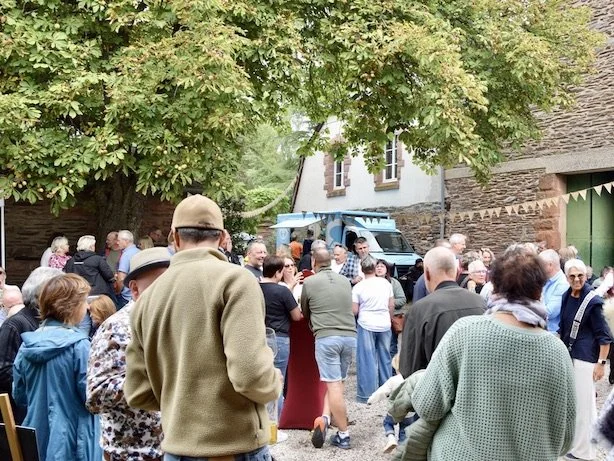
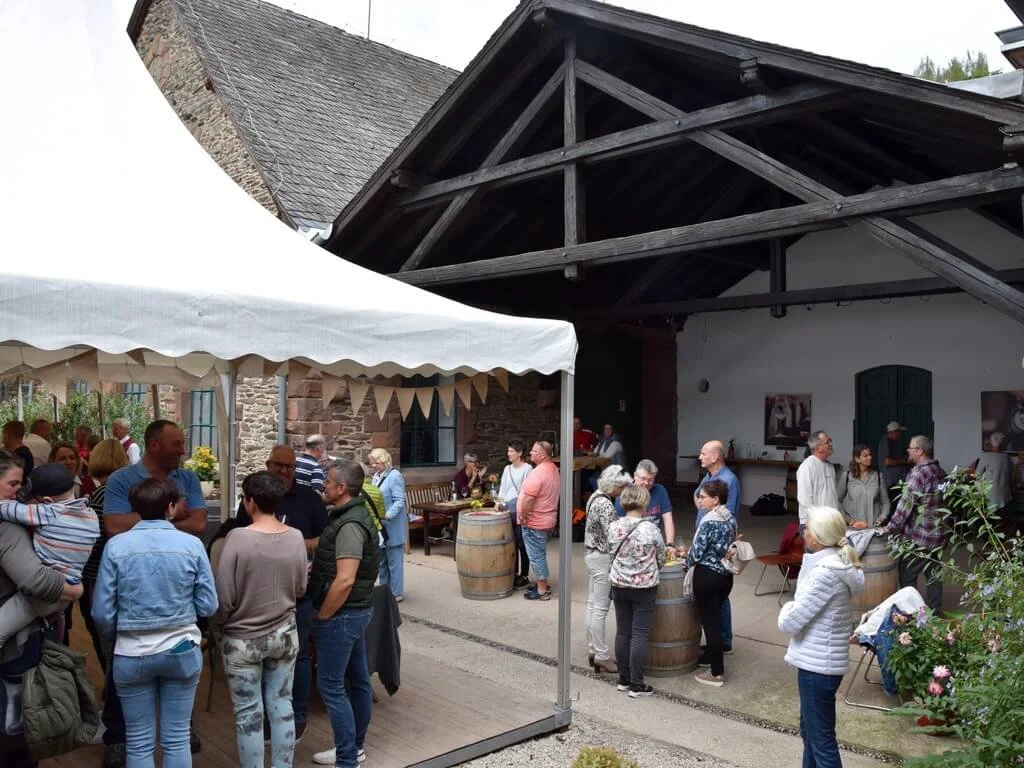
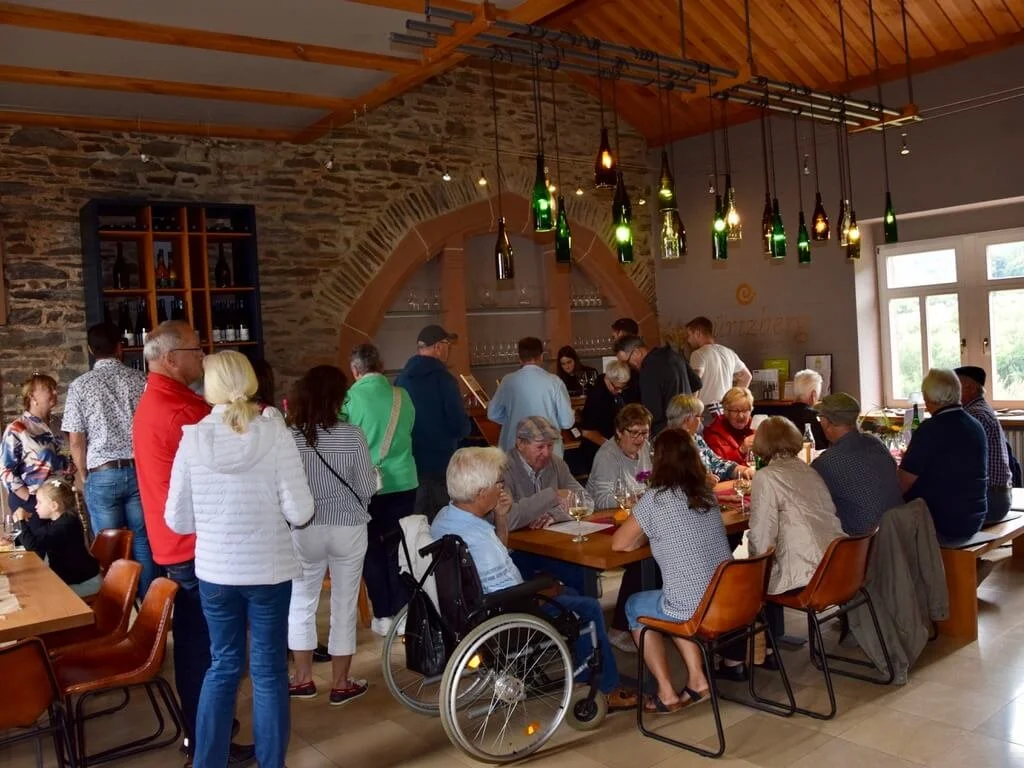
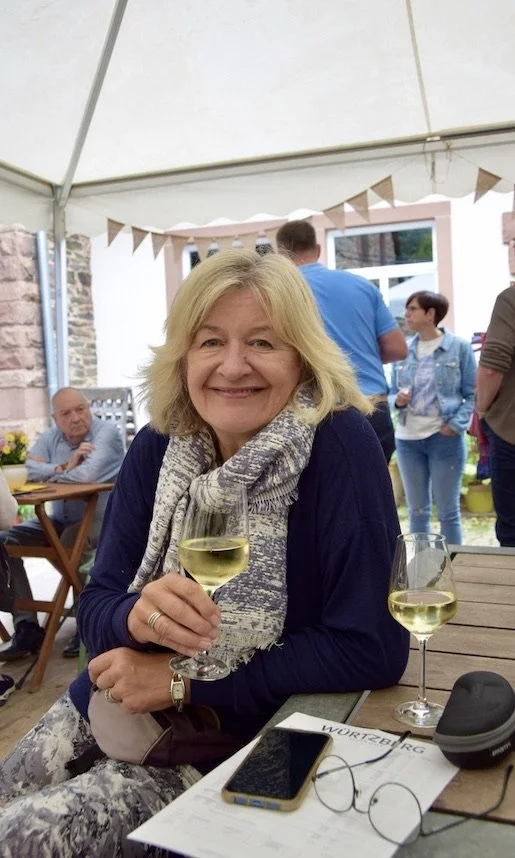
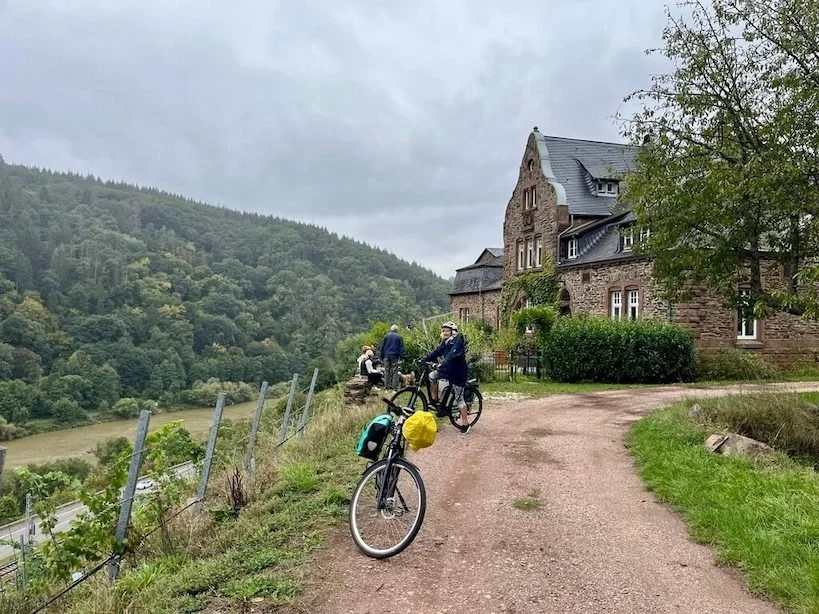
We had the opportunity to taste some of the Würtzberg wines (which were seriously good) in a wonderful and joyous setting and we can highly recommend you visit and discover this superb winery for yourselves. If you want to experience a traditional and authentic, family-owned Saar winery and taste some wonderful examples of Saar wine then look no further than Weingut Würtzberg!
Saarburg things to do
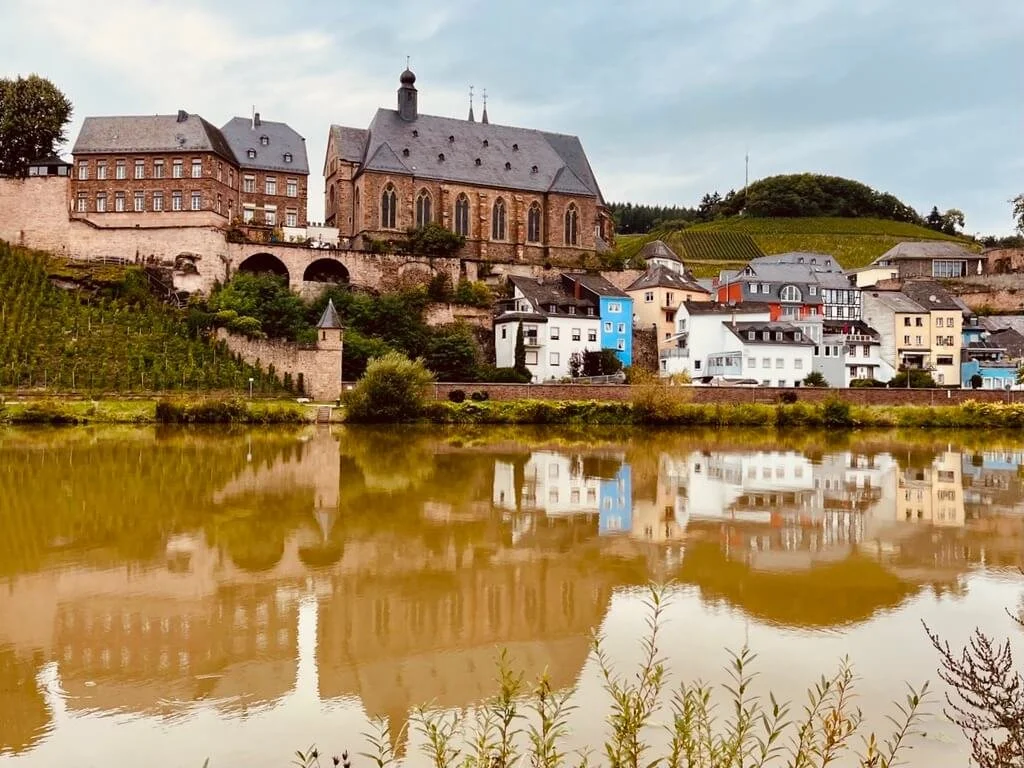
Roughly two-thirds into our bike ride from Konz to Serrig in the Saar Valley, we started to approach a bend in the river and were met with the stunning sight of the stunning ‘Saar Burg’ or ‘Saar Castle’ standing high up on the vine covered slopes, looking over the old town of the same name and the River Saar.
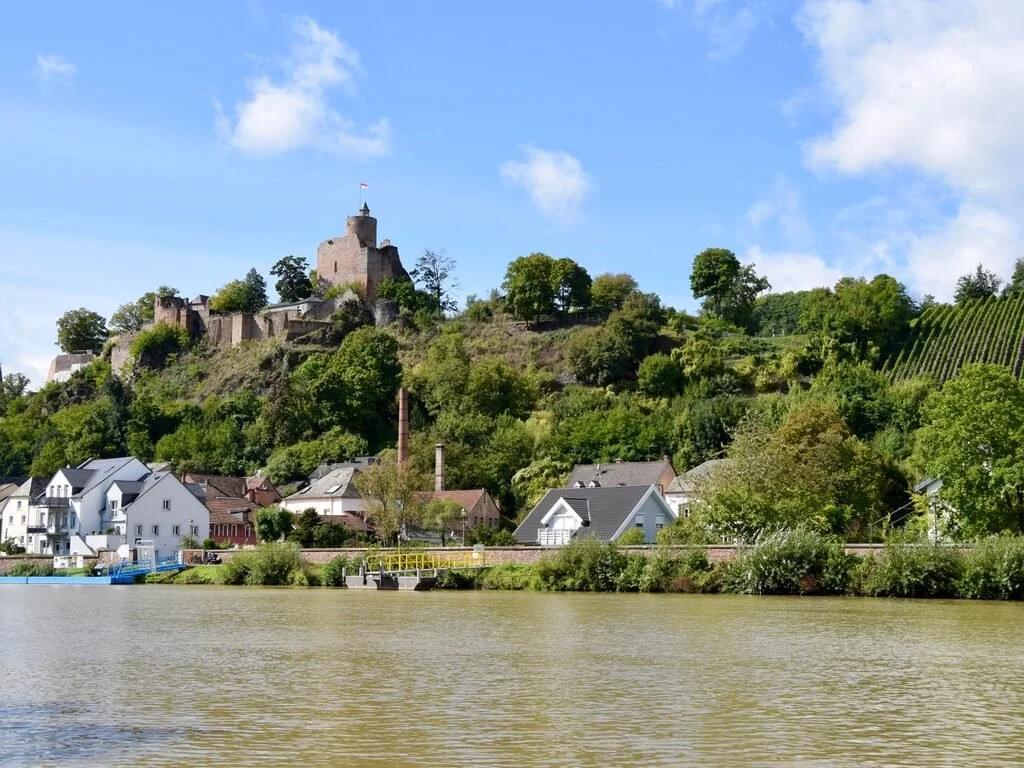
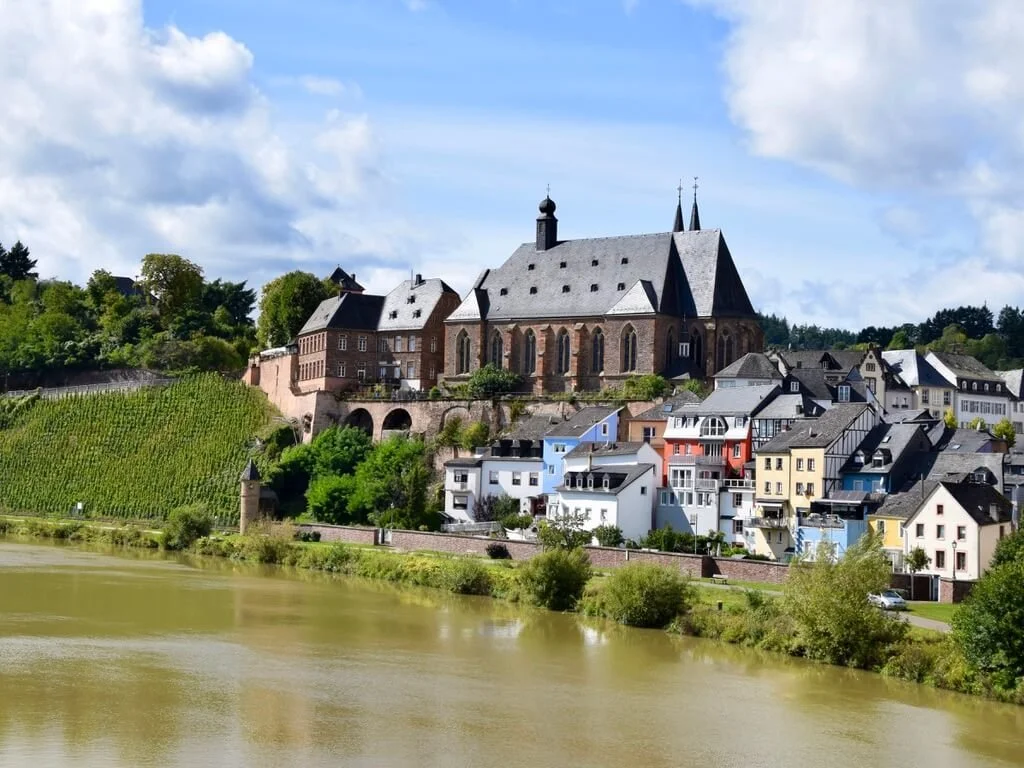
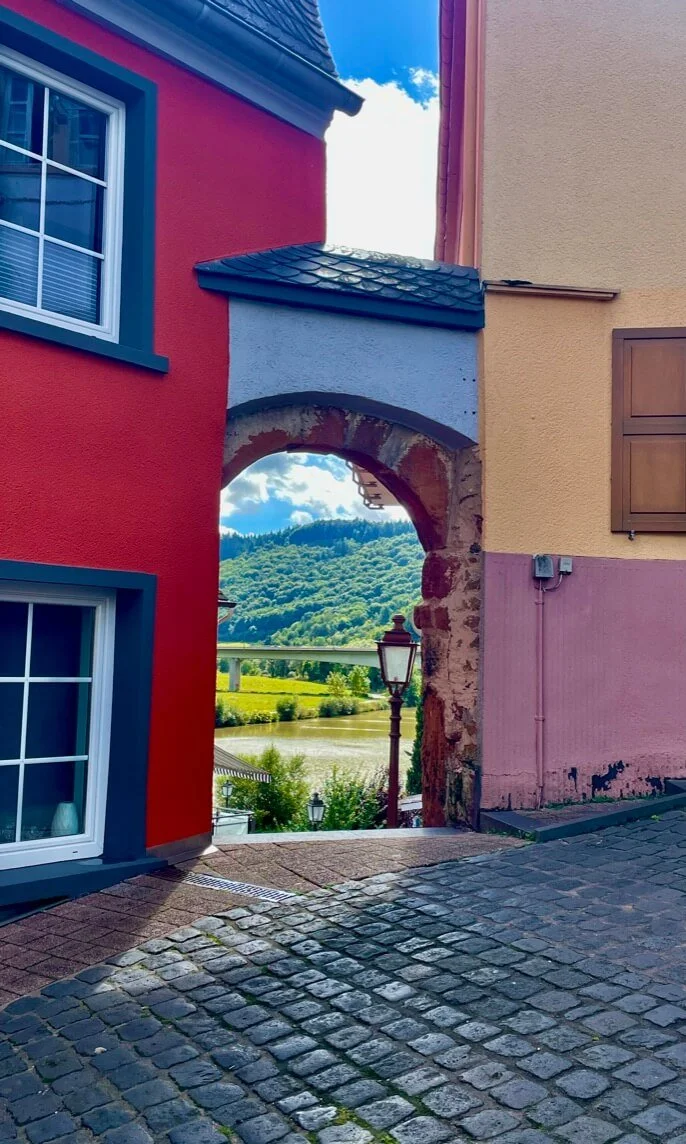
Saarburg is a jewel in the Saar crown and is very popular with visiting tourists, so we left the river cycle path and headed up the steep, cobbled lanes to the heart of the beautiful ‘upper town’ on the hill.
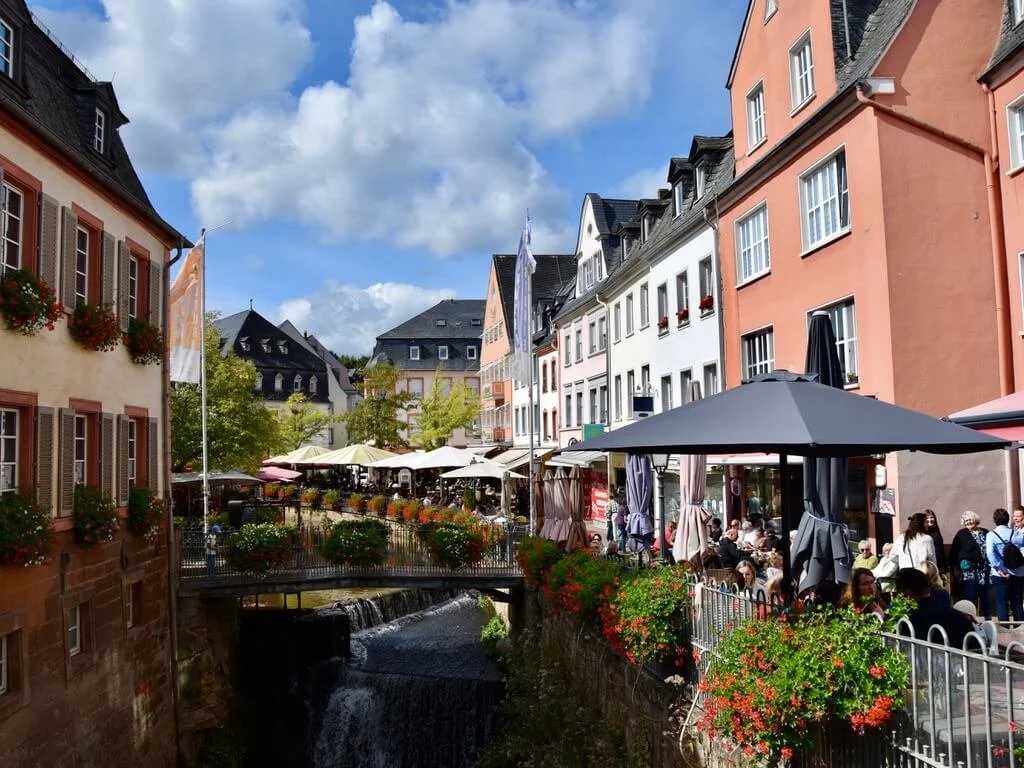
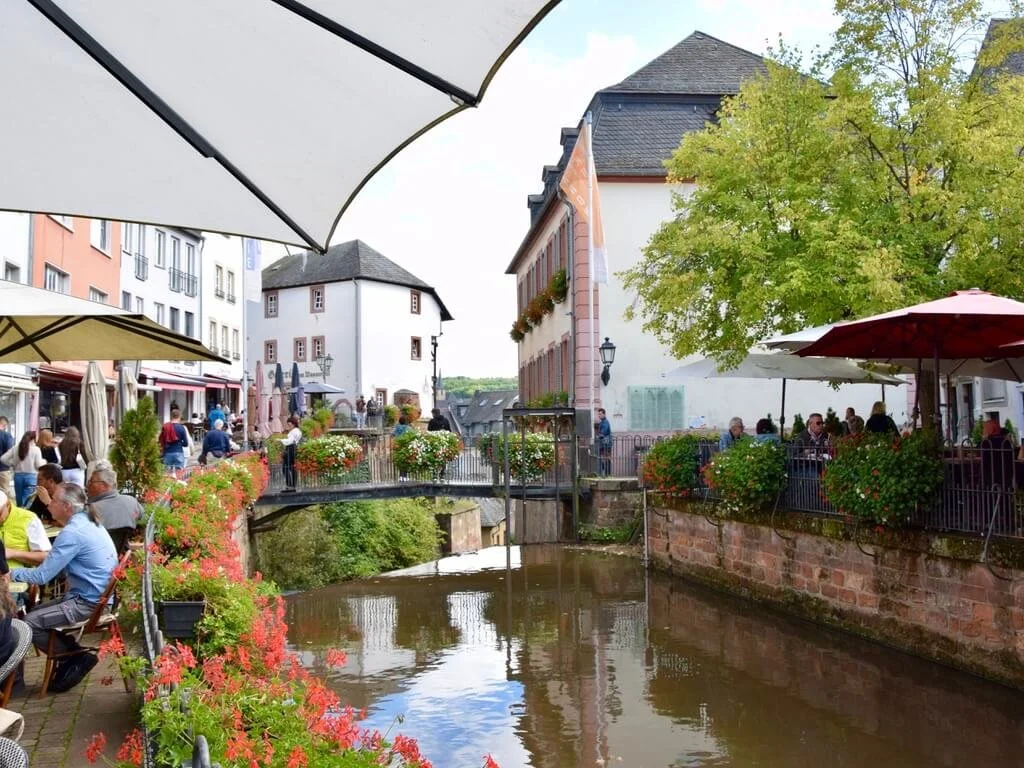
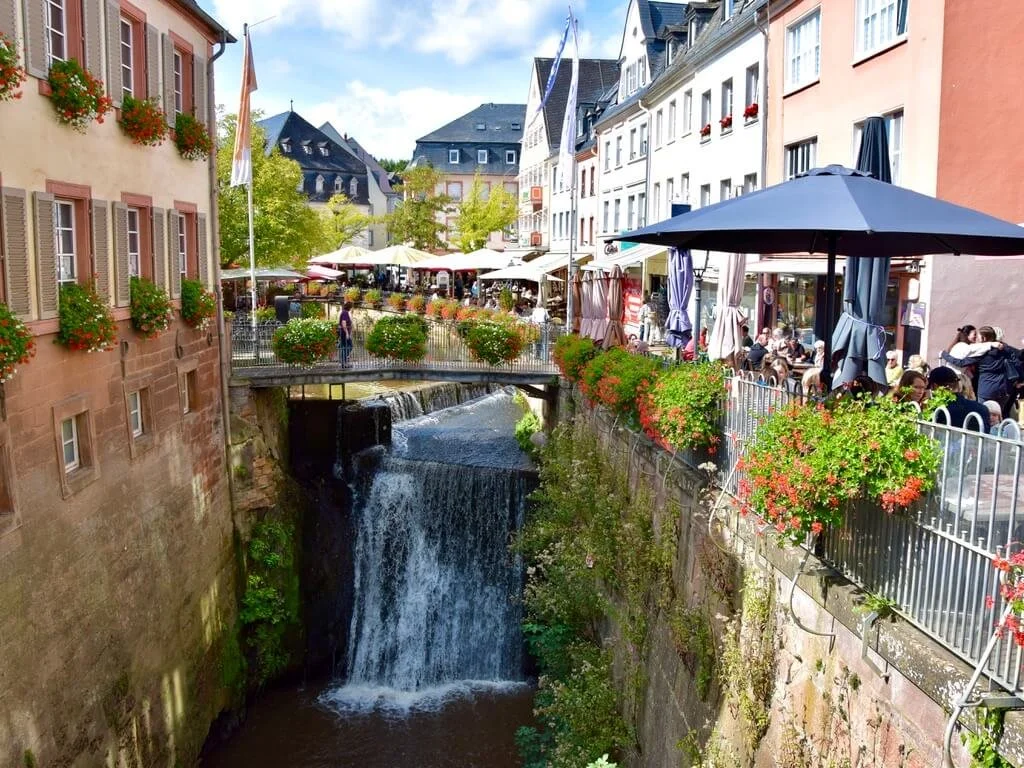
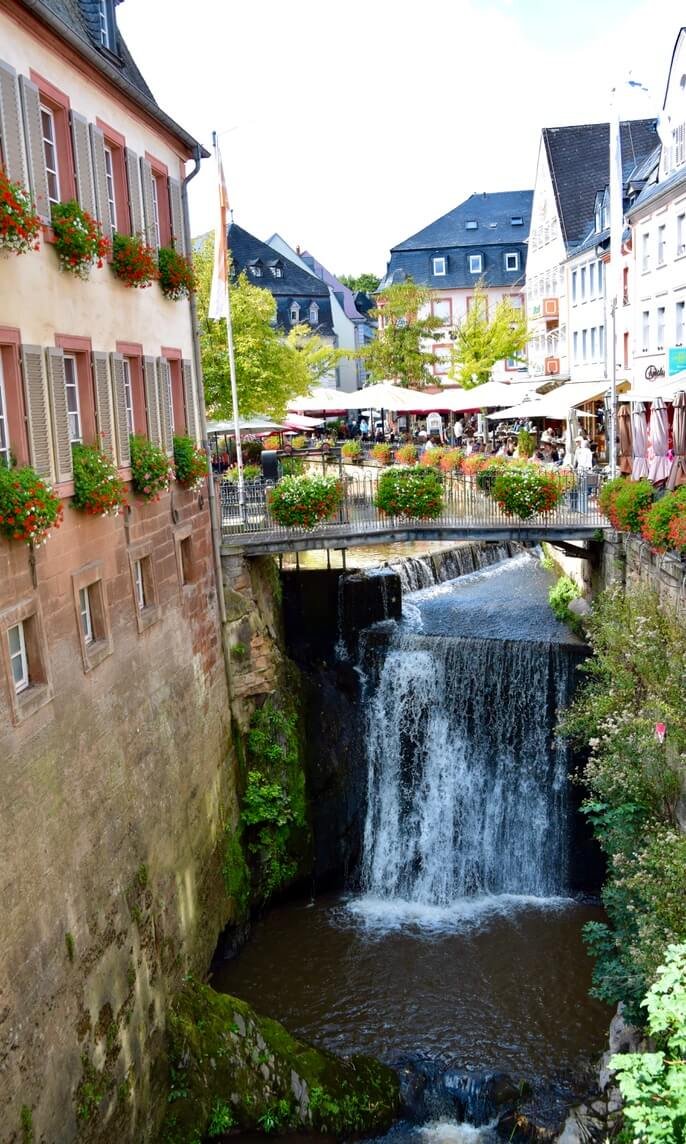
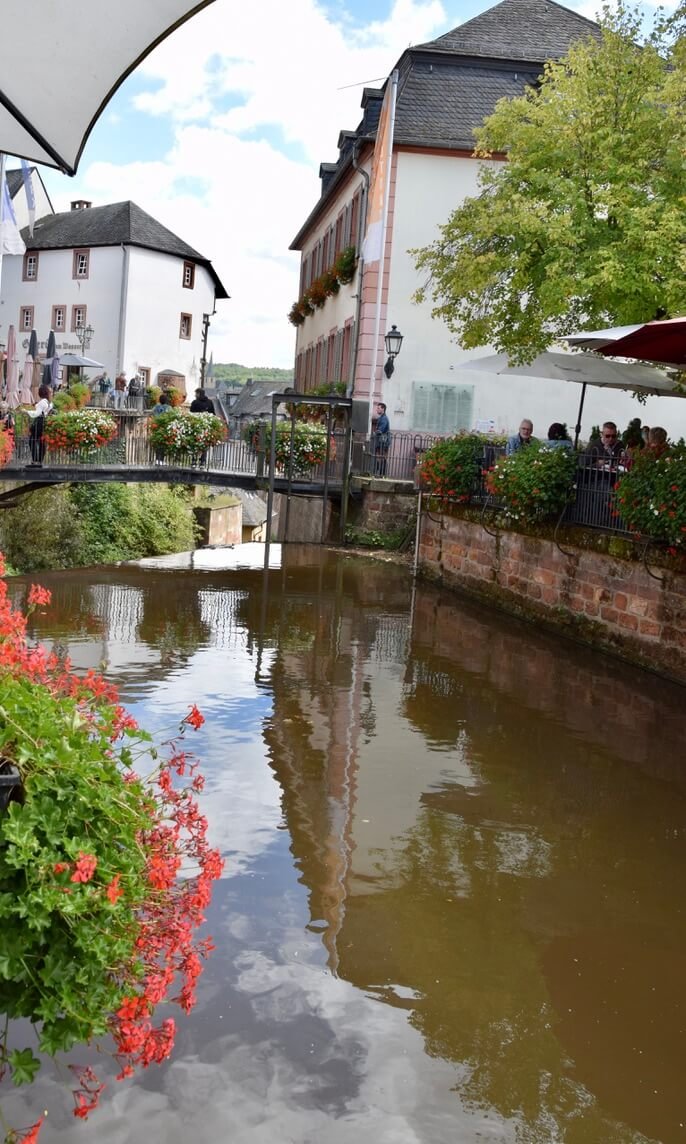
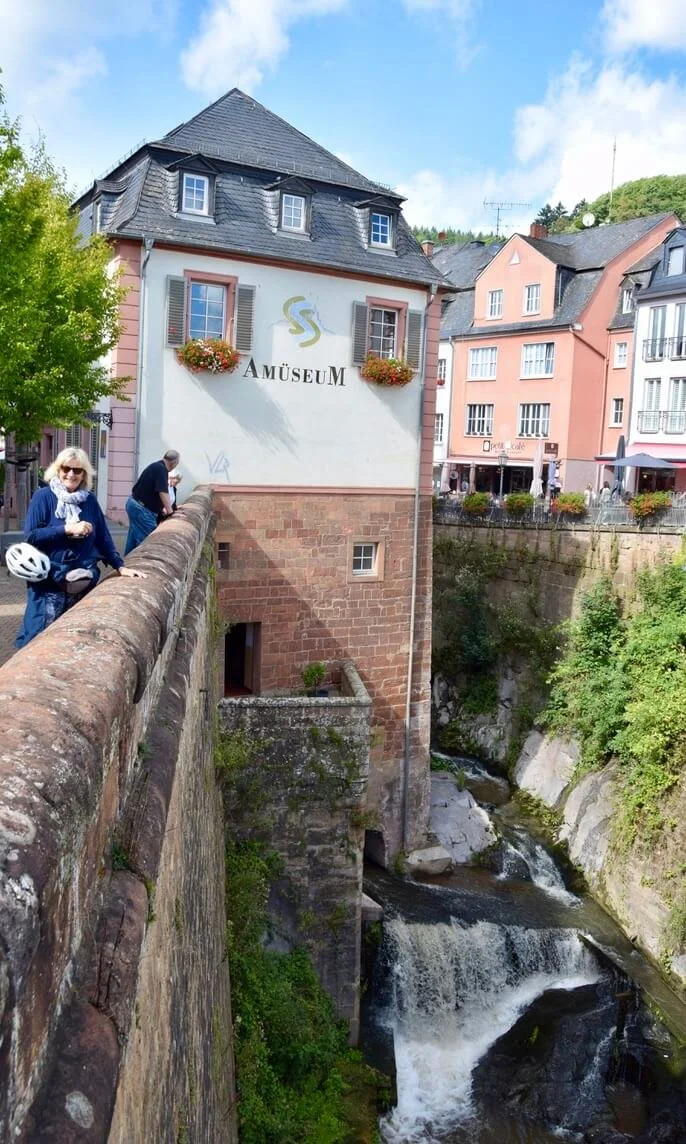
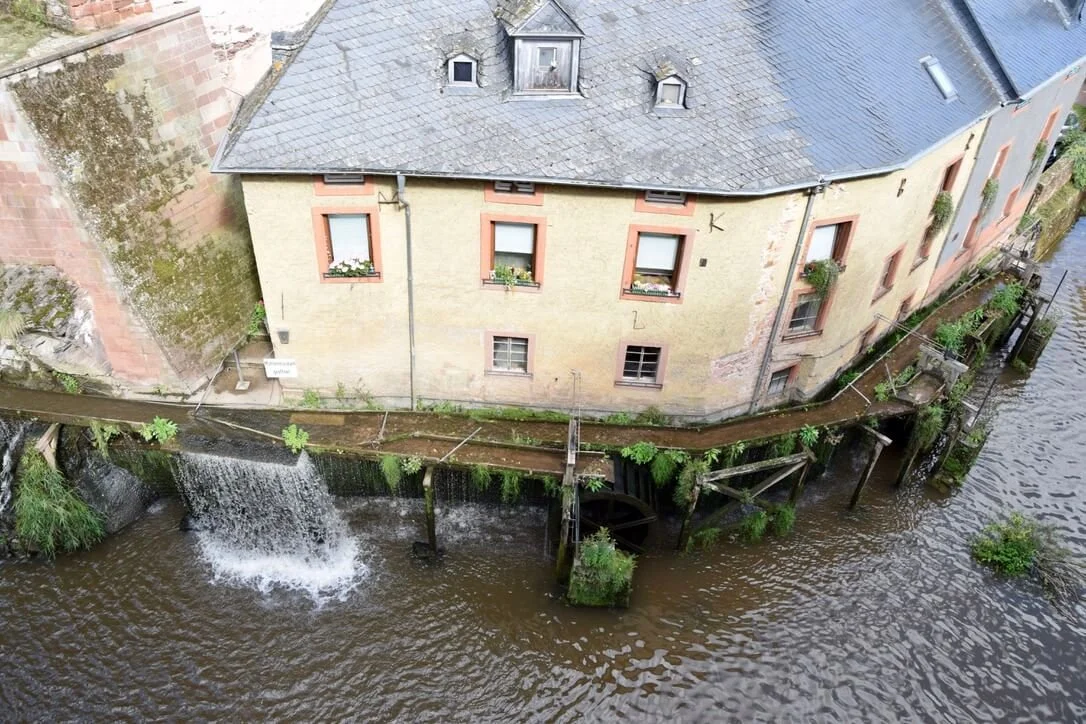
Saarburg is known of course for its medieval castle, but also the Saarburg waterfall which plunges 20 metres down into the centre of the old town. The Leukbach stream runs through the town crossed by several beautiful bridges, which is why the area is known affectionately as ‘Saarburg's Little Venice’. There are two mills at the foot of the waterfall and one is a museum, which is worth visiting.
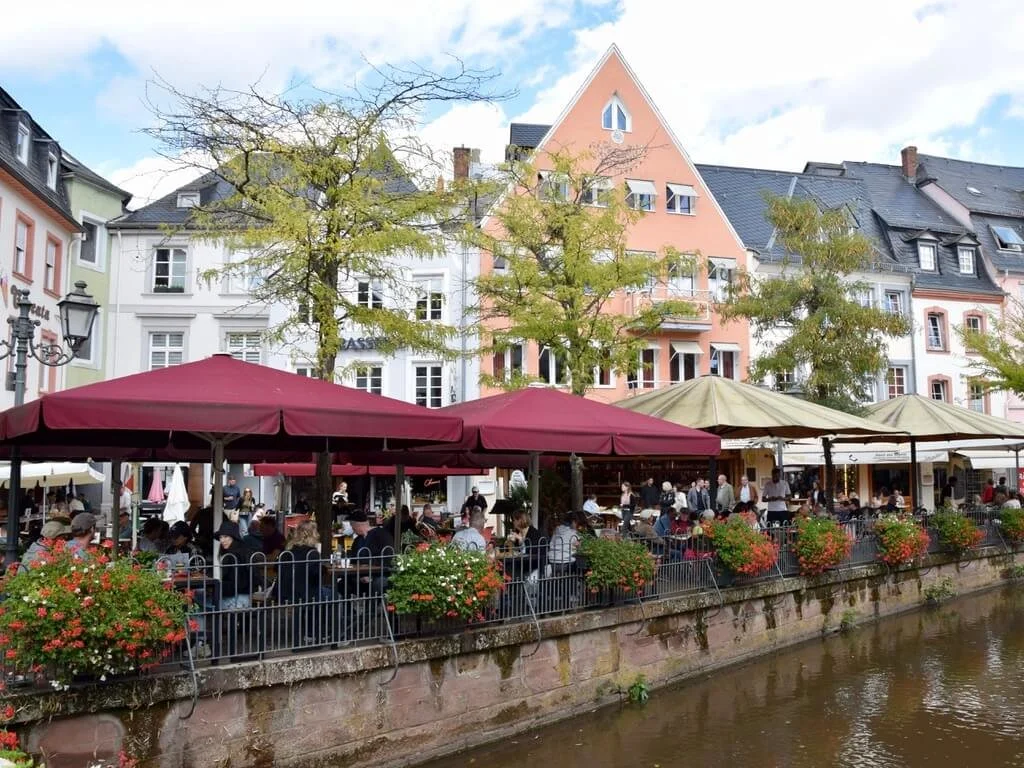
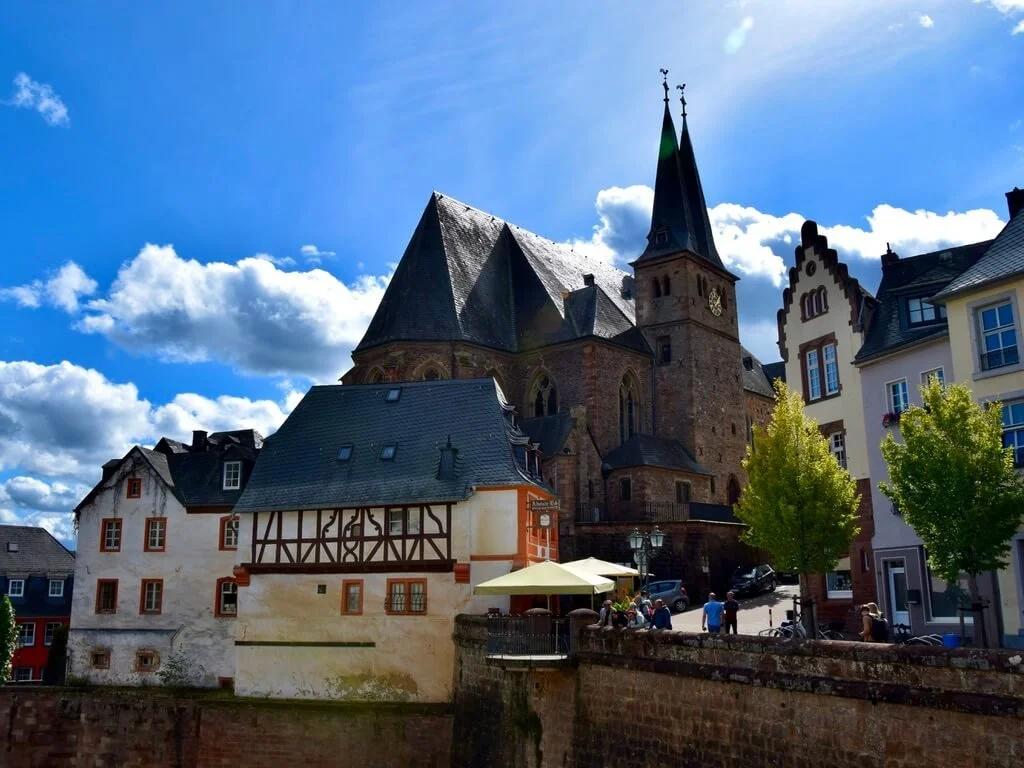
We spent time in the heart of the charming old town, the market square called Buttermarkt, which is a great place to sit, rest and have a drink or a bite to eat. Surrounded by colourful houses and bustling cafés, shops and restaurants, with the ever-present sound of the water in the background makes this a really lovely rest stop!
The ‘lower town’ of Saarburg, an old fishing settlement called Staden stretches out along the river and is in fact the oldest part of the town, with its colourful fishermen’s and sailor’s houses. There is also a bell foundry here dating back to 1770, which you can visit.
Saarburg is also known for its lovely winding streets, alleyways and historic squares so take some time to explore and soak up the special atmosphere here and the spectacular views across the rolling hills and countryside of the beautiful Saar.
For more information about exploring the Mosel wine region’s beautiful Saar, visit ‘VisitMosel’.
Conclusion
We spent a delightful couple of days exploring the Mosel’s Saar region and we weren’t disappointed with the wines! We love German Riesling and the ones we tasted from the Saar were amongst some of the best we have had! We loved exploring the region by way of the Saar cycle path and can highly recommend it!
If you want to also learn about the Ruwer region in Germany’s Mosel, see here.