Discover the top estates in the Mosel’s Ruwer wine region
A tiny region in Germany’s Mosel wine region, but home to iconic Grand Cru vineyards, prestigious German wine estates and top-class Ruwer Rieslings
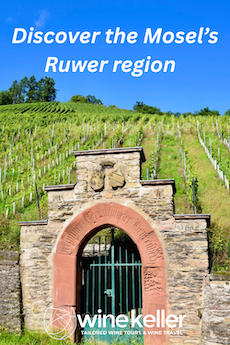
The Abtsberg Vineyard, Maximin Grünhaus, Ruwer Valley - Source: Winekeller
The Mosel wine region is one of the most famous wine regions in Germany, known for its steep vineyards and top Mosel Riesling wines. Some of the undisputed best Mosel Riesling wines are produced in a small Mosel region called Ruwer, a region with over 2000 years of wine history. The Saar and the Ruwer are two tributary rivers of the River Mosel and their vineyard-lined valleys both produce some excellent wines, made from grapes grown on the south-facing, Devon-slate hillsides.
Here we explore the Mosel’s Ruwer wine region, considered one of the world’s most premium wine regions for cooler climate Riesling wine and shine a light on two of its greatest wine estates, Karthäuserhof and Maximin Grünhaus.
Read on to learn all about the Mosel’s beautiful Ruwer wine region, Germany:
Ruwer wine map - Source Wine Folly
The Ruwer wine region
The Ruwer is a small tributary that joins the River Mosel just east of the historic city of Trier, where the wines enjoy a worldwide reputation for greatness.
There are about 190 hectares of vineyards in this small Mosel wine region, but it is home to some of the most prestigious wine estates in the whole of Germany.
The Ruwer wine region stretches from the village of Ruwer, shortly after the river Ruwer flows from the river Mosel to Morscheid, passing through villages like Kasel, Mertesdorf and Eitelsbach where the wine producers are concentrated around the top, historic vineyard sites.
The Ruwer is known for its steep, south and south-west-facing vineyards, planted on hillsides of blue Devonian slate, which retains the heat of the sun and imparts a distinct mineral character to the wines. The climate can be cool, a perfect terroir for the cool climate Riesling, which makes up approximately 90% of the Ruwer vineyard plantings.
Ruwer vineyards, Mertesdorf: Source - Winekeller
Ruwer wines
The Ruwer is known for producing some of the world's finest, high-acidity, aromatic and long-lived Rieslings. Ruwer Rieslings are recognised for their intense, fruity acidity, lightness, and delicate expression.
The difference between Mosel Saar-Ruwer wine
The Saar and the Ruwer are both tributary rivers of the River Mosel, located either side of the city of Trier and their vineyard-lined valleys both produce some excellent examples of Mosel Riesling wines.
Ruwer wines and Saar wines are quite similar, with lots of minerality and acidity and are both quite distinct to Mittel Mosel wines, which are more fruity. However the Ruwer wine region is slightly higher and cooler than the Saar wine region, which makes Ruwer wines slightly more delicate and floral.
Read all about the Mosel’s Saar region here.
Ruwer Riesling vines: Source - Winekeller
Ruwer wine estates
As mentioned above, some of Germany’s most prestigious wine estates and ‘Grosse Lage’/’Grand Cru’ vineyard sites are located in the small wine region of Ruwer in the Mosel.
These top vineyard sites are located around three wine villages in the 3km stretch of the Ruwer from the village of Kasel to Ruwer and it is here that produces some of the best examples of Ruwer wines. These vineyard sites sit above the streams that feed the Ruwer river and have direct southerly exposure to the sun:
Kasel - considered the centre of the Ruwertal (Ruwer Valley) and home to the top vineyard sites of Herrenberg, Kaseler Nies'chen and Kaseler Timpert;
Mertesdorf - famous for the vineyard sites of Abtsberg, Herrenberg and Bruderberg;
Ruwer/Eitelsbach - home to the Karthäuserhofberg vineyard.
In contrast to the general Mosel wine region, the Ruwer vineyard sites tend to be owned outright by individual estates. A 'monopole' site is a vineyard site owned and cultivated by a single estate, with a château (as in Burgundy, France).
Maximin Grünhaus - One of Germany's greatest estates, consistently producing top-tier Riesling.Located on the opposite bank of the Ruwer river from the town of Mertesdorf, producing wines from three monopole sites: Abtsberg, Herrenberg, and Bruderberg;
Karthäuserhof - Located in the village of Eitelsbach, very close to the city of Trier. A historic producer known for its monopole vineyard site, Karthäuserhofberg, producing wines with an incomparable, distinct mineral character and massive ageing potential;
Weingut Karlsmühle - Located in Mertesdorf, directly on the Ruwer river. Monopole owner of the Kaseler Timpert vineyard and a well-respected estate producing traditional Ruwer Riesling;
Weingut Erben von Beulwitz - Located in Mertesdorf/Eitelsbach, known for its expressive, terroir-driven Rieslings (also has an excellent hotel - Hotel Weingut Weis - see later);
Weingut Georg Fritz von Nell - Located near Trier/Kasel and known for quality Riesling in the Kasel area;
Bischöfliche Weingüter Trier - A historic wine estate managing extensive, top-tier vineyards in the Mosel, Saar and Ruwer, including the Grand Cru Kaseler Nies'chen vineyard in Ruwer.
Visit to Weingut Karthäuserhof Eitelsbach
The world-famous Karthäuserhofberg vineyard, Ruwer: Source - Winekeller
Weingut Karthäuserhof was founded in 1335 by Carthusian monks who received the estate as a gift from Elector Baldwin of Luxembourg and ran it as a winery until secularisation by Napoleon in 1803.
This iconic German wine estate - the 8th oldest wine estate in the world - has been owned by the same family since the early 1800s, now in its seventh generation. Valentin Leonardy first bought the property at auction in 1811 and it has remained in the same family since then. Christoph Tyrell was responsible until 2012, when the estate was passed over to his cousin, Albert Behler.
Learn more about the history of this famous wine estate here.
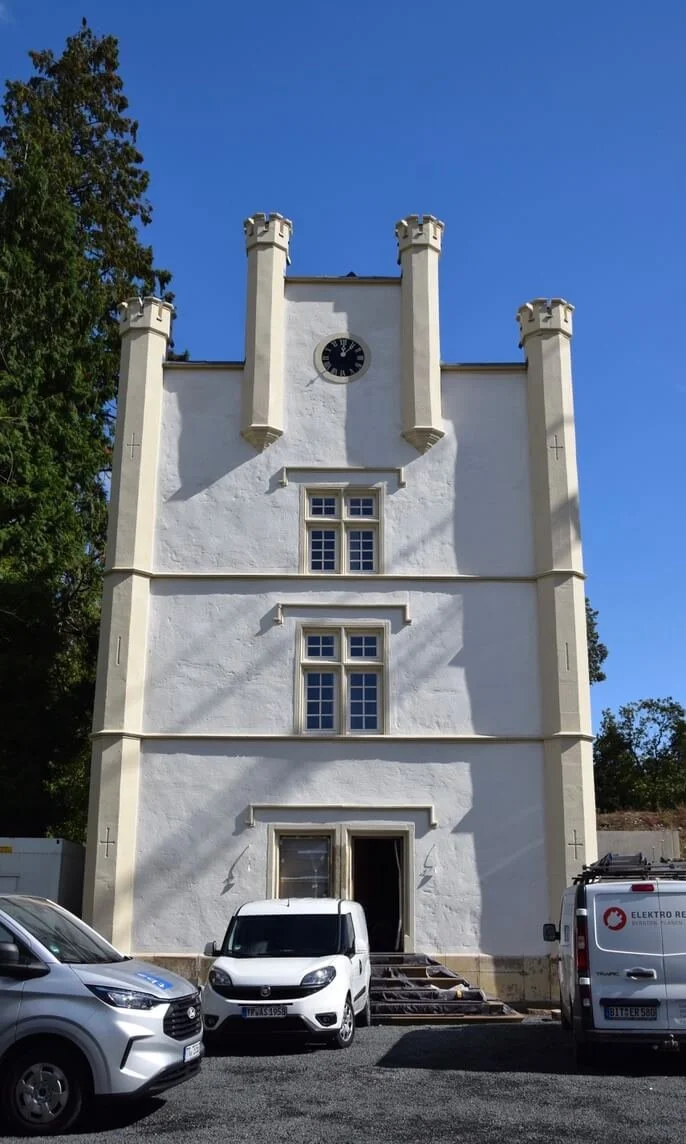
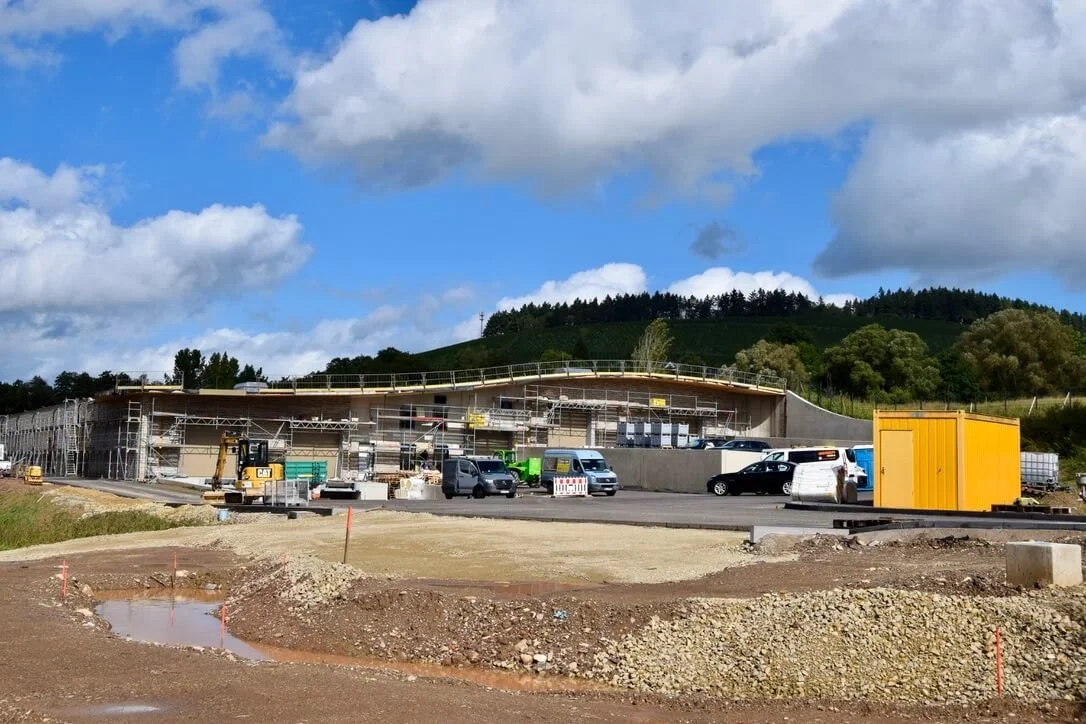
When we visited the estate in September 2025, a major renovation project was underway, involving the estate’s historic, listed buildings. A new vinothek is being built on the site which will open in 2026 and a new winery has been built in nearby Mertesdorf.
The historic ‘Bruno Tower’ (Turm Bruno) sits proudly in the centre of the estate, named after Bruno of Cologne, the founder of the Carthusians, who personally founded the order's first two communities.
Karthäuserhof vineyards
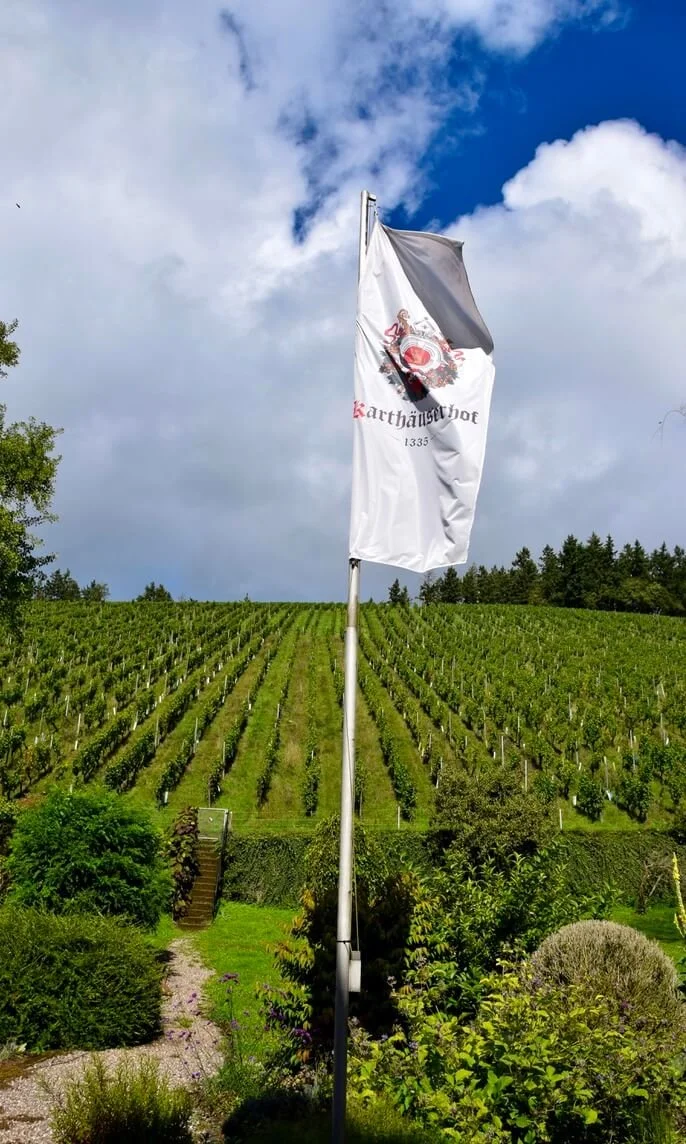
Weingut Karthäuserhof Ruwer is known for its monopole vineyard site, Karthäuserhofberg. This 19 hectare vineyard comprises the famous VDP ‘Grosse Lage’ Karthäuserhofberg vineyard, classified a top vineyard site in 1868, which has a south to south-west facing slope and an approximate gradient of 55%.
The Karthäuserhofberg is planted mainly with Riesling, which thrives in the blue and grey Devon slate soils and is protected by forest to the east and above on the hilltop.
Karthäuserhof wines - Source: Winekeller
The estate has accumulated additional vineyard plots in the area over recent years and the total vineyard area is now just under 30 hectares.
The estate is transitioning to organic and biodynamic processes under the leadership of Mathieu Kauffmann, a leading figure in the German wine industry, who joined the team as Technical Director in 2020.
Weingut Karthäuserhof wines
Karthäuserhof is famous for its classic, dry Rieslings, which have minerality and fruity acidity, typical of Ruwer wines. Karthäuserhof wines also famously age well and few German wines have a reputation for being as long-lived.
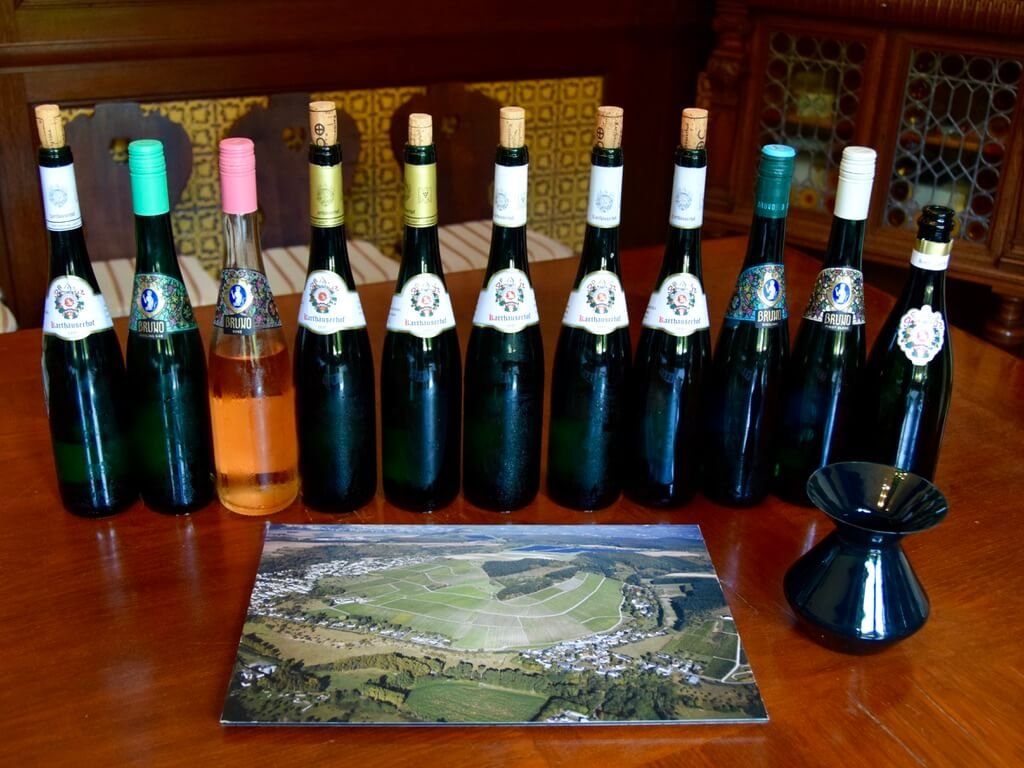
In addition to a range of VDP estate wines, village wines and Grand Cru wines (purely from the Karthäuserhofberg vineyard), the Karthäuserhof range of wines also includes an entry-level range called ‘Bruno’, (named after Bruno of Cologne - see earlier), which are made from grapes from other growers in the area. However all of the pressing is done in the Karthäuserhof winery.
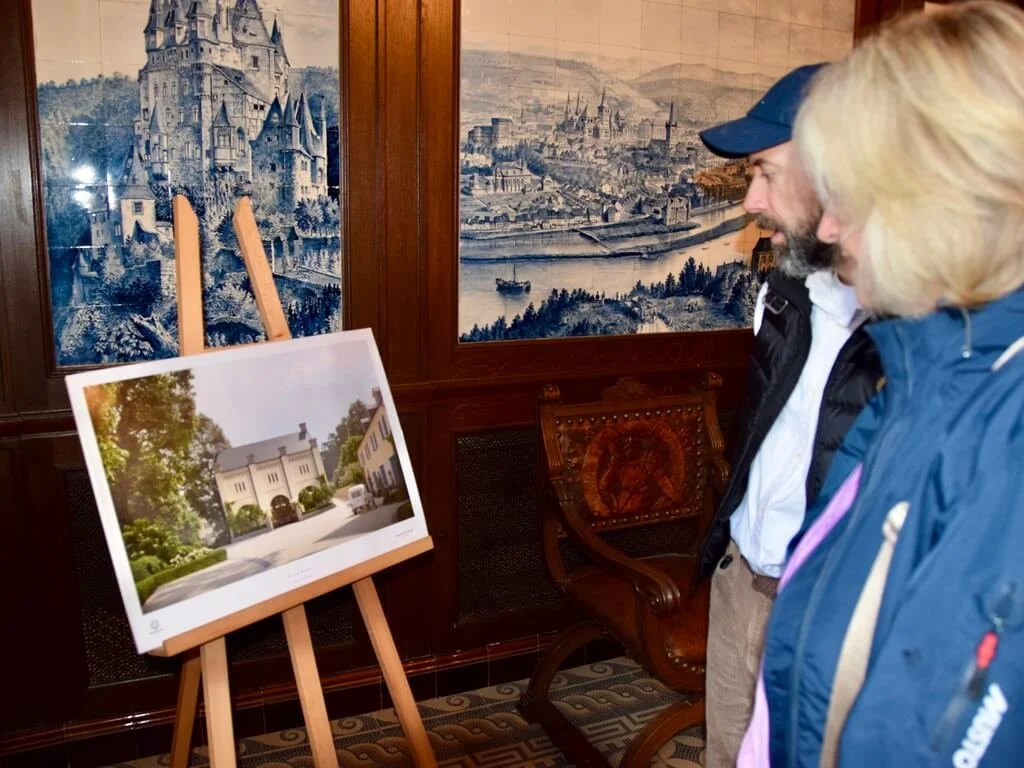
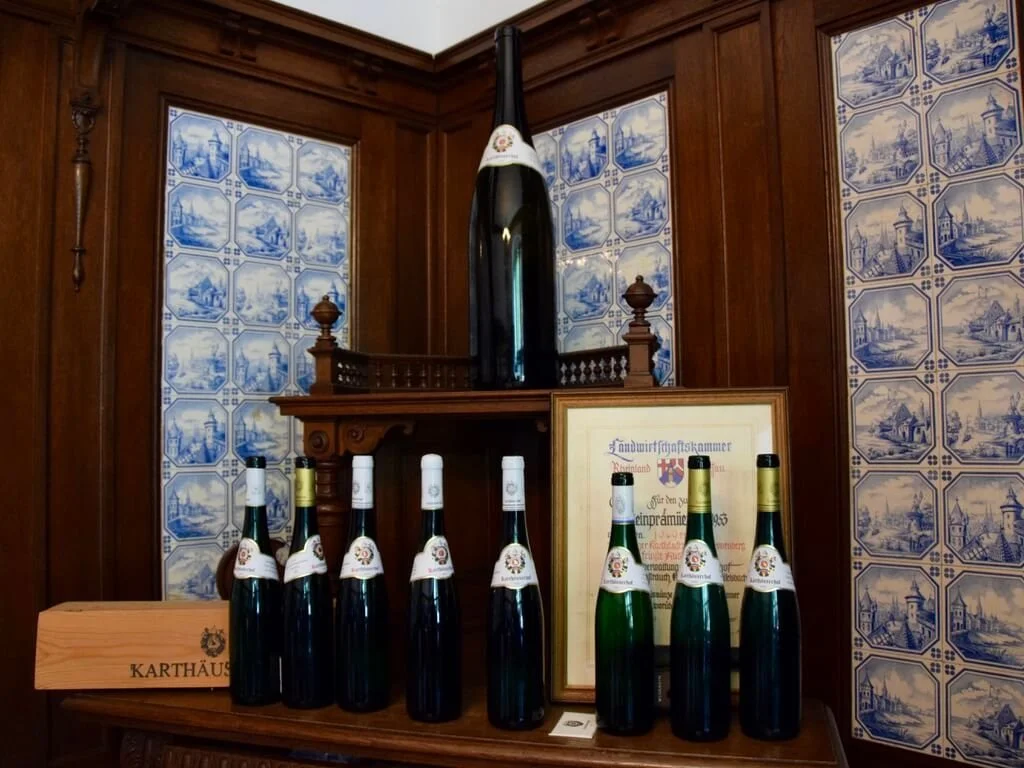
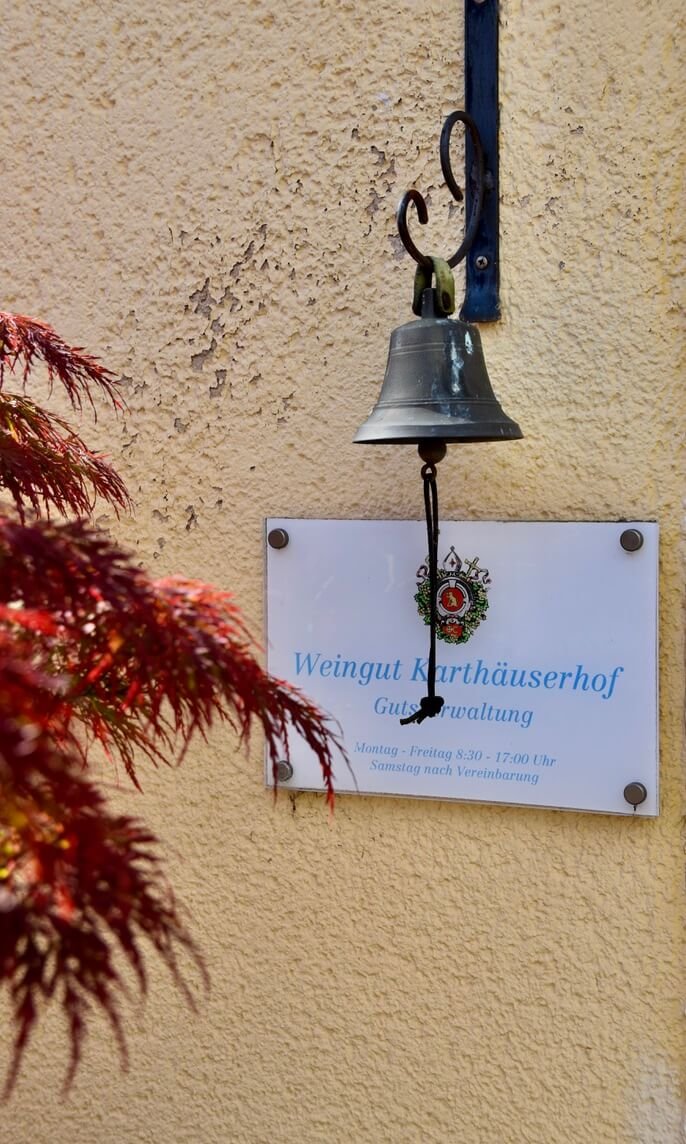
Our wine tasting
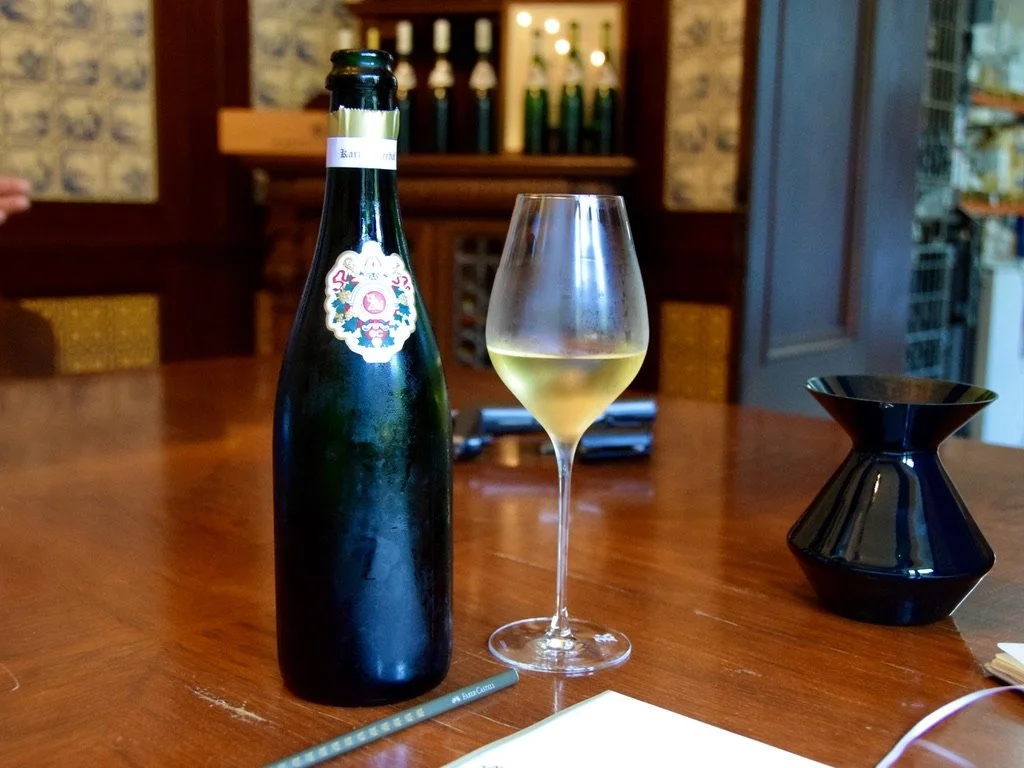
We were privileged to enjoy an incredible wine tasting at Karthäuserhof, including wines from the Bruno range (a Pinot Blanc, a rosé, a dry Riesling and a fruitier, low alcohol ‘feinherb’ Kabinett Riesling), followed by a broad selection of Riesling wines, as well as the Karthäuserhof Brut Sekt, which we loved - a Riesling/Pinot Blanc sparkling cuvée made by the traditional method.
We also loved the famous Kartäuserhofberg Grosses Gewächs (Grand Cru) - we tasted both the 2018 and the 2023 - they were both stunning wines.
Karthäuserhof is indeed an iconic German wine estate and if you are exploring the Ruwer, you need to make time to visit - we would certainly love to return to experience the new vinothek!
Maximin Grünhaus
The beautiful Maximin Grünhaus ‘schloss’ - Source: Winekeller
Maximin Grünhaus is a world-class Riesling specialist producer and top Ruwer wine estate, located in the village of Mertersdorf, with a viticulture history dating back to Roman times.
Weingut Maximin Grünhaus lies at the foot of a steep, southern-facing cliff - the Grüneberg - that extends along the left bank of the Ruwer River, roughly 2 km away from its junction with the Mosel.
Like Weingut Karthäuserhof, Maximin Grünhaus is a single vineyard estate, famous for its ‘Grand Cru/Grosse Lage’ vineyard, Maximin Grünhaus Abtsberg. In fact Maximin Grünhaus owns three contiguous Grosse Lage monopole sites: Maximin Grünhäuser Abtsberg, Bruderberg and Herrenberg.
Maximin Grünhaus was a monastery for almost 1,000 years, serving as a secondary location for the Sankt Maximin Benedictine cloister of Trier and this provided the foundation for the production of its top quality wines. The estate passed to the French administration under Napoleon’s secularisation in 1811 and then to the von Schubert family in the late 19th century. Today the estate is overseen by the family’s sixth-generation, Maximin Von Schubert, who took over from his father Carl in 2014.
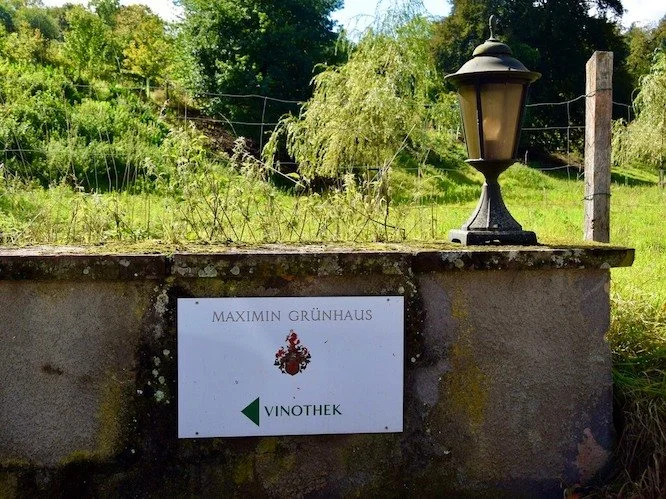
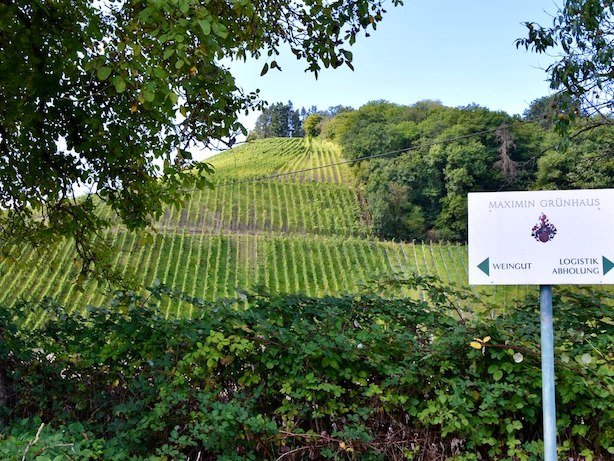
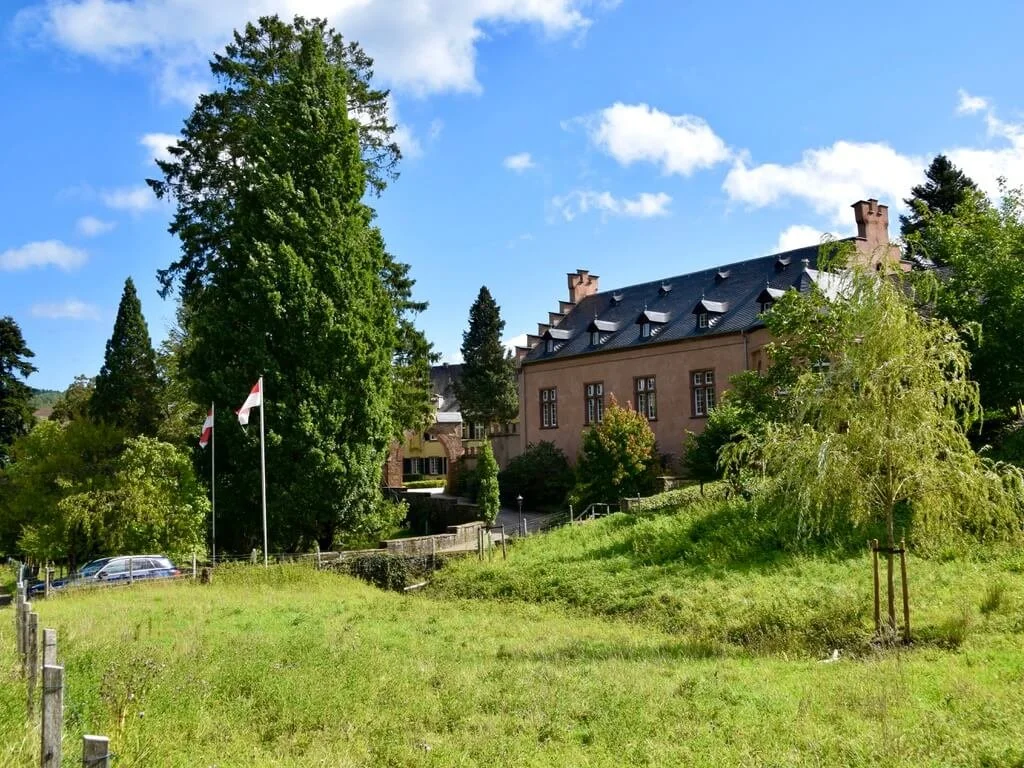
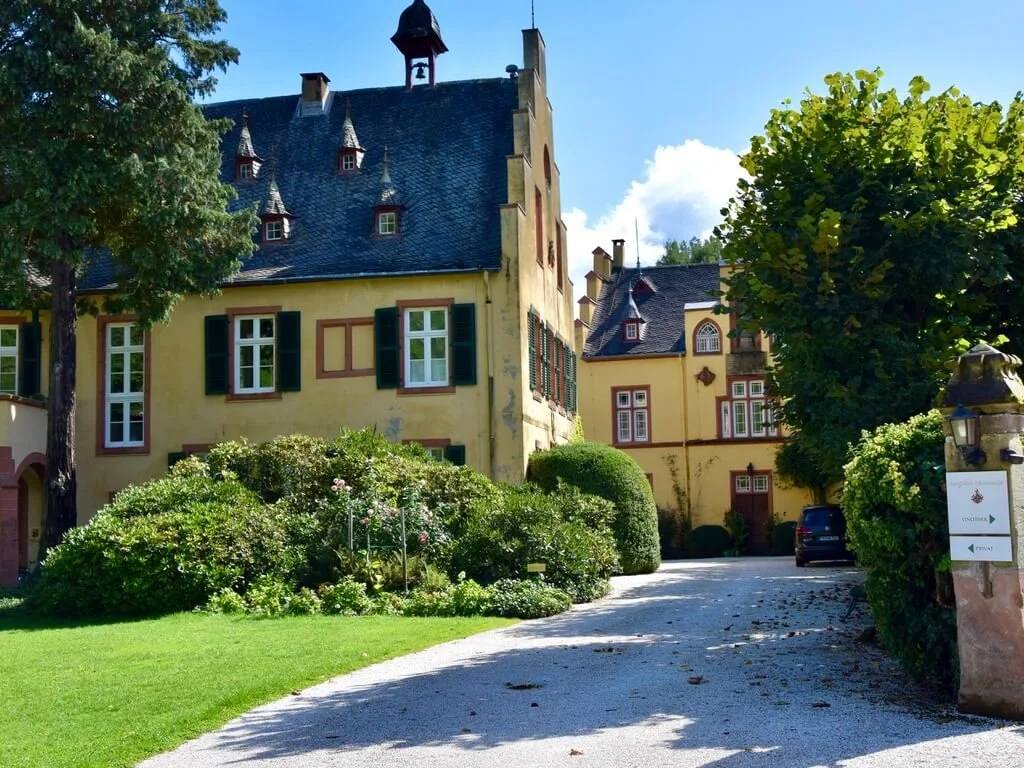
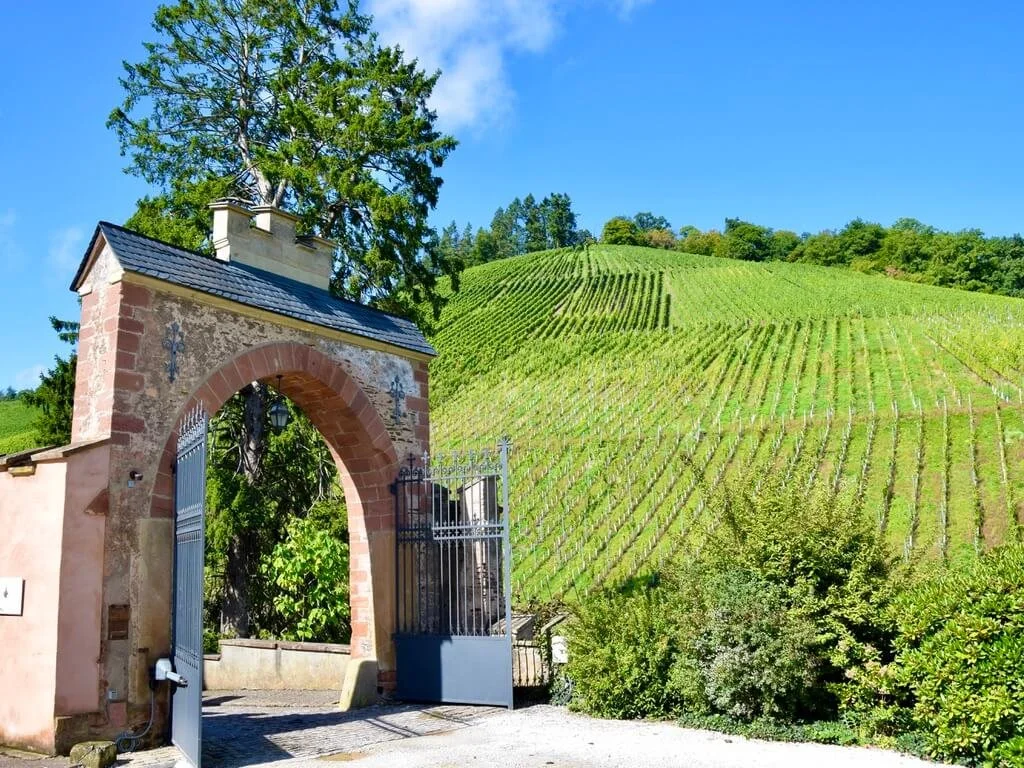
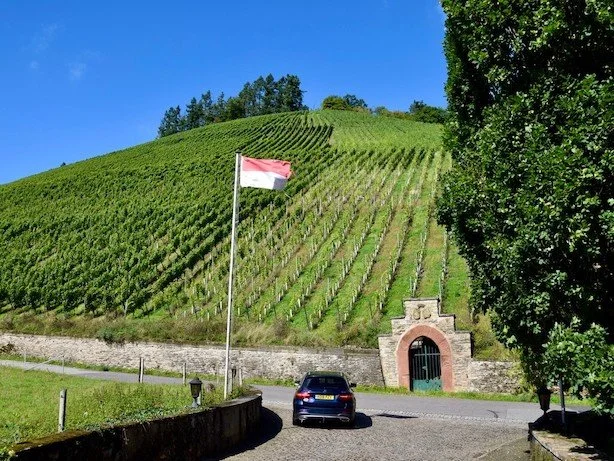
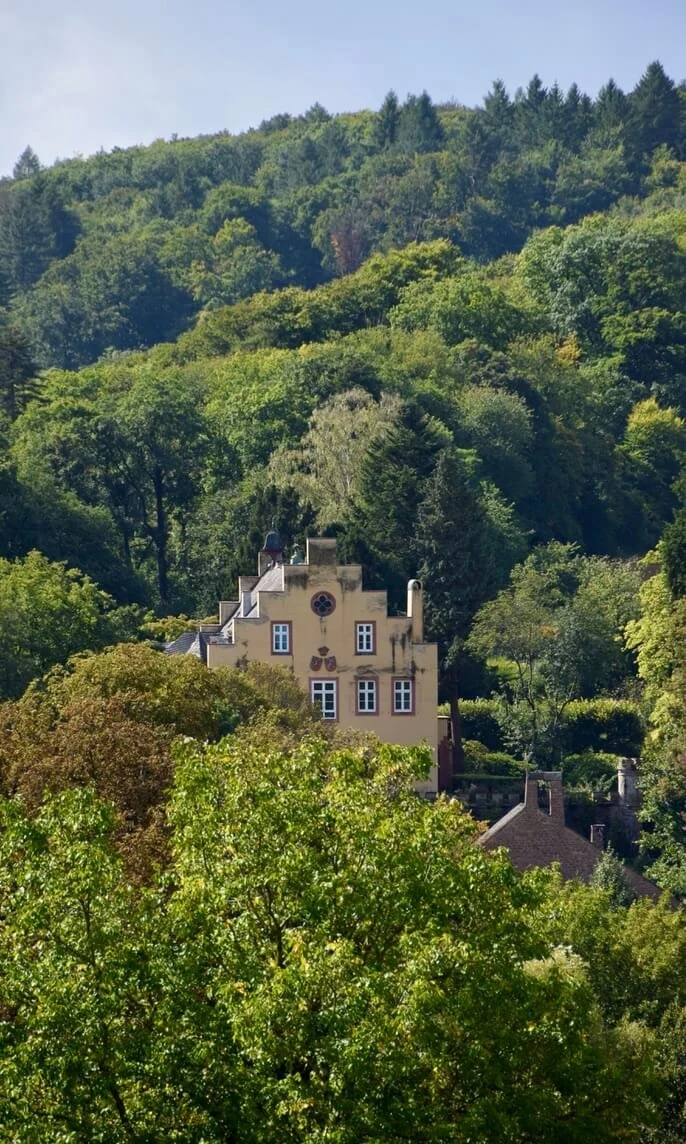
The family lives in the manor house (or ‘Schloss’ - castle), which reportedly, as a former monastic property still connects with the former Roman capital city of Trier, 8km away, by way of a subterranean aqueduct. The beautiful manor house sits proudly at the centre of the world-famous monopole vineyard sites, located on steep, south-facing slopes, each divided into separate, but contiguous plots and each having its own unique terroir and microclimate. This enables Maximin Grünhaus to offer a range of stand-out Riesling wines, with different Riesling expressions.
Work in the vineyards is finely tuned with nature and grapes are harvested by hand. The Maximin Grünhaus winery and cellar are located minutes from the vineyards to ensure quick pressing after harvest and fermentation takes place in small stainless-steel tanks and large oak casks, made by local coopers using wood from the estate’s forests.
Maximin Grünhaus Abtsberg
The famous ‘Abtsberg’ vineyard is the most renowned of the three Maximin Grünhaus sites, planted on 14 hectares of blue Devonian slate subsoil with a 75% incline. The best parcels of the site are classified as ‘Grosse Lage’. Historically ‘Abstberg’ wines were produced for the abbot of the local monastery.
Wines from the Abtsberg are especially famous for their aging potential.
The world-famous Abstberg vineyard, Maximin Grünhaus, Ruwer: Source - Winekeller
Maximin Grünhaus Herrenberg
The ‘Herrenberg’ vineyard covers 19 hectares and is located near the Grüneberg forest, a cooler site and much less steep compared to the Abtsberg. Here Riesling grows on red Devonian slate soils, along with some Pinot Blanc.
Maximin Grünhaus Bruderberg
Just one hectare in size, the Bruderberg vineyard faces south-east and is a much cooler site than either the Herrenberg or Abtsberg, giving the wines a unique character.
Maximin Grünhaus Riesling wines
Maximin Grünhaus is known especially for its ‘Grosses Gewächs’ (GG) wines - which sit at the top of its dry wine hierarchy, offering the unique expression of each ‘Grosse Lage’ site, the Abtsberg, Herrenberg, and the Bruderberg. Each wine in the Maximin Grünhaus ‘GG’ collection is made using fruit exclusively from each of the three single vineyards owned by the Maximin Grünhaus estate.
There is a broad range of Maximin Grünhaus wines to explore and we implore you to do so! If you are in the Ruwer area then make sure you arrange a tasting as these really are special, iconic Ruwer, Mosel and German wines.
Where to stay in the Ruwer
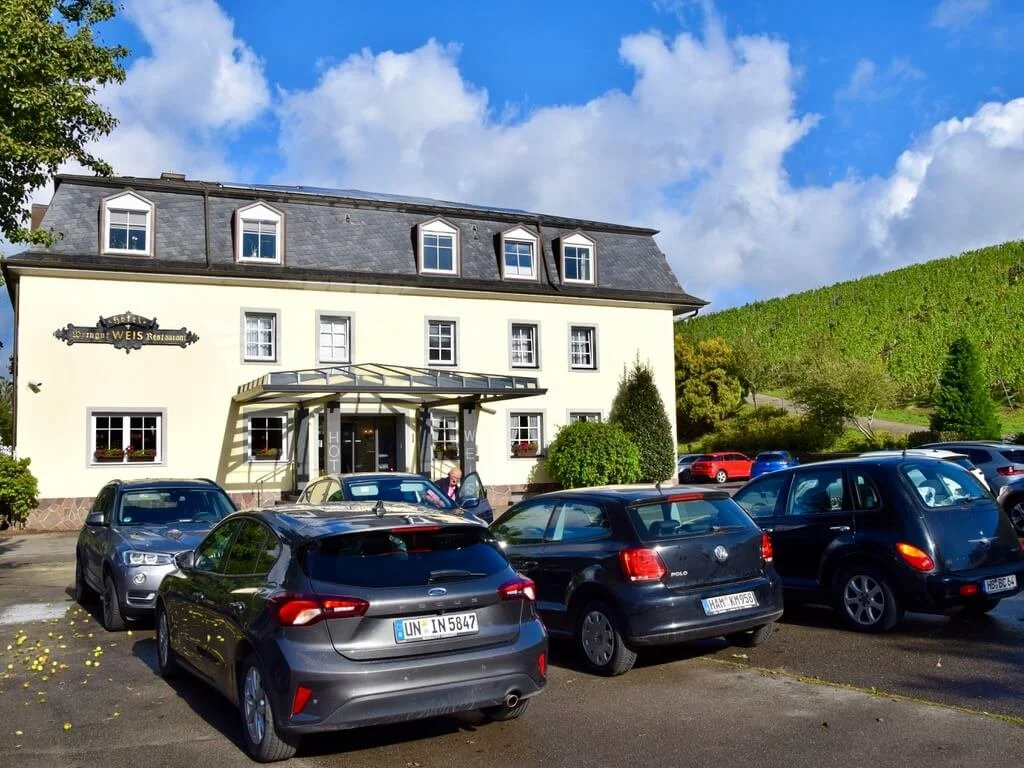
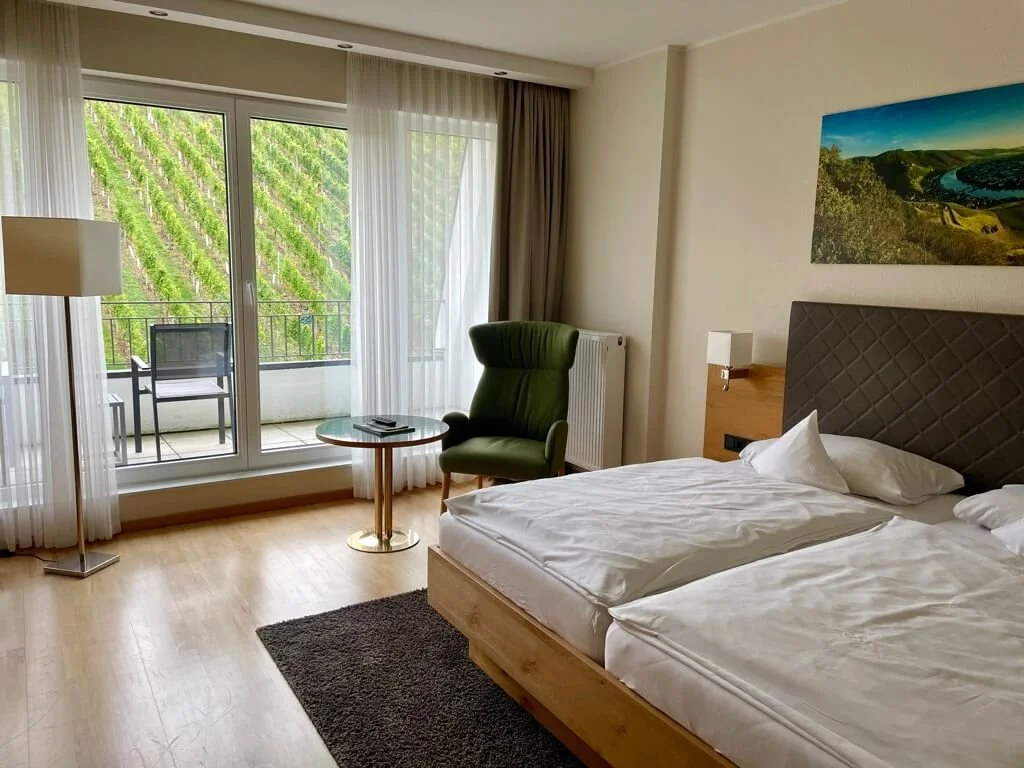
We can highly recommend the wonderful Hotel Weingut Weis in Mertersdorf, a four star hotel with superb facilities including an excellent restaurant and a spa. Located in the centre of the vineyards you have easy access to the two wine estates covered here, but you can also visit the hotel’s own winery - Weingut Erben von Beulwitz - and enjoy sampling the excellent wines over dinner.
We had a wonderful room overlooking the vineyards and really enjoyed our stay here, the food and wines were excellent and the service super friendly.
Visit the historic city of Trier
The Porta Nigra Roman gate in Trier: Source - Winekeller
Both Maximin Grünhaus and Karthäuserhof are just minutes away from the capital city of the Mosel wine region, the magnificent and historic city of Trier.
Trier is the oldest city in Germany and an important site for ancient, historic treasures and world-class architectural monuments and we highly recommend you visit it whilst in the Ruwer wine region.
Read all about Trier and things to do in Trier here.
Discover the Ruwer Valley
The Ruwer Valley (Ruwertal) is the perfect place for relaxation and enjoying nature.
Located between the Eifel and Hunsrück hills, the picturesque Ruwertal leads into the Hochwald and the Saar-Hunsrück Nature Park and there are lots of options to explore the beautiful landscapes.
Visit the tourist information centre in Kasel or see here for ideas and inspiration. We can recommend some cycling on the ‘Ruwer-Hochwald Radweg’ (cycle path), and also the ‘Ruwer Riesling Erlebnisweg’ , an 8km adventure trail focusing on Ruwer Riesling wine! There is also lots to do in the Ruwer valley for families.
Conclusion
Ruwer may be a tiny region in Germany’s Mosel but it more than makes up for size with the quality of its Ruwer Rieslings and the calibre of its iconic and historic wine estates! A feast for any wine lover or wine enthusiast!
If you want to also learn about the Saar region in Germany’s Mosel, see here.