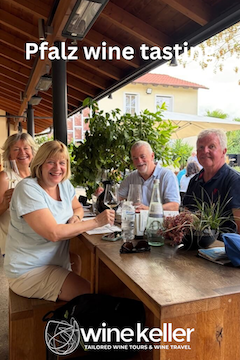
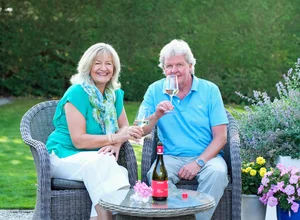
We visit two top wineries in the northern Pfalz wine region
Weingut Knipser and Weingut Philipp Kuhn are top Pfalz wine region wineries located at the northern end of the popular German wine route in the village of Laumersheim
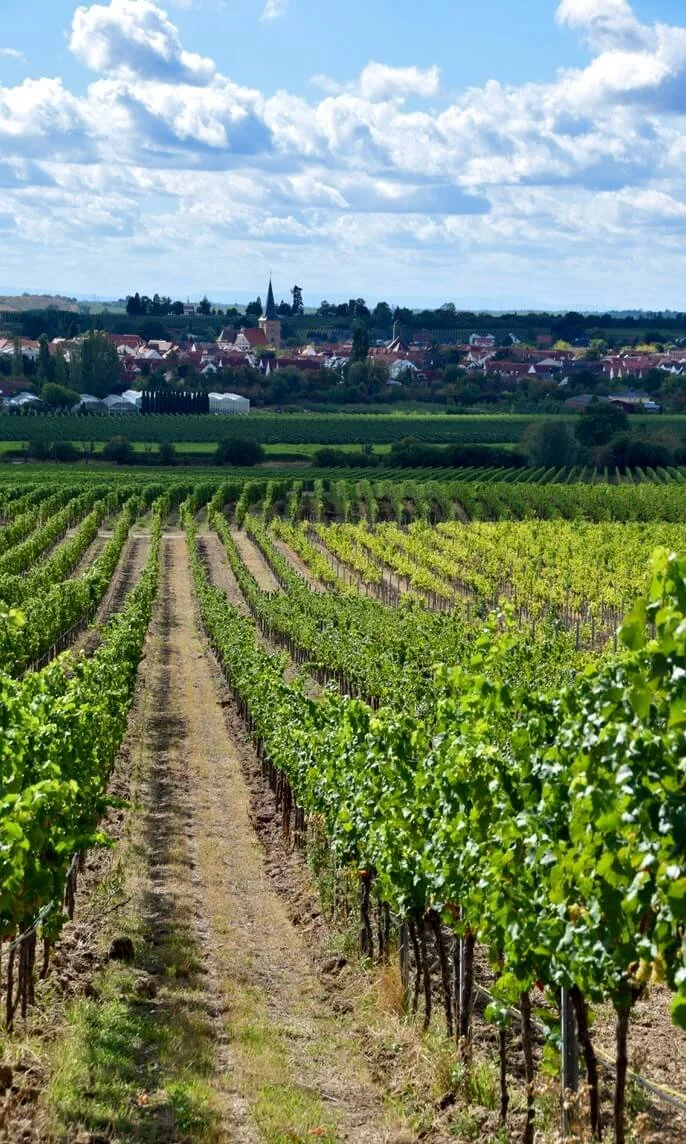
Walking into the Pfalz village of Laumersheim - Source: Winekeller
North of the town of Bad Dürkheim in Germany’s Pfalz wine region lies a cluster of villages known for their exciting and innovative Pfalz wines, a region called the northern Mittelhaardt Pfalz wine region. Central to this area’s wine story are two Pfalz wineries, Weingut Knipser and Weingut Phillip Kuhn, both located in the lovely Pfalz village, Laumersheim.
We decided to spend a day visiting these top, iconic Pfalz wineries and exploring the beautiful Pfalz countryside between the famous Pfalz villages, Laumersheim and Freinsheim.
The northern Mittelhaardt Pfalz wine region
It wasn’t until the late 1970s that the Pfalz vineyards north of the town of Bad Dürkheim developed a reputation for excellent Pfalz wines - a reputation that today is rivalling that of the popular central Mittelhaardt region. The early pioneers at this time were the Knipser brothers in the village of Laumersheim and Bernd Philippi of Koehler-Ruprecht in Kallstadt, who both started to produce wonderfully dry German Rieslings and barrique-aged red German wines - specifically Spätburgunder or Pinot Noir wines.
Interest in these wines slowly grew and other young winemakers in the area started to emulate these pioneering efforts later in the 1990s, including Philipp Kuhn in Laumersheim, Neiss in Kindenheim and Gaul and Metzger in Grünstadt. In more recent years, two brothers in the village of Freinsheim, Weingut Rings, have further strengthened this region’s reputation for excellent Pfalz wines, in particular Pfalz red wine.
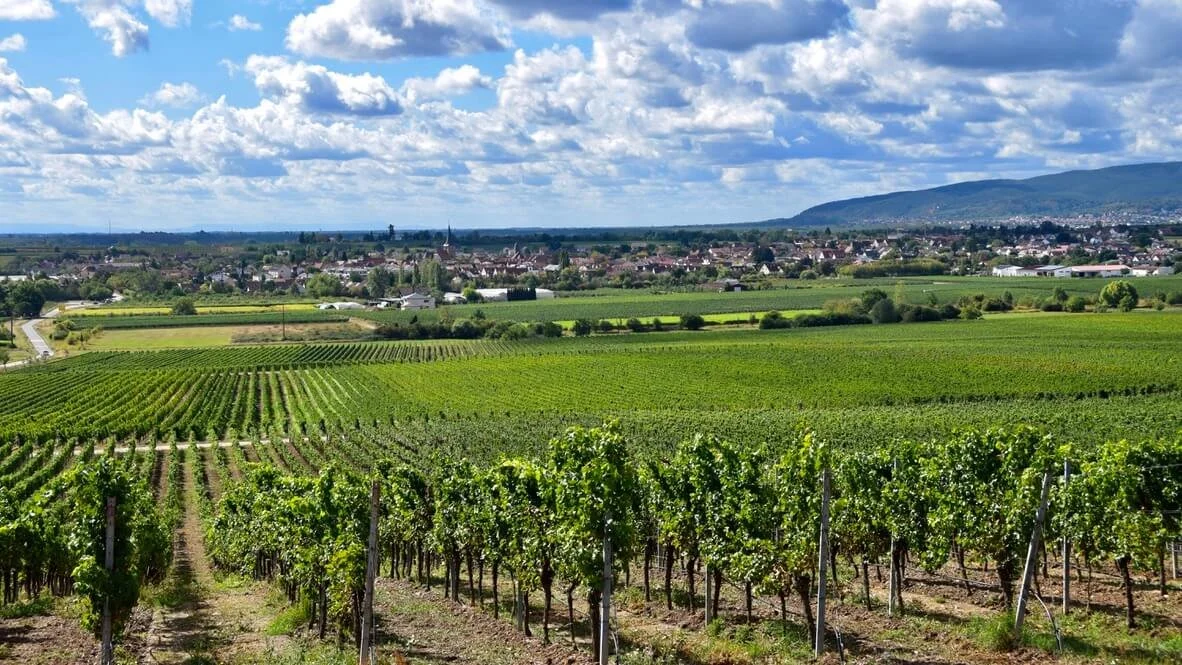
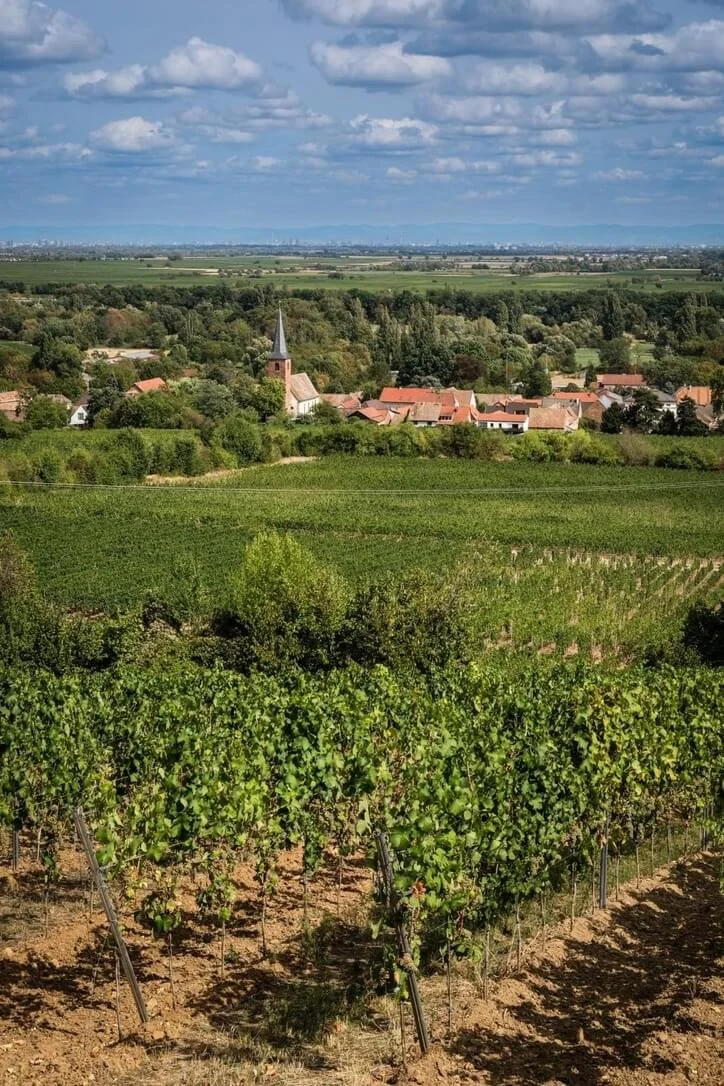
The vineyards around the Pfalz village of Freinsheim: Source - Winekeller
This Pfalz revolution has ensured that the area around the village of Laumersheim has now become a magnet for lovers of excellent red German wine, specifically Pfalz Pinot Noir. There are also some excellent examples of Sauvignon Blanc, Chardonnay, Cabernet Sauvignon and Syrah being produced in this northern part of Germany’s Pfalz wine region.
Exceptional Pfalz vineyards in northern Mittelhardt:
Notable, premium vineyard sites in the northern Mittelhardt region, which are known for producing exceptional Pfalz Riesling and Pfalz Pinot Noir, include:
Laumersheim: Kirschgarten, Steinbuckel;
Grosskarlbach: Burgweg;
Freinsheim: Schwarzes Kreuz;
Dirmstein: Mandelpfad;
Kallstadt: Saumagen, Steinacker
Our hike from Freinsheim to Laumersheim
Our Pfalz wine region base for a few nights was the Freinsheimerhof in the beautifully restored old city of Freinsheim, with its imposing city wall, towers and gates (see later).
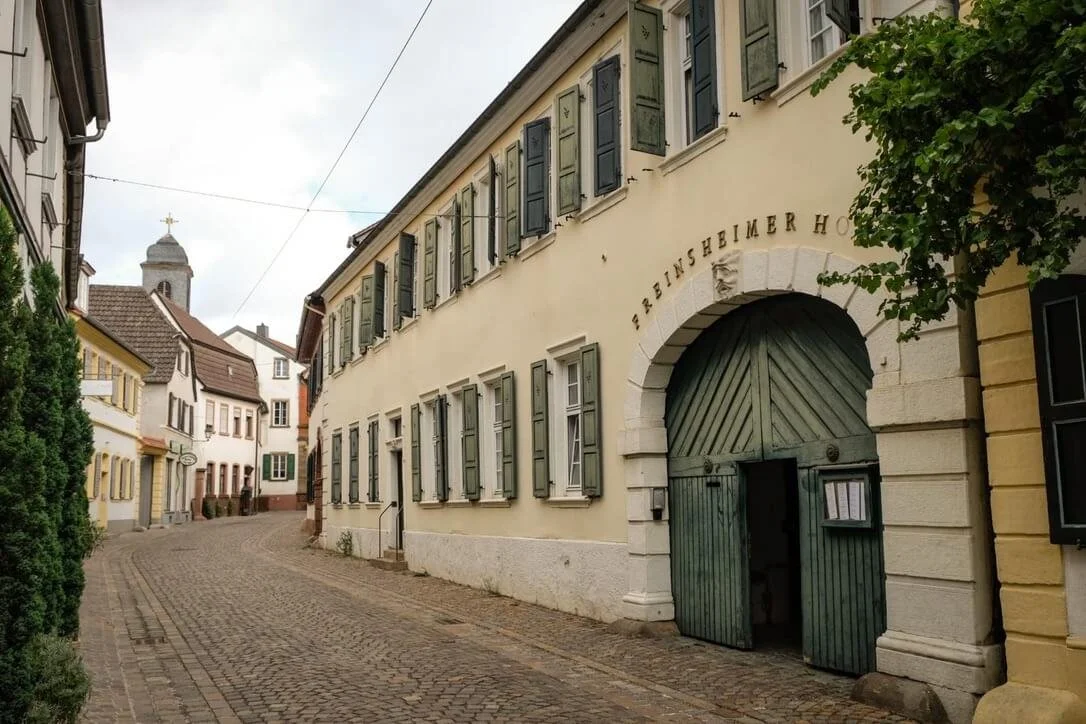
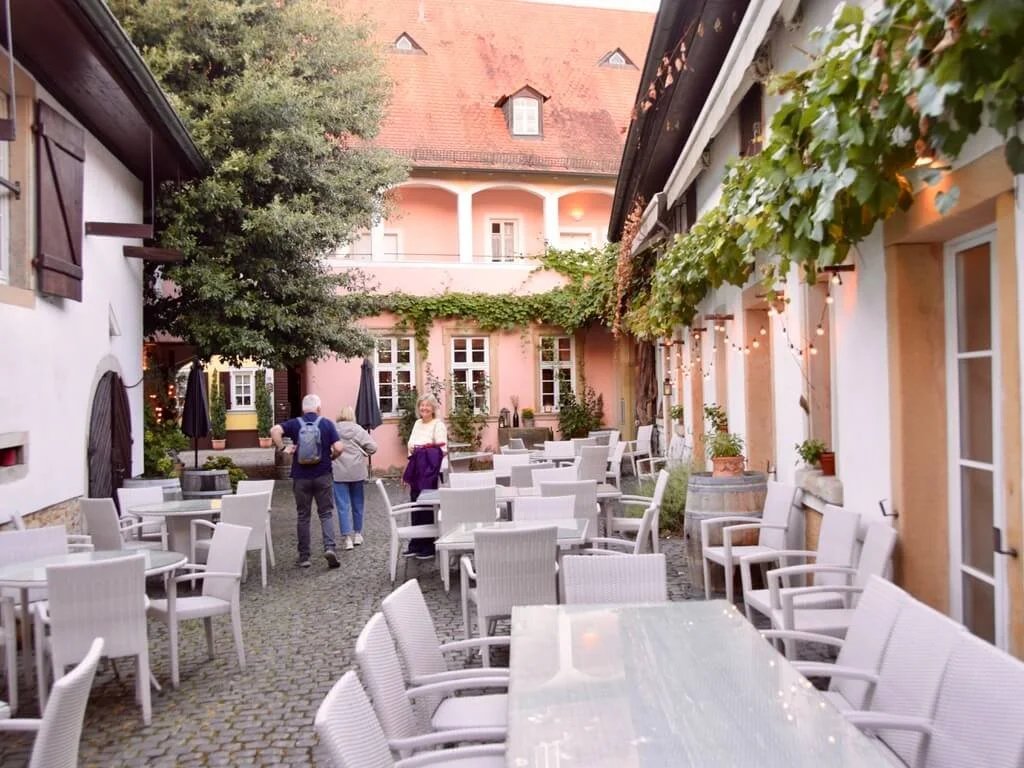
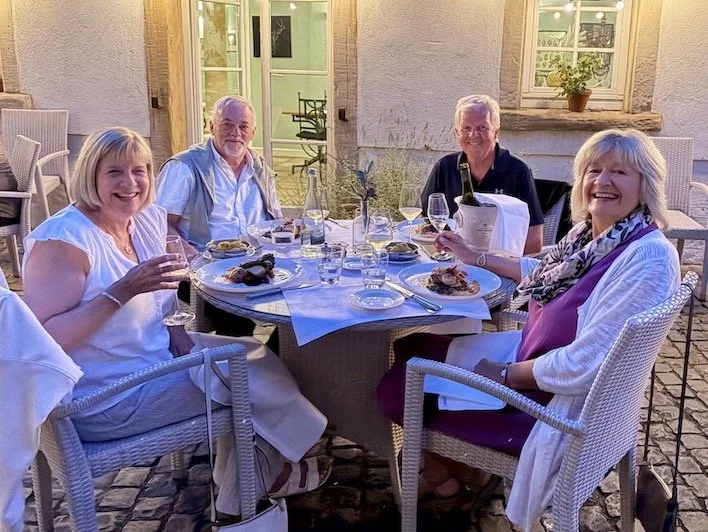
The accommodation was rustic, charming and very comfortable. The handful of rooms are located on an upper level overlooking the courtyard below, where the only access is an outdoor staircase, so this wouldn’t meet everyone’s needs, but we can highly recommend both the rooms and the restaurant (see later).
We decided to leave the car for the day, put our walking boots on and walk through the famous Pfalz vineyards to the village of Laumersheim, home to Pfalz pioneers and icons Weingut Knipser and Weingut Philip Kuhn.
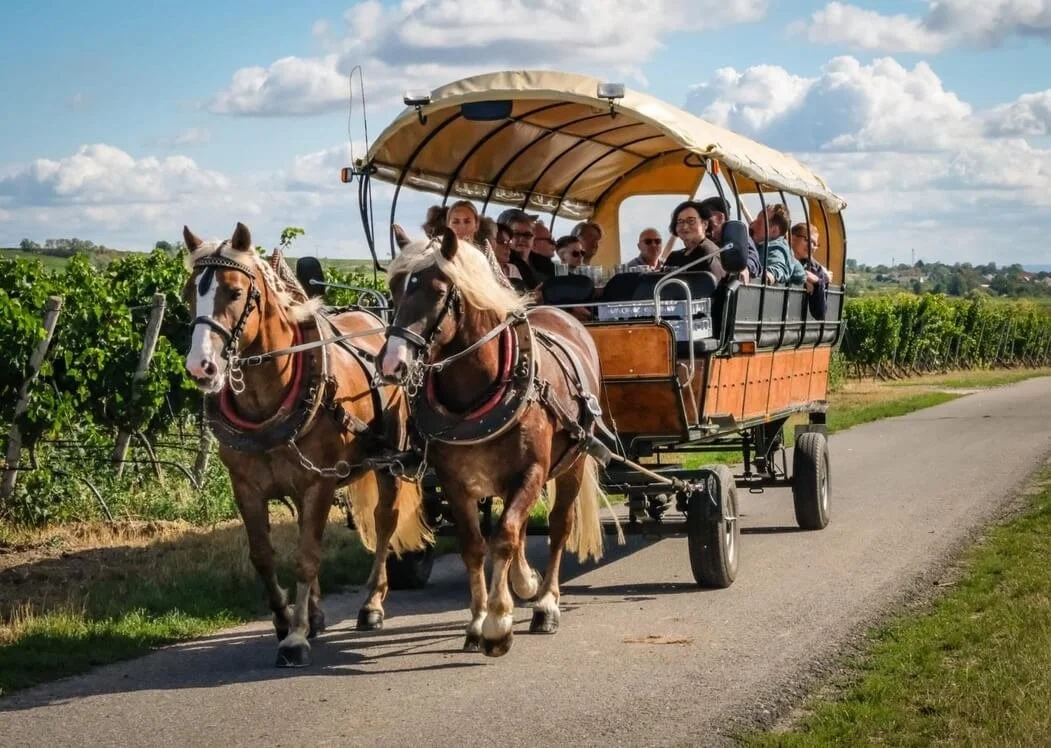
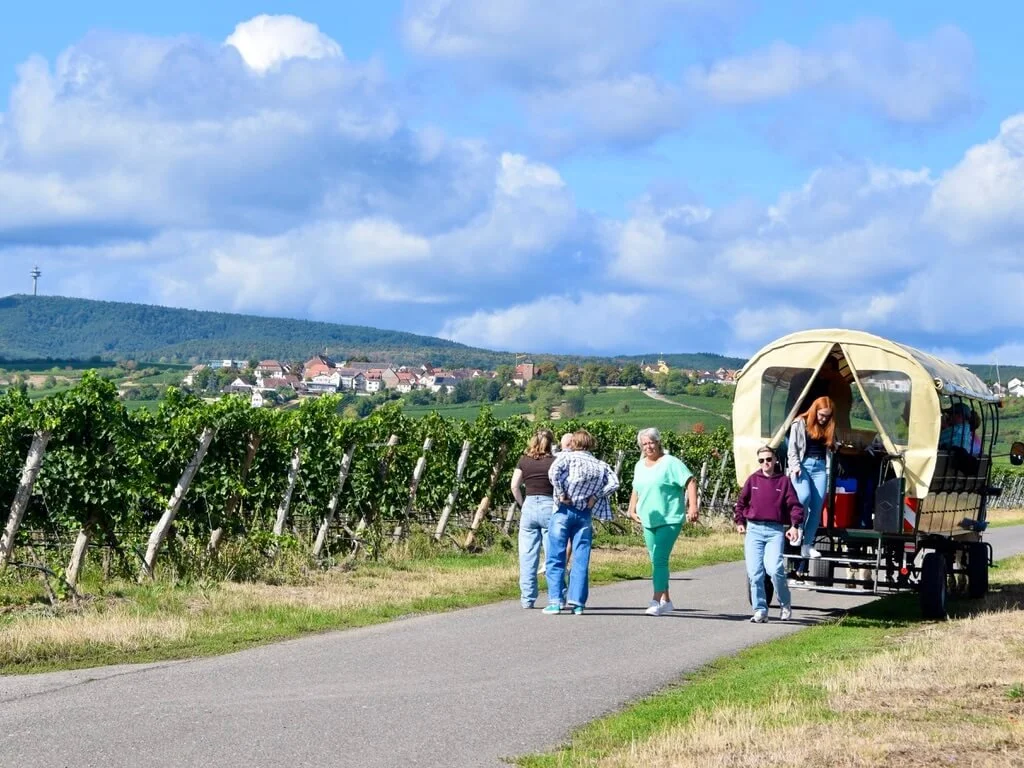
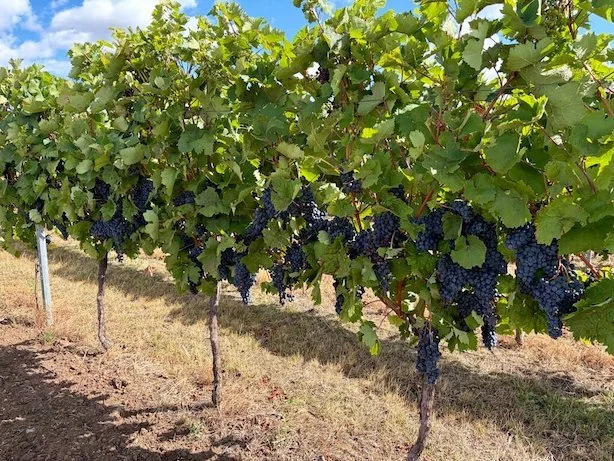
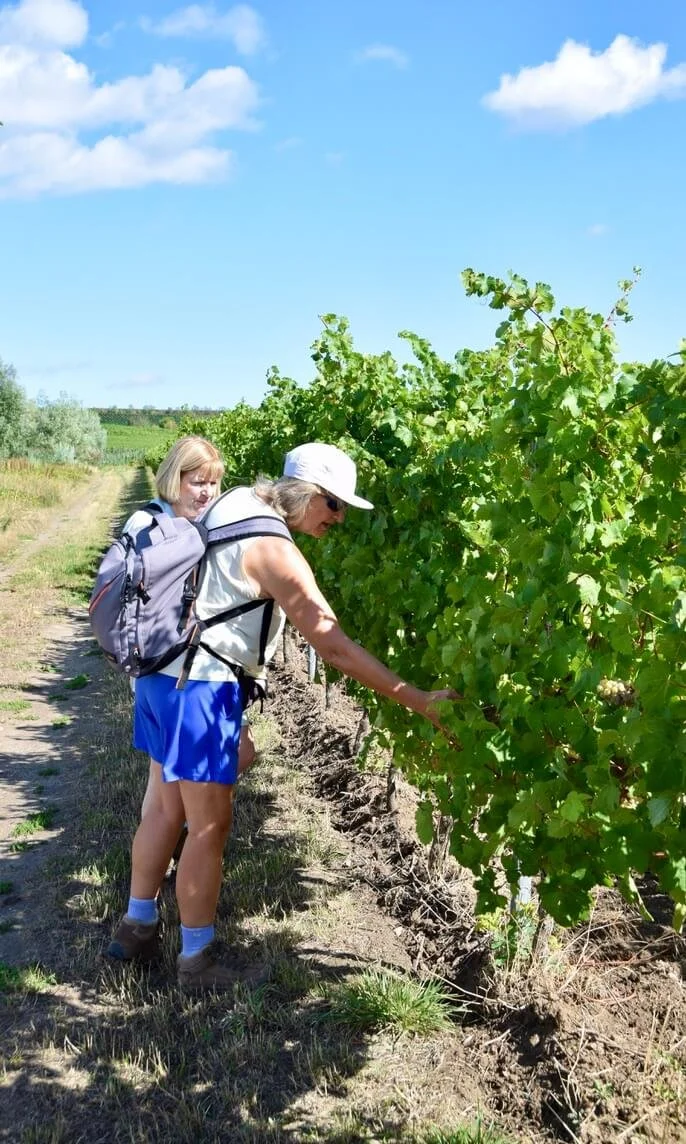
Our vineyard hike took about 1.5 hours and the distance was 7 km. The terrain was mostly flat, so it was an easy hike and the path took us through vineyards and agricultural fields. What was most striking was how rural and unspoiled the Pfalz region is and this hike enabled us to really appreciate the fabulous landscapes, the nature and the tranquillity. In fact we didn’t meet anyone else during our hike, apart from a group enjoying a wine tour in the vineyards in a horse drawn cart!
See here for other hiking routes around Freinsheim.
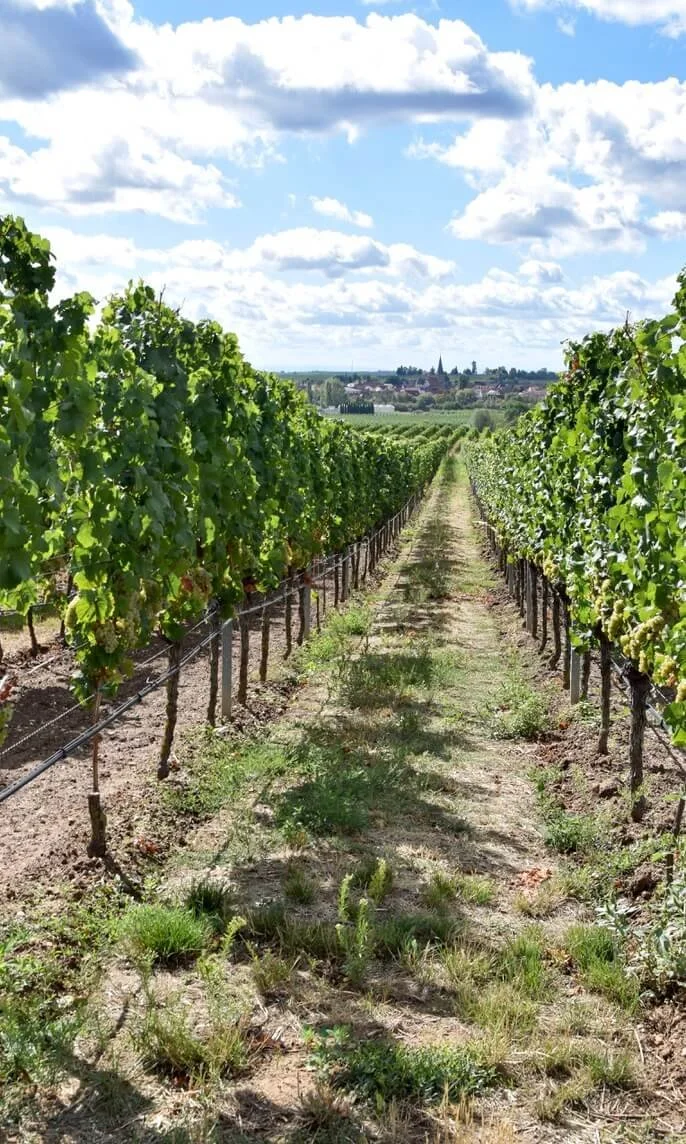
Our visit to Weingut Philipp Kuhn Pfalz
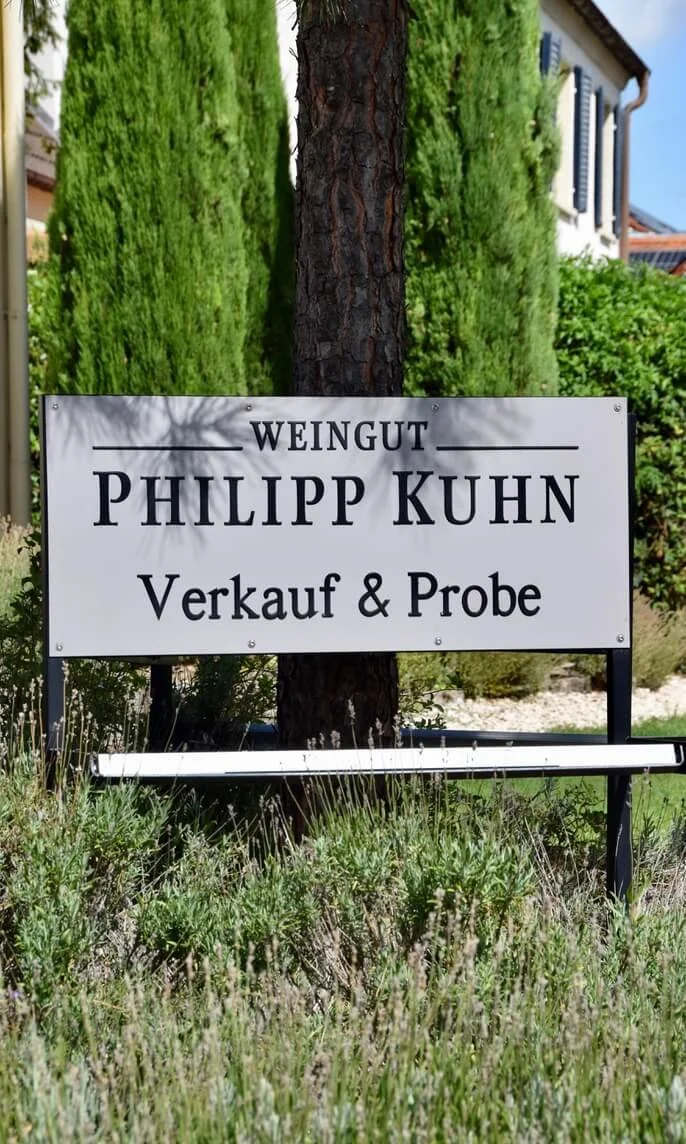
As we entered Laumersheim, we arrived at the impressive Weingut Philipp Kuhn located on the edge of the village.
Philipp Kuhn is one of Germany’s top winemakers and a member of Germany’s VDP association - a private association of some 200 top German wine producers (for more information see here), who has helped shape and build the reputation of Pfalz wines around the world.
At the age of 20, as a young, innovative winemaker, he was already solely responsible for looking after the vineyards on his parents estate and he produced his first vintage in 1992.
Arriving at Weingut Philipp Kuhn, Laumersheim - Source: Winekeller
Philipp Kuhn Pfalz wines
Today Philipp Kuhn is known for his exceptional-quality Pfalz wine - both white and red wines. About 60% of wines produced are from white grape varieties, the remainder red grapes.
Philipp Kuhn is probably mostly known for his dry Pfalz Rieslings as well as Pinot Blanc and Pinot Noir wines, produced with hand-picked grapes grown in the limestone-rich soils of the top Grand Cru (or Grosse Lage) Pfalz vineyard sites.
Our Philipp Kuhn tasting
We enjoyed a really comprehensive tasting across a broad range of Philipp Kuhn’s wines, focusing more on the white wines, in anticipation of a red wine tasting at Weingut Knipser to follow!
We started with an entry-level ‘estate wine’, the Riesling Tradition, 2025 which we agreed was a real winner and superb value for money. This was followed by a range of ‘local wines’ including a Pinot Gris, the ‘Grauburgunder Grosskarlbacher, Vom Löss, 2025’, the ‘Laumersheimer Pinot Blanc, 2024’, the Chardonnay Dirmsteiner ‘Vom Kalkmergel’ and the ‘Laumersheimer Riesling, 2025’, which were all excellent.
We then progressed onto a selection of superb Erste Lage (Premier Cru) and Grosse Lage (Grand Cru) Pfalz Riesling wines, which, again, were all superb.
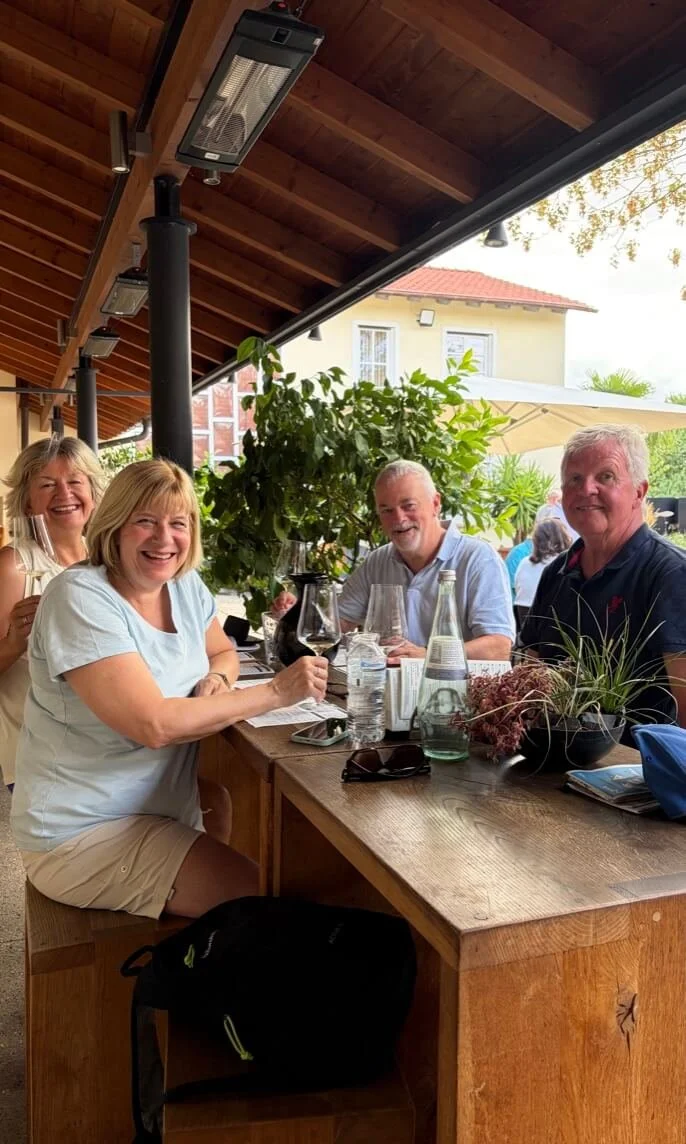
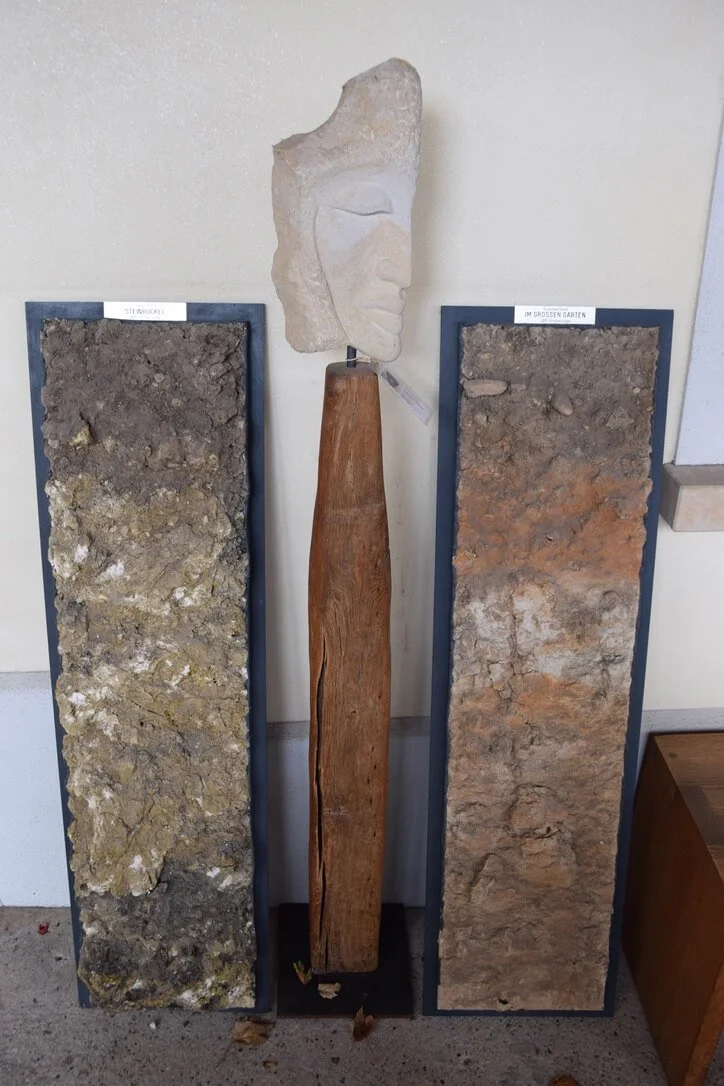
Weingut Philipp Kuhn is a great ambassador for Pfalz wines and is a great example of what this exciting German wine region can produce, in terms of top-quality wines across a broad range of red and white grape varieties. We really enjoyed our tasting here and can highly recommend you visit!
Our visit to Weingut Knipser Pfalz
Following our tasting at Weingut Philipp Kuhn we continued our walk through the village of Laumersheim and onto Weingut Knipser.
Years ago we used to import Knipser wines and we were already very much aware of how great the Pfalz Pinot Noirs are. Our visit provided the ideal opportunity to try some more recent vintages and to catch up with old acquaintances!
Views on our hike Reil-Pünderlich - Source: Winekeller
Weingut Knipser Pfalz wines
Weingut Knipser is also a ‘VDP’ winery - known in particular for its superb, barrel-aged, Grand Cru, Pinot Noir (Spätburgunder) red wines.
With a history and tradition dating back to 1876, Weingut Knipser remains a family winery and business, whose philosophy is centred around blending tradition and innovation to produce top-quality wines which reflect the unique terroir of the Pfalz wine region. Brothers Werner and Volker Knipser, the early pioneers in the 1970s of top quality Pfalz Riesling and Pfalz Pinot Noir wines, maintain the family tradition today, set to be continued by the next generation, Stephan Knipser.
Weingut Knipser produces some excellent wines, including blends, from traditional Bordeaux varieties, including Cabernet Sauvignon, Cabernet Franc, Merlot and Syrah, but its success is most rooted in Burgundy varieties such as Chardonnay, Pinot Gris, Pinot Blanc and Pinot Noir. These grape varieties thrive in the limestone soils found in the top vineyard sites farmed by Knipser, including Laumersheimer Kirschgarten, Laumersheimer Steinbuckel, Großkarlbacher Burgweg and Dirmsteiner Mandelpfad.
Our Knipser tasting
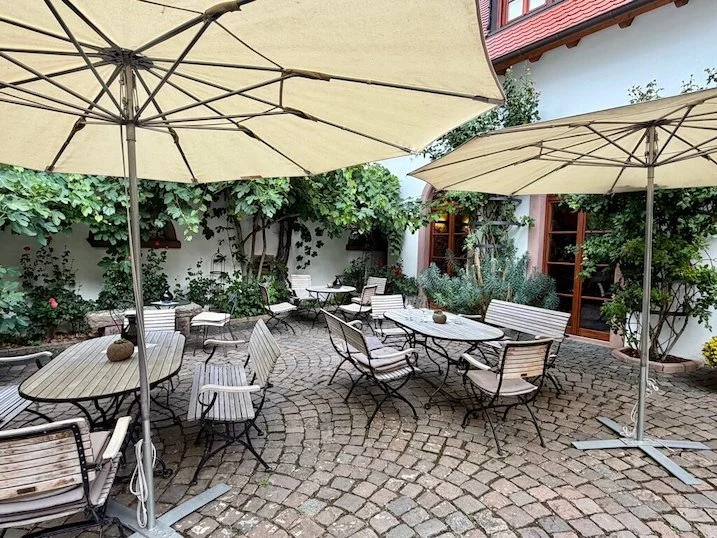
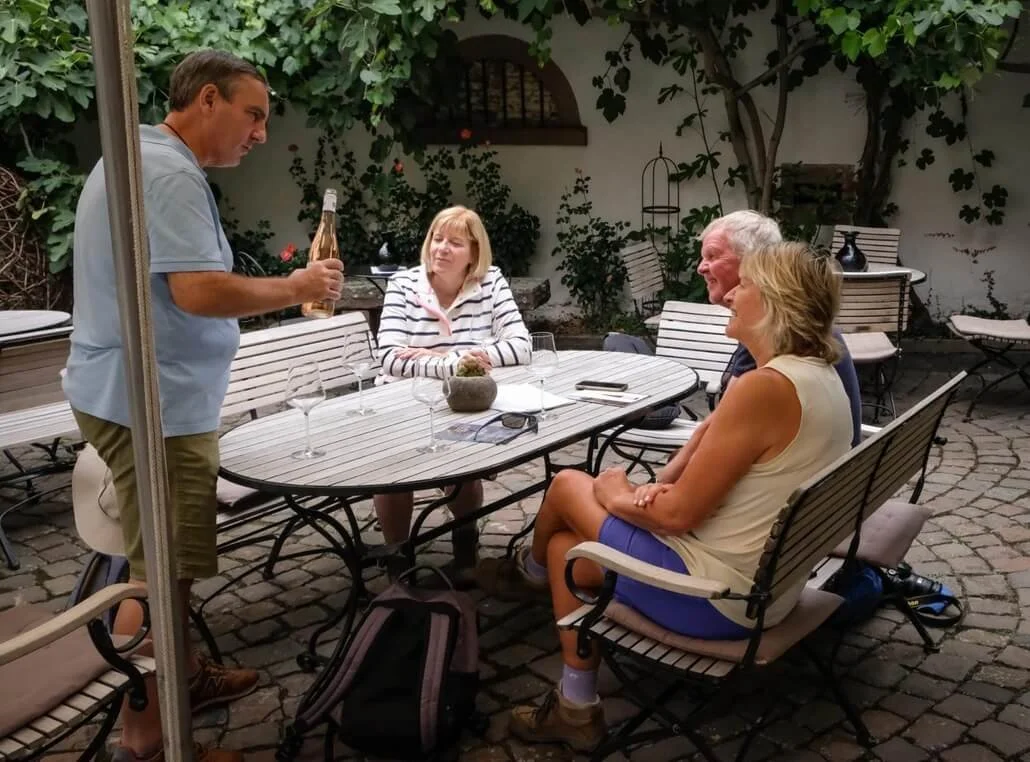
We enjoyed a wonderful tasting sitting in the lovely courtyard at Weingut Knipser. We were keen to focus on the red wines as we had concentrated on white wines earlier at Weingut Philipp Kuhn.
Our tasting started with an exceptional, refreshing, rosé wine called ‘Clarette’, produced from a blend of Cabernet Sauvignon, Cabernet Franc, Merlot grapes. This was followed by an excellent example of a Pfalz Pinot Noir cuvée, the trademark wine of Weingut Knipser, the ‘Kalkmergel (limestone marl) Spätburgunder, produced from a blend of grapes from the top Pfalz vineyard site, Großkarlbacher Burgweg and aged in barrique for 18 months.
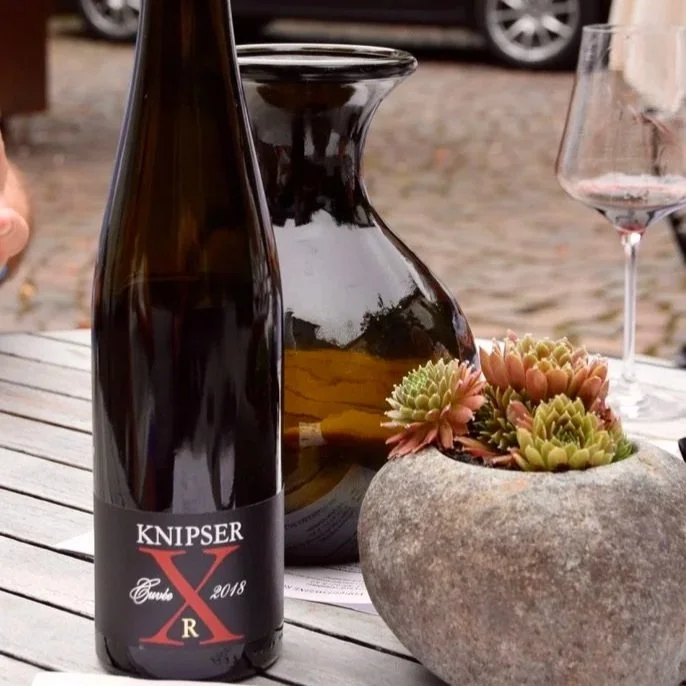
We finished our tasting with the incredible Bordeaux blend, the Knipser Cuvée X, made from Cabernet Sauvignon, Merlot, Cabernet Franc grapes and aged in barrique for 24 months. The 2018 vintage was simply outstanding. We also got to taste the 2018 Cuvée X Réserve, which was very special and a great way to finish such a wonderful tasting!
For those who are curious about red German wine, we would highly recommend discovering Pfalz red wines from Weingut Knipser!
Exploring the historic Pfalz village of Freinsheim
The historic city of Freinsheim is located in the district of Bad Dürkheim along the German Wine Route - Germany’s best wine route - and provided us with the perfect base from which to explore the Pfalz (northern) Mittelhardt region.
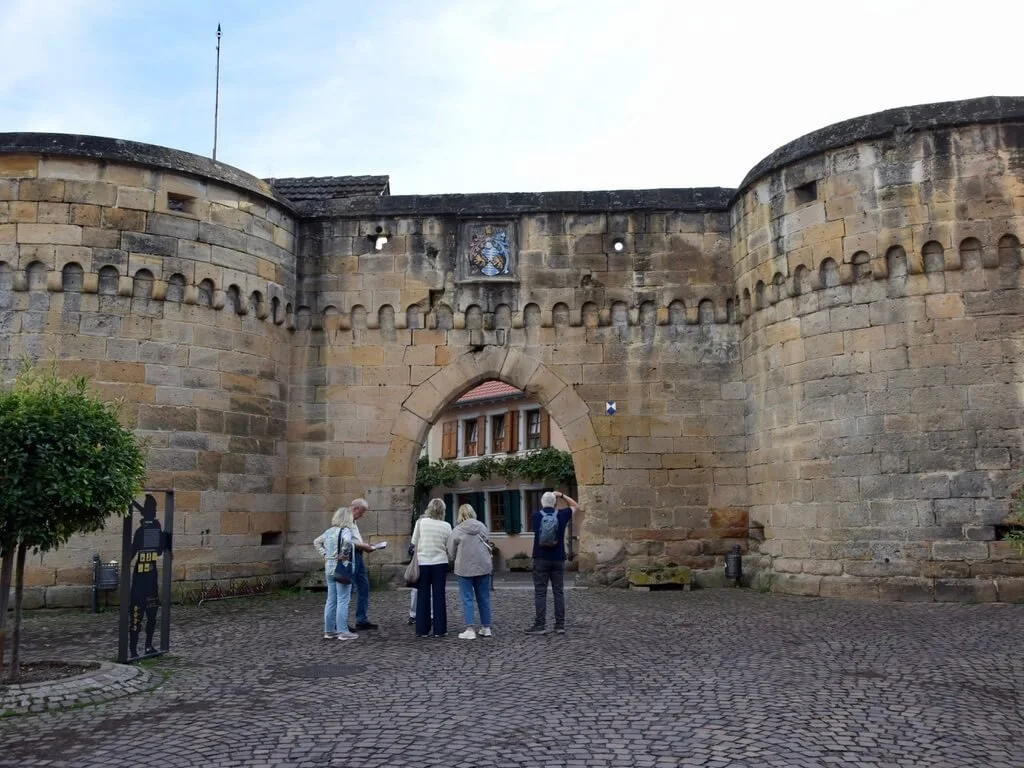
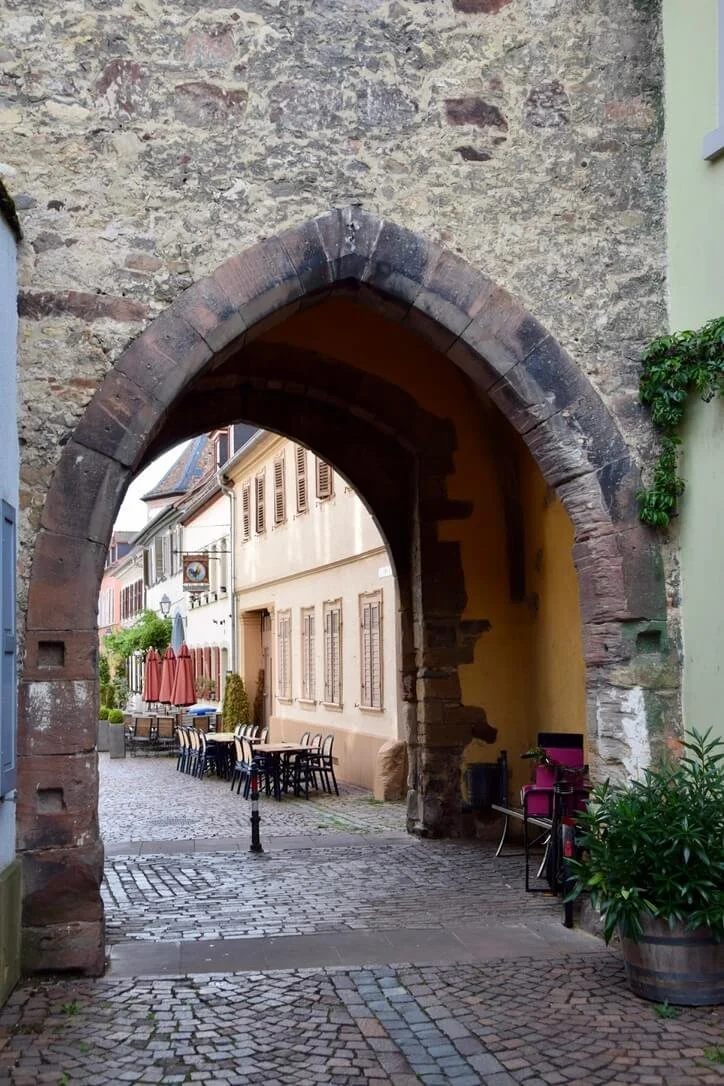
The medieval city of Freinsheim is characterised by its almost perfectly preserved medieval city walls, which surround the old town for almost 1,300 metres, featuring many preserved towers and original gates. Freinsheim was first mentioned in records dating back to 774 and since then it endured a rich but turbulent history, which resulted in the town being completely destroyed in 1689, severely damaging the city walls, gates, and towers. Extensive renovation and restoration of the old town took place between 1978-1993 and today Freinsheim is a key attraction for visitors exploring the German Wine Route and the Pfalz wine region.
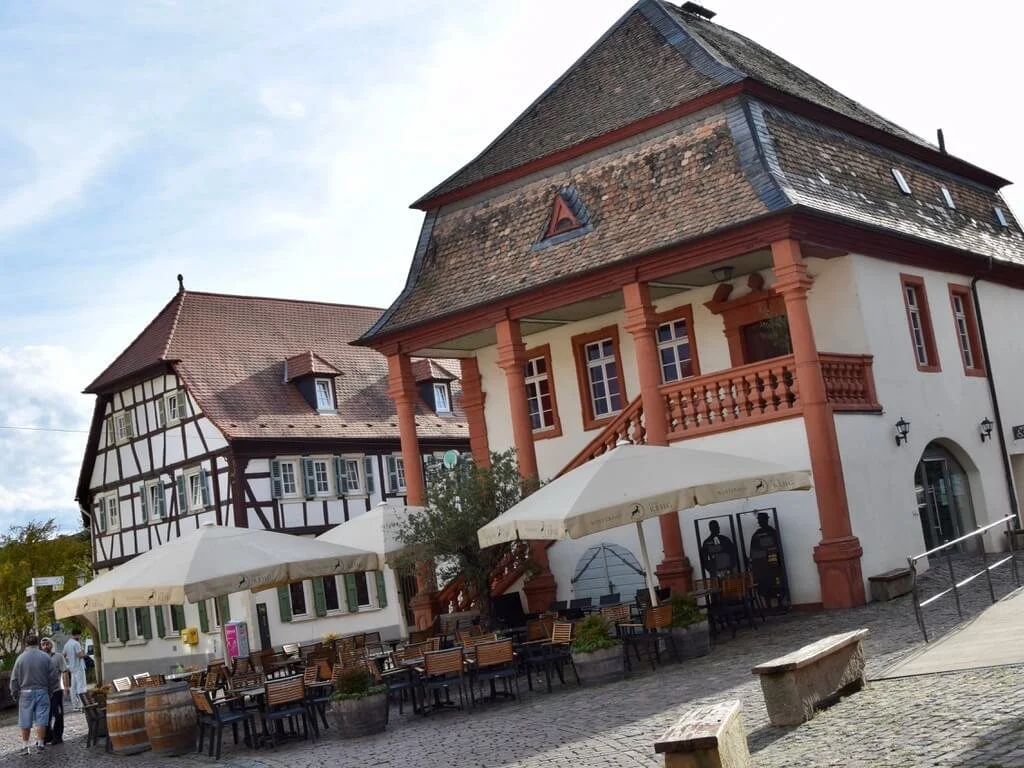
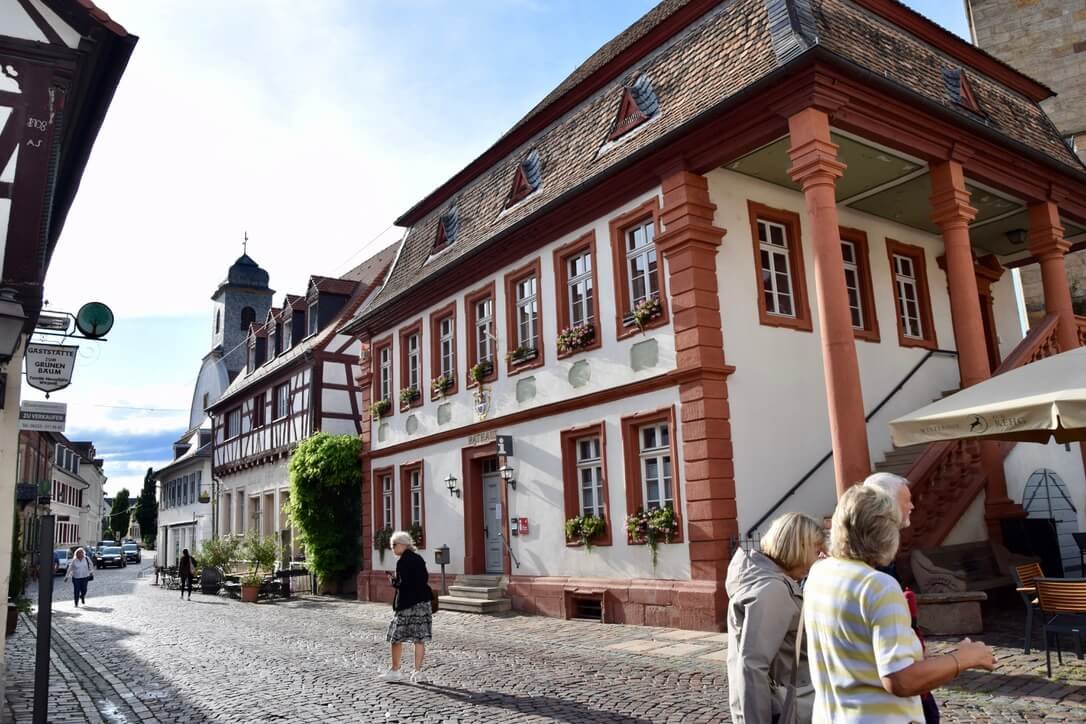
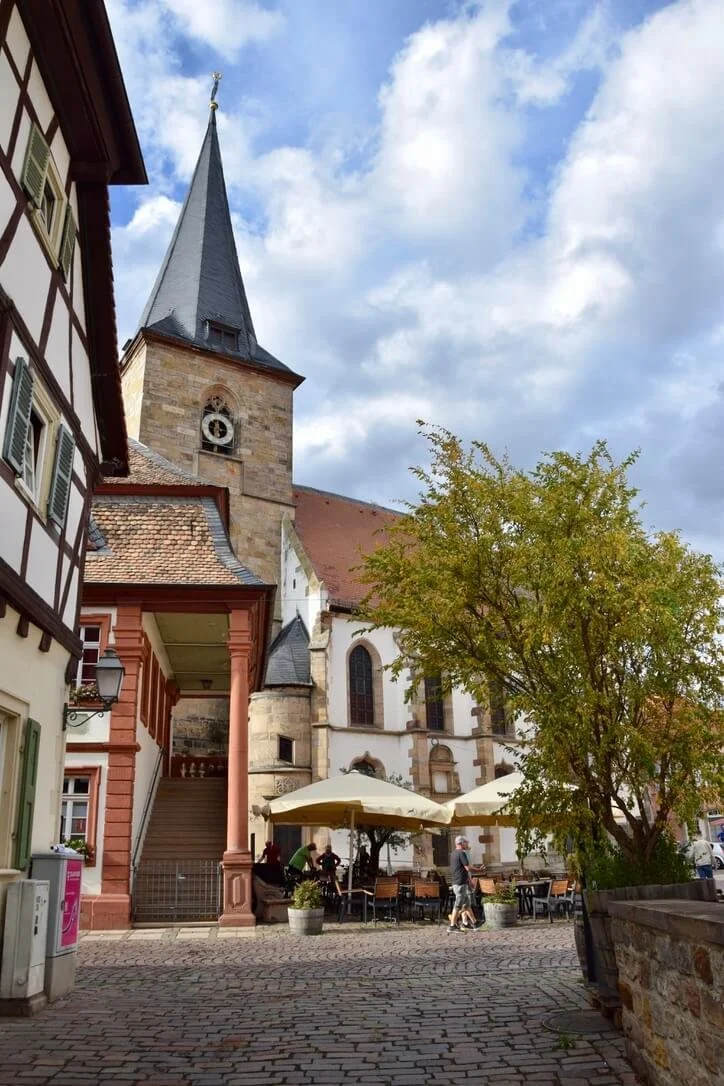
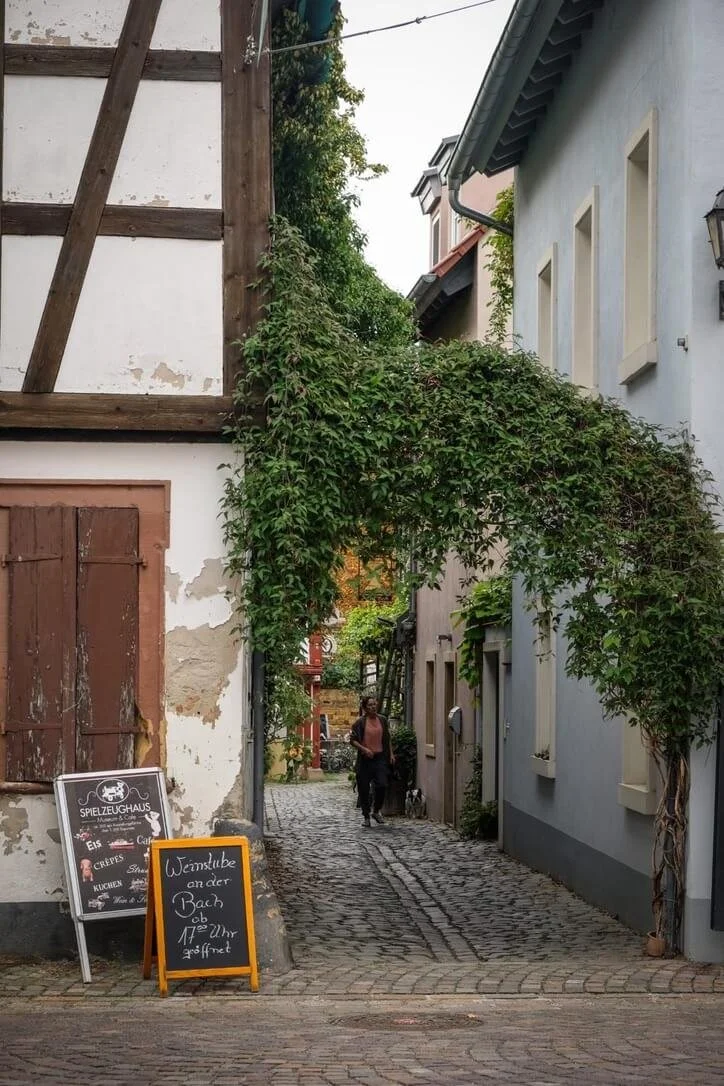
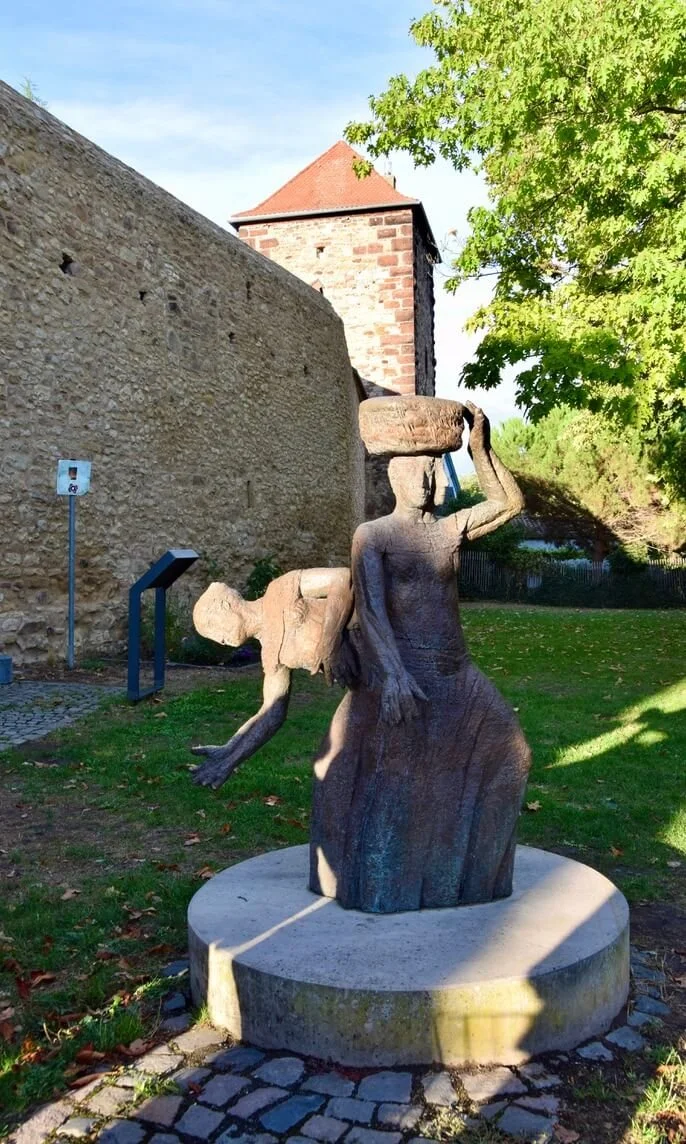
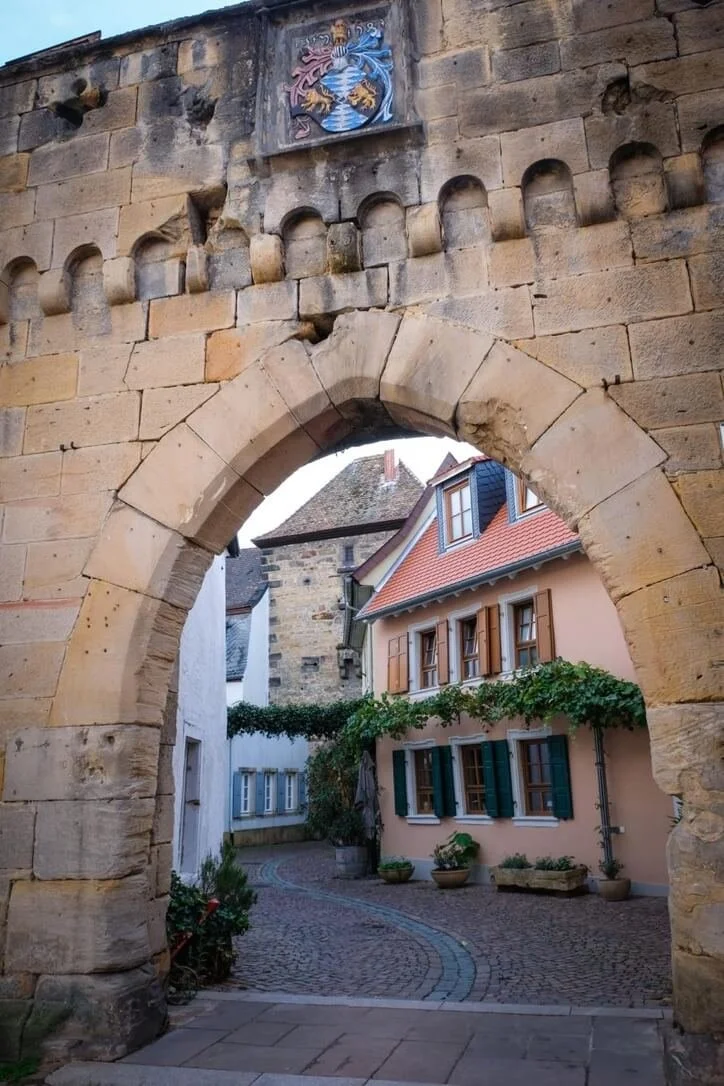
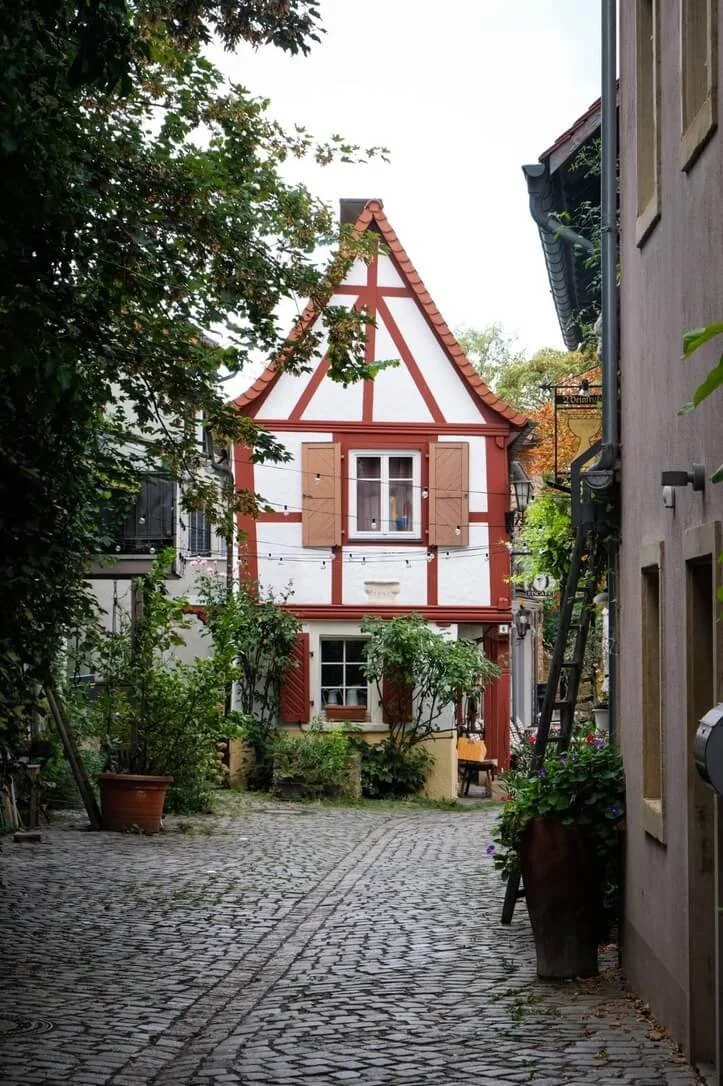
Exploring historic Freinsheim - Source: Winekeller
You can explore Freinsheim, with its wonderfully preserved city walls, following the well-marked route around the old city, however the best way to discover this Pfalz hidden gem is to book yourself on a guided city tour, which is what we did. Our tour guide was very knowledgeable and shared many fascinating anecdotes and snippets of history about this historic city, things we would have otherwise missed.
Freinsheim is only small, but there is much to discover - see here for the main sights and hopefully our photos below give you some impression of what a beautifully preserved medieval city Freinsheim is.
Agriculture and viticulture have always played a prominent role in the life and culture of Freinsheim and today it hosts many wine festivals and cultural events throughout the year. In addition to wine, Freinsheim is also known for almonds and in fact, Germany's only almond orchard is located on the outskirts of the city walls. Almond cultivation is a very old tradition and dates back to Roman times in the region.
Eating out in Freinsheim
As in most other wine regions around the world, where this is good wine, there tends to be good food! Germany’s Pfalz wine region is no exception.
There is no shortage of great places to eat and drink within the city walls, where you can enjoy a range of local, traditional dishes as well as more international food.
We can highly recommend the Freinsheimerhof Restaurant where we were staying. We ate there twice, once inside and on a warmer evening we ate in the beautiful courtyard. The food, wines, service and setting were all excellent.
Try to sample the local dishes, which tend to be quite simple, rustic and hearty. Venison, game and other red meats with robust wine sauces feature strongly and popular accompaniments are potatoes and sauerkraut.
Traditional Pfalz dishes include:
Saumagen: The Pfalz’s most famous dish, which is honestly nicer than it sounds! A mixture of pork, sausage meat, potatoes, onions, and spices are stuffed into a pig's stomach, boiled, sliced thick, and pan-fried
Pfälzer Teller: Platter featuring regional dishes Bratwurst, grilled Saumagen, and liver dumplings (Leberknödel)
Flääschknepp: Pork meatballs, traditionally served with a creamy horseradish sauce.
Backesgrumbeere: An oven-baked dish made with sliced raw potatoes, pork, and onions
Flammkuchen: A traditional dish in nearby Alsace - a very thin crust pizza, covered in a thin layer of crème fraiche and topped with traditionally onion and bacon but lots of other savoury toppings.
See here for more information about exploring this section of the beautiful German Wine Route and here for more information about visiting Freinsheim and the surrounding area.
Conclusion
What a fantastic day visiting two such top Pfalz wineries, both great examples of how great Pfalz wines can be. We also loved exploring this part of Germany’s wine route and spectacular Freinsheim. If you want to discover some great German wines - especially German Rieslings and Pinot Noirs - and a beautiful, rural wine region which has much to offer but remains totally unspoiled, then visit Palatine in Germany!